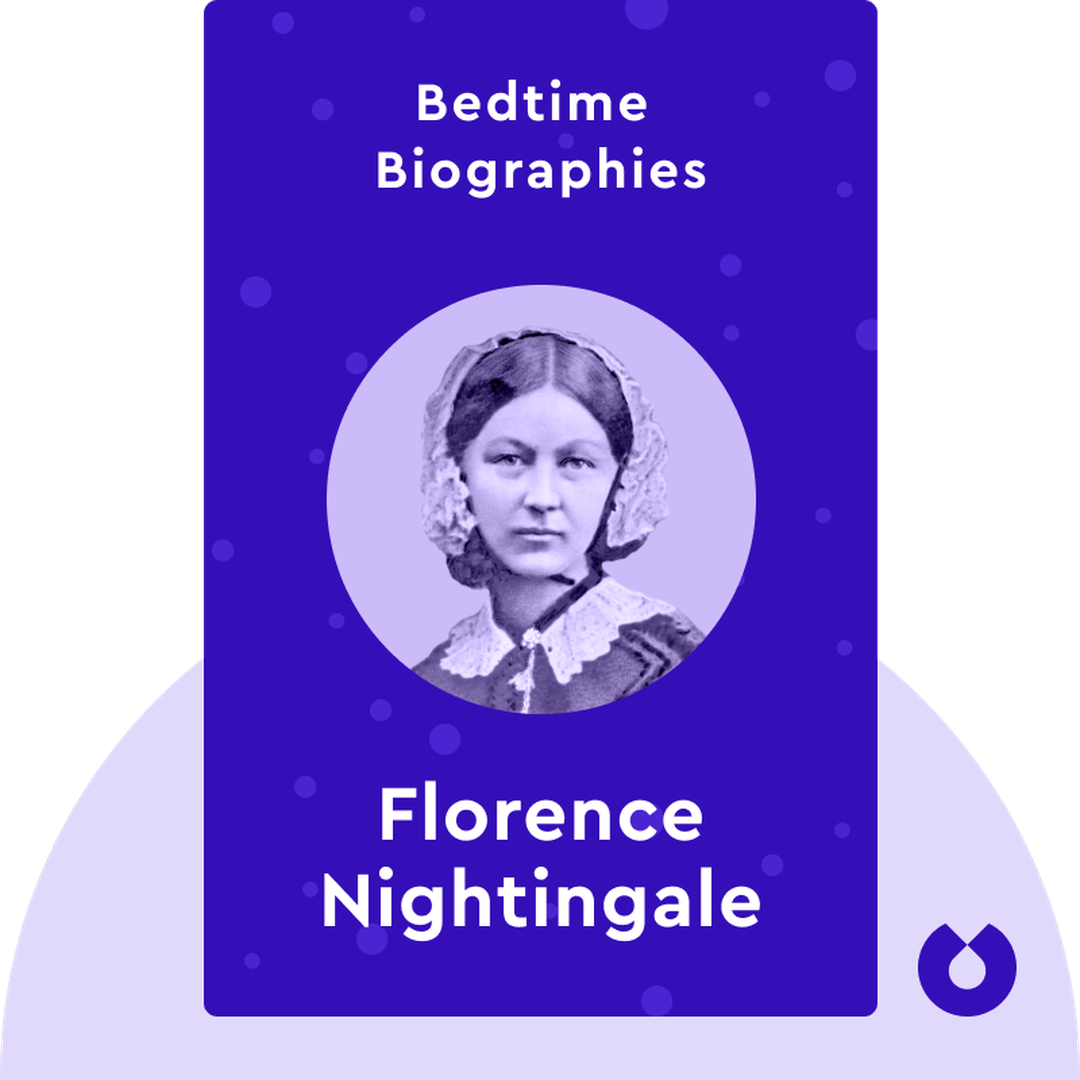
If You're Curious About These Questions...
You should listen to this audiobook
- Did you know that the woman who revolutionized modern nursing had to overcome fierce opposition from her own wealthy Victorian family just to pursue her calling?
- Have you ever wondered what shocking conditions Florence Nightingale actually discovered in the Crimean War barracks that drove her to change the face of healthcare forever?
- Are you curious about how a single individual managed to challenge the entire British military establishment and transform the way the world treats the sick and wounded?
Listen to Florence Nightingale — Free Audiobook
Loading player...
Key Takeaways from Florence Nightingale
- Discover how a profound spiritual calling at age 16 drove Florence Nightingale to reject Victorian high society, marriage, and familial expectations to pursue a life of selfless service.
- Understand the grim reality of nineteenth-century nursing, a profession once notorious for unsanitary hospitals and rampant drunkenness, before Nightingale revolutionized the field.
- Find out how an exceptionally rigorous education in mathematics and philosophy from her father laid the intellectual foundation for Nightingale's later innovations.
- Learn how Nightingale transformed family restrictions into an opportunity by secretly gathering data and mastering European public health statistics before her career even began.
- Uncover the immense emotional toll and severe depression Nightingale endured while fighting for her vocation, proving that world-changing perseverance often requires profound personal sacrifice.
Learning Tools
Reinforce what you learned from Florence Nightingale
Mind Map
Florence Nightingale
Early Life & Calling+
Preparation & Struggle+
The Crimean War+
Legacy & Reform+
Quiz — Test Your Understanding
Question 1 of 8
Why did Florence Nightingale's mother and sister originally oppose her desire to become a nurse?
Question 2 of 8
How did Florence Nightingale initially build her expertise in hospital care during the years her family prevented her from working?
Question 3 of 8
What crucial role did Sidney Herbert play in Florence Nightingale's career?
Question 4 of 8
When Florence Nightingale and her nurses first arrived at the hospital in Scutari, what strategic decision did she make regarding the hostile army doctors?
Question 5 of 8
Upon arriving in Scutari, what did Nightingale realize was the primary cause of death among the British soldiers?
Question 6 of 8
How did Florence Nightingale respond to the fame and public adoration she received after the Crimean War?
Question 7 of 8
Which of the following was one of Florence Nightingale's major accomplishments after returning from the Crimean War?
Question 8 of 8
According to the text, what was a notable drawback of Nightingale's intense drive and devotion to her cause?
Florence Nightingale — Full Chapter Overview
- 1Recommendation
- 2God’s Voice
- 3Finding a Vocation
- 4Study and Standstill
- 5A True Career
- 6Work, War, and Opportunity
- 7A Horrifying Situation
- 8The Value of Nurses
- 9The Lady with the Lamp
- 10An Honored Life, a Humble Death
- 11Final summary
Florence Nightingale Summary & Overview
Florence Nightingale (1951) tells the legendary story of the “Lady with the Lamp,” the famed nurse who arrived to soothe the souls of those wounded in the Crimean War. It chronicles her journey to the conflict’s horrific medical barracks, and how she used her experiences to forever change the way hospitals are run and how the sick are treated.
Who Should Listen to Florence Nightingale?
- People interested in amazing life stories
- Those curious about life and hardships during Victorian times
- History buffs
Books Similar to Florence Nightingale
Readers who enjoyed this also liked these titles.