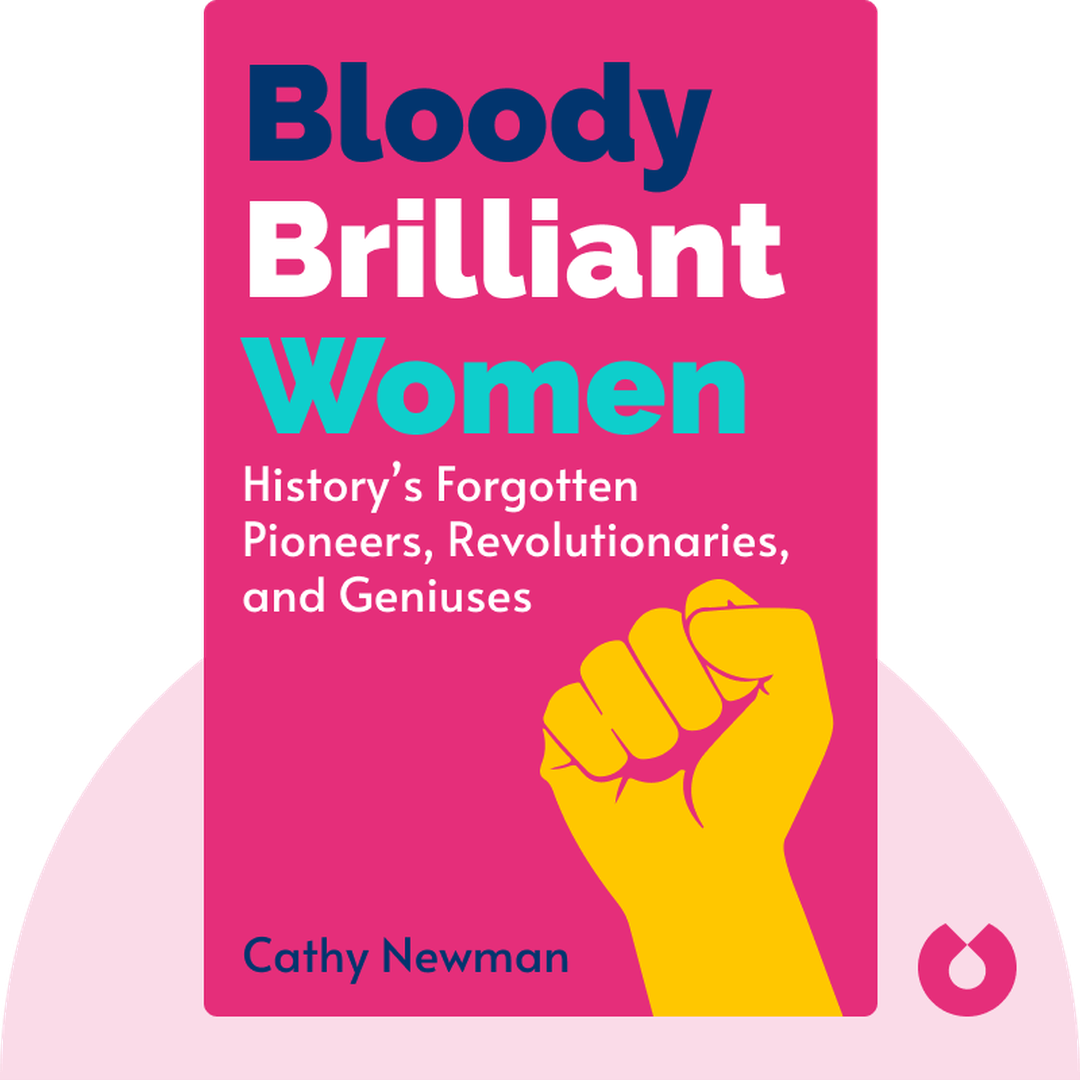
Bloody Brilliant Women
Start ListeningDownload Try free on iPhoneScan to start in 5 seconds
Categories:
If You're Curious About These Questions...
You should listen to this audiobook
- Did you know that many of the most pivotal moments in British history were actually orchestrated by women whose names were scrubbed from the record books?
- Have you ever wondered how different modern Britain would look if the pioneering female scientists, engineers, and activists of the last 150 years had never stepped up?
- Are you curious about the unsung heroines who were the true architects of social change in Britain from the 1880s to the present day?
Listen to Bloody Brilliant Women — Free Audiobook
Loading player...
Key Takeaways from Bloody Brilliant Women
- Discover how Victorian women fought oppressive marriage laws to transition from being the legal property of their husbands to gaining financial and physical autonomy.
- Learn how the immense labor demands of World War I shattered the myth of female fragility, propelling women into crucial roles in munitions factories and battlefield nursing.
- Understand how suffragettes strategically used their patriotic wartime contributions to prove their worth, ultimately forcing the British government to grant millions of women the right to vote.
- Find out how interwar trailblazers rebelled against societal expectations to simply stay home and breed by opening early family planning clinics and launching radical campaigns for reproductive rights.
- Explore the groundbreaking legislative shifts that followed enfranchisement, empowering women to run for office and allowing pioneers like Nancy Astor to take their seats in parliament.
Learning Tools
Reinforce what you learned from Bloody Brilliant Women
Mind Map
Bloody Brilliant Women
Victorian Era Marriage Laws+
WWI & Suffrage+
Interwar Era Progress+
WWII & Equality Fights+
Post-War Welfare & Tensions+
1960s Sexual Revolution & Feminism+
Margaret Thatcher's Paradox+
Quiz — Test Your Understanding
Question 1 of 7
What was the legal doctrine of coverture in Victorian England?
Question 2 of 7
How did suffragette Millicent Garrett Fawcett view the outbreak of World War I?
Question 3 of 7
What significant legal shift for women was introduced by the Infanticide Act of 1922?
Question 4 of 7
What was Beatrice Shilling's major engineering contribution during World War II?
Question 5 of 7
According to the post-war research of psychologists Slater and Woodside, what was a major cause of soaring divorce rates in 1940s Britain?
Question 6 of 7
How was access to the contraceptive pill restricted when it was first introduced in the United Kingdom in the 1960s?
Question 7 of 7
Why did Prime Minister Margaret Thatcher actively diminish the feminist movement during her time in office?
Bloody Brilliant Women — Full Chapter Overview
- 1Recommendation
- 2During the Victorian Era, new marriage laws gave British women significant autonomy.
- 3Women’s remarkable contributions to the war effort were eventually rewarded with the vote.
- 4Women pushed for sexual freedom in the interwar years and gained new political and professional advantages.
- 5Women played a crucial role in World War II but still faced discriminatory laws.
- 6Lower-class women benefited from the expanded post-war welfare state, while demobilization created problems at home.
- 7Women embraced new sexual freedoms in the 1960s and introduced radical ideas about gender relations.
- 8Despite her strength as a leader, Prime Minister Margaret Thatcher did nothing to advance women’s rights.
- 9Final summary
Bloody Brilliant Women Summary & Overview
Bloody Brilliant Women (2018) shines a light on some of British history’s most remarkable women, who, for years, were conveniently left out of history books mainly written by men. Newman rights this wrong, providing an exhaustive history of the multitude of women responsible for shaping Britain from the 1880s to the present day.
Who Should Listen to Bloody Brilliant Women?
- History buffs
- Feminists
- Anglophiles
Books Similar to Bloody Brilliant Women
Readers who enjoyed this also liked these titles.