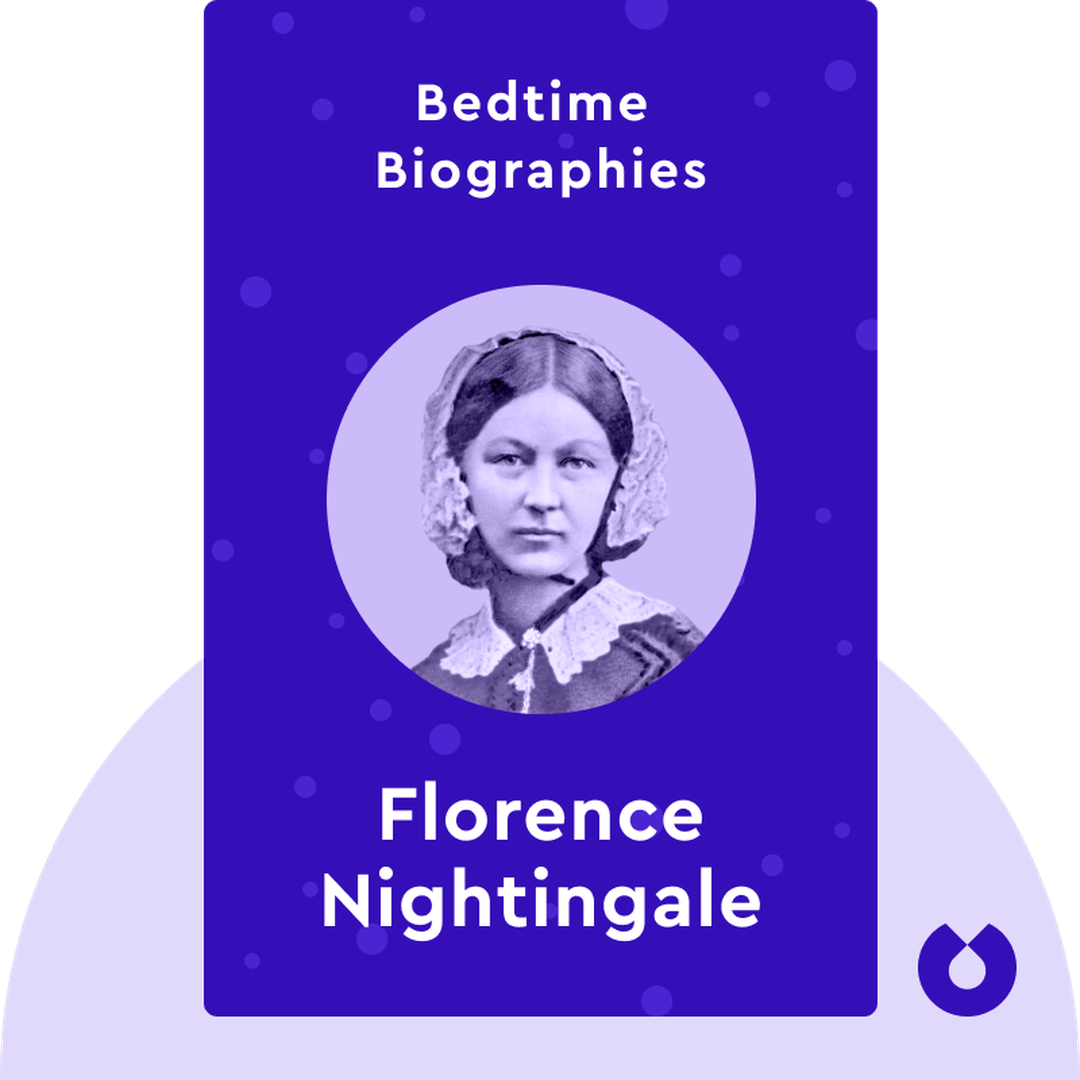
Bedtime Biography: Florence Nightingale
Start ListeningDownload Try free on iPhoneScan to start in 5 seconds
Categories:
If You're Curious About These Questions...
You should listen to this audiobook
- Did you know that the most dangerous part of the Crimean War wasn't the battlefield, but the very hospitals meant to save the soldiers?
- Have you ever wondered what secret drive led a high-society Victorian woman to leave her life of luxury for the horrific medical barracks of a distant war?
- Are you curious about how the "Lady with the Lamp" used her harrowing experiences on the front lines to forever change the way we treat the sick and injured today?
Listen to Bedtime Biography: Florence Nightingale — Free Audiobook
Loading player...
Key Takeaways from Bedtime Biography: Florence Nightingale
- Discover how Florence Nightingale's legacy extends far beyond basic compassion, as her brilliant mind helped revolutionize the fields of sanitation, medical statistics, and epidemiology.
- Learn how Nightingale combined a profound sense of divine purpose with a deep passion for mathematics to address the widespread suffering of her time.
- Understand the immense familial and societal resistance she overcame, spending eight years secretly studying medical care while outwardly fulfilling the duties of a wealthy aristocrat.
- Explore how hands-on leadership and inclusive policies allowed Nightingale to transform her first London hospital into a highly advanced, non-sectarian medical institution.
- Find out how she navigated extreme sexism and horrific sanitary conditions at the frontlines of the Crimean War to prove the undeniable value of her nursing expertise.
Learning Tools
Reinforce what you learned from Bedtime Biography: Florence Nightingale
Mind Map
Bedtime Biography: Florence Nightingale
Early Life & Calling+
The Crimean War+
Medical & Statistical Reform+
Professionalizing Nursing+
Later Life & Legacy+
Quiz — Test Your Understanding
Question 1 of 10
What broad fields did Florence Nightingale help revolutionize, in addition to her direct compassionate care as a nurse?
Question 2 of 10
How did Florence Nightingale's wealthy family initially react to her desire to become a nurse?
Question 3 of 10
What significant ideological change did Florence implement when she took over the management of a charitable hospital in London in 1853?
Question 4 of 10
During the Crimean War, Florence Nightingale enacted a major shift in nursing protocol at the Scutari field hospital by doing what?
Question 5 of 10
How did Florence Nightingale respond to her newfound status as a patriotic folk hero after the Crimean War?
Question 6 of 10
What was a key element of Florence Nightingale's 1,000-page report, 'Notes on Matters Affecting the Health, Efficiency and Hospital Administration of the British Army'?
Question 7 of 10
Which of the following best describes the Nightingale Training School established at St Thomas' Hospital in 1860?
Question 8 of 10
What forward-thinking, though ultimately ignored, recommendation did Florence make regarding the British Army in India?
Question 9 of 10
What was the ultimate result of Florence Nightingale's campaign to reform workhouses alongside philanthropist William Rathbone?
Question 10 of 10
How did Florence Nightingale's personality and personal life evolve in her later years?
Bedtime Biography: Florence Nightingale — Full Chapter Overview
- 1Recommendation
- 2Chapter One
- 3Chapter Two
- 4Chapter Three
- 5Chapter Four
- 6The Conclusion
Bedtime Biography: Florence Nightingale Summary & Overview
Narrated by Marston York
Florence Nightingale (1951) tells the legendary story of the “Lady with the Lamp,” the famed nurse who arrived to soothe the souls of those wounded in the Crimean War. It chronicles her journey to the conflict’s horrific medical barracks, and how she used her experiences to forever change the way hospitals are run and how the sick are treated.
Who Should Listen to Bedtime Biography: Florence Nightingale?
- People interested in amazing life stories
- Those curious about life and hardships during Victorian times
- History buffs
Books Similar to Bedtime Biography: Florence Nightingale
Readers who enjoyed this also liked these titles.