If You're Curious About These Questions...
You should listen to this audiobook
- What if the secret to a more fulfilling life isn’t avoiding mistakes, but actually seeking out failure as fast as possible?
- Have you ever wondered why waiting for the "perfect moment" is often the biggest obstacle standing between you and your dreams?
- Did you know that the most successful people don't succeed despite their failures, but specifically because of how quickly they embrace them?
Listen to Fail Fast, Fail Often — Free Audiobook
Loading player...
Key Takeaways from Fail Fast, Fail Often
- Discover why waiting for a perfect plan creates a paralyzing "not-yet" mindset, and learn to seize immediate opportunities instead.
- Learn how to draw more success into your life by maintaining a 3:1 ratio of positive experiences and creating a "fun map" to maximize joy in your daily routine.
- Understand why focusing on rapid trial-and-error and output quantity over perfect quality actually accelerates your skill improvement.
- Find out how intentionally making mistakes on a small scale, just like top comedians and successful entrepreneurs, helps you perfect your ideas before a major launch.
- Master the mindset of a beginner to conquer the fear of looking bad, recognizing that avoiding action is the only guaranteed way to fail.
Learning Tools
Reinforce what you learned from Fail Fast, Fail Often
Mind Map
Fail Fast, Fail Often
Overcoming Fear of Failure+
The Value of Failing Fast+
Prioritizing Fun & Curiosity+
Action & Goal Setting+
Career & Community+
Quiz — Test Your Understanding
Question 1 of 8
What is the 'not-yet' approach described in the book?
Question 2 of 8
How does the book suggest you use a 'fun map'?
Question 3 of 8
What did the ceramics teacher's study reveal about success and skill improvement?
Question 4 of 8
According to the book, what is a primary reason people are often afraid to start a new hobby?
Question 5 of 8
How does the book view the impact of traditional schooling on our mindset?
Question 6 of 8
What lesson is illustrated by Allan’s attempt to lose 30 pounds and run a marathon in a year?
Question 7 of 8
What does the book recommend you do before dedicating yourself to a specific career path?
Question 8 of 8
How does the book distinguish between 'networking' and 'building a community'?
Fail Fast, Fail Often — Full Chapter Overview
- 1Recommendation
- 2Fulfilled, joyful people make things happen instead of waiting for life to unfold on its own.
- 3A fun life naturally creates happiness, but it can also lead to something less obvious: success.
- 4Failing often offers a fast, reliable path to success, even when it isn’t enjoyable.
- 5Value your beginner’s journey and embrace the lessons failure can teach.
- 6Reclaim your curiosity to discover new and exciting things in the world around you.
- 7Set ambitious goals, then break them into smaller, manageable steps.
- 8Despite others’ expectations, don’t commit to a career before exploring your options.
- 9You can’t get very far in life without a supportive community around you.
- 10The final summary
Fail Fast, Fail Often Summary & Overview
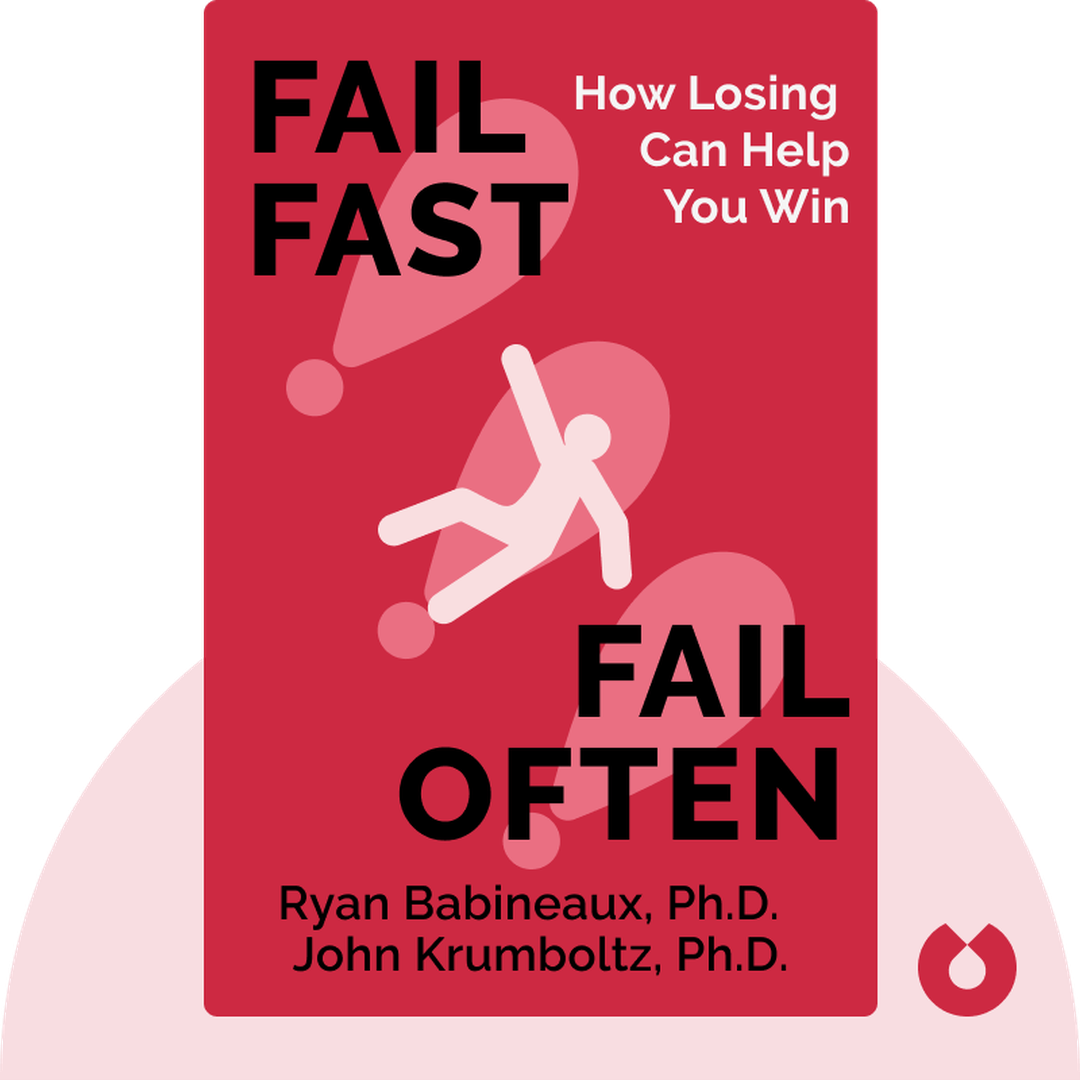
Fail Fast, Fail Often reminds us that our fear of failure can keep us from having new experiences, meeting new people, and creating our own happiness. By embracing failure we can lead happier, more successful lives.
Who Should Listen to Fail Fast, Fail Often?
- Anyone who finds it hard to get up in the morning
- Anyone who’s afraid of failure
- Anyone who desires a happy, fulfilling life
Books Similar to Fail Fast, Fail Often
Readers who enjoyed this also liked these titles.