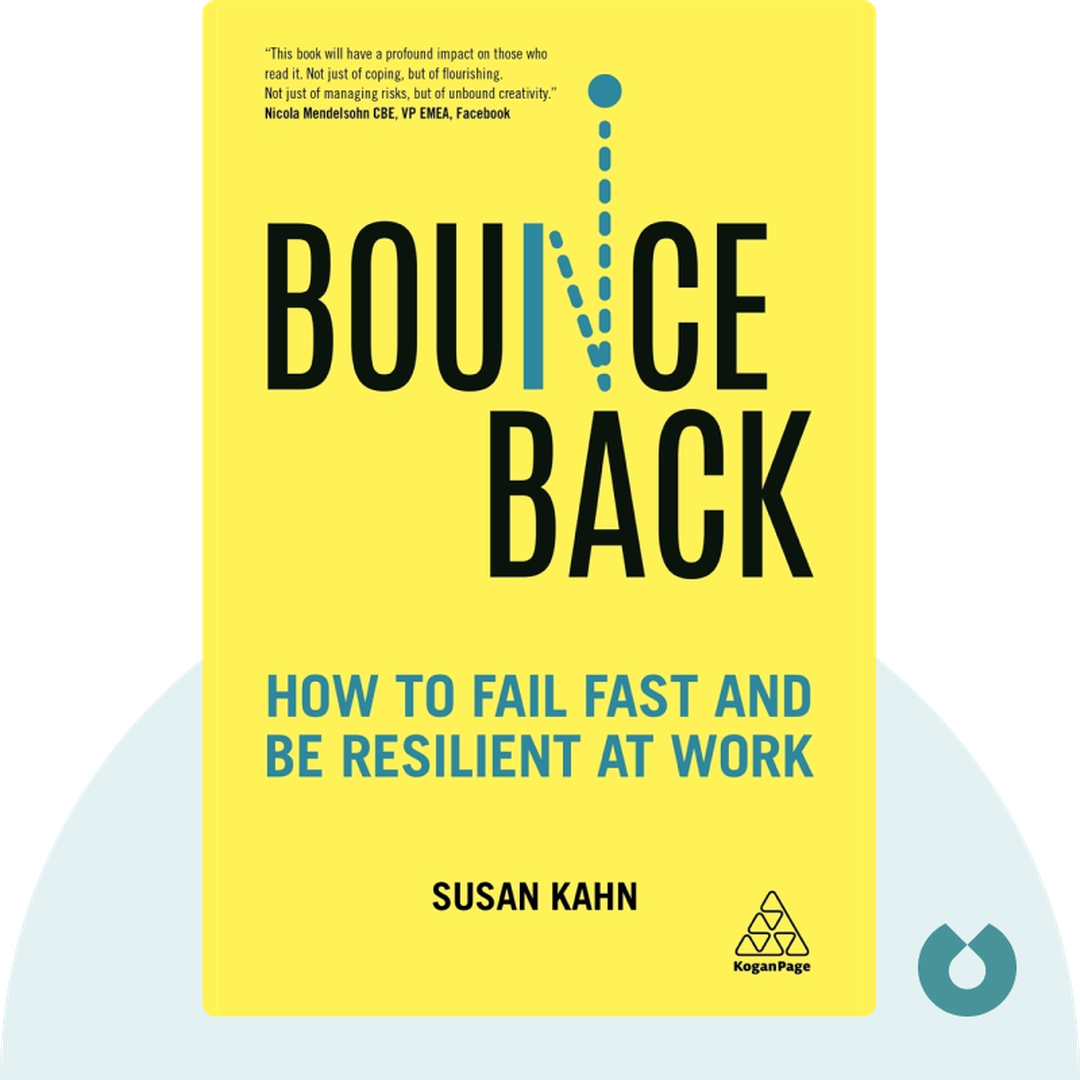
If You're Curious About These Questions...
You should listen to this audiobook
- Have you ever wondered what ancient Greek philosophers and modern neuroscientists both agree is the true secret to surviving a workplace crisis?
- What if you could use insights from Freudian psychoanalysis to completely reframe your fear of failure and take bolder risks in your career?
- Are you curious about the specific psychological techniques that allow top professionals to bounce back from setbacks that would stop most people in their tracks?
Listen to Bounce Back — Free Audiobook
Loading player...
Key Takeaways from Bounce Back
- Understand that true resilience is not just about surviving life's bumpy ride, but about actively adapting and remaining flexible so you can flourish in your workplace.
- Discover why embracing frequent failure is an essential stepping stone to success, guided by the historical setbacks of highly accomplished figures like Michael Jordan and Thomas Edison.
- Learn how to implement a 'fail fast' methodology to test new ideas early, keeping the stakes low and preventing years of wasted investment.
- Overcome the trap of familiarity and professional risk-aversion by setting moderate challenges that encourage creative solutions in today's volatile work environment.
- Explore how unconscious psychological drivers, such as childhood transference and emotional projection, secretly shape your daily behavior and workplace conflicts.
Learning Tools
Reinforce what you learned from Bounce Back
Mind Map
Bounce Back
Concept of Resilience+
Embracing Failure+
Failing Fast+
Psychological Clarity+
Physical Resilience+
Stoicism & Negative Thinking+
Power of Purpose+
Finding Meaning+
Actionable Advice+
Quiz — Test Your Understanding
Question 1 of 9
How does Susan Kahn define 'resilience' in the context of personal development and the workplace?
Question 2 of 9
According to psychologist Denis Waitley, how do the most accomplished individuals and institutions view failure?
Question 3 of 9
What is the primary benefit of adopting a 'fail fast' approach in a modern work environment?
Question 4 of 9
If a professional has unacceptable feelings of hatred toward a coworker and unconsciously decides that the coworker actually hates them instead, which psychological concept is at play?
Question 5 of 9
According to neuroscientist Matthew Walker, why should a relaxing alcoholic 'nightcap' be avoided before bed?
Question 6 of 9
How does the Stoic practice of contemplating worst-case scenarios, such as death or losing one's job, contribute to resilience?
Question 7 of 9
In the book's example of the two overworked teachers, why is Teacher 'B' considered more resilient than Teacher 'A'?
Question 8 of 9
The Japanese concept of 'ikigai' is found at the intersection of four specific questions. Which of the following is NOT one of those questions?
Question 9 of 9
What is the goal of the actionable exercise called 'Turning the Obstacle Upside Down'?
Bounce Back — Full Chapter Overview
- 1Recommendation
- 2To succeed, accept that you’ll fail again and again.
- 3“Fail fast” helps individuals and organizations get the most out of failure.
- 4Your unconscious influences your behavior, and understanding your inner motivations can build resilience.
- 5Sleep is essential for building physical resilience.
- 6Resilience isn’t only about positivity – it also helps to consider everything that might go wrong.
- 7Purpose strengthens resilience and carries us through difficult times.
- 8Only you can decide what makes work meaningful.
- 9Final summary
Bounce Back Summary & Overview
Bounce Back (2020) is an instruction manual for professionals faced by seemingly insurmountable workplace challenges. Drawing on business coach Susan Kahn’s insights into the psychology of resilience, these blinks explore strategies that will help you overcome setbacks and change your thinking. Along the way, you’ll find out what ancient Greek philosophy, Freudian psychoanalysis, and contemporary neuroscience can teach us about the art of resilience.
Who Should Listen to Bounce Back?
- Would-be risk-takers scared of failing
- Managers and team leaders
- Workers worried about disruptive changes
Books Similar to Bounce Back
Readers who enjoyed this also liked these titles.