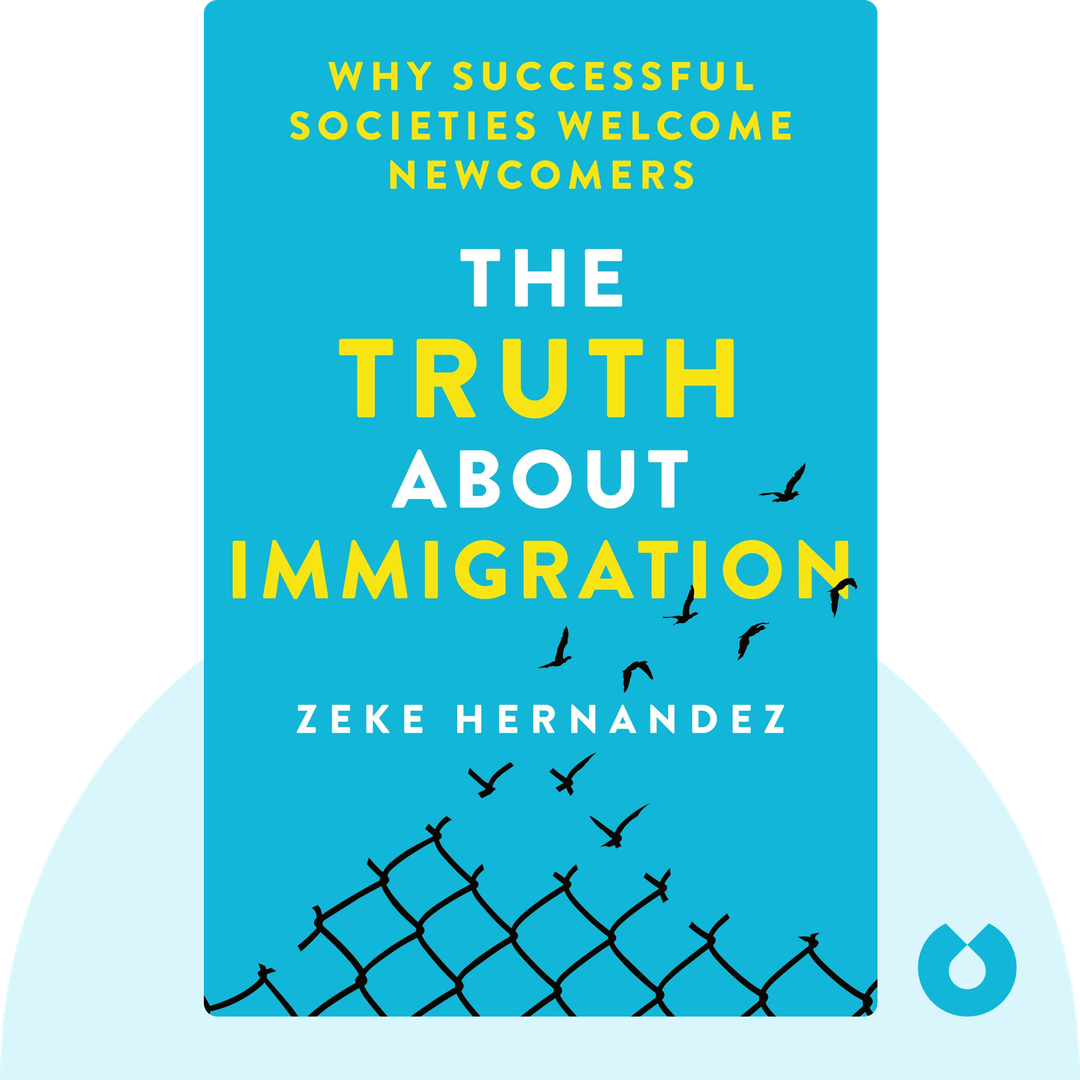
The Truth About Immigration
Start ListeningDownload Try free on iPhoneScan to start in 5 seconds
Categories:
If You're Curious About These Questions...
You should listen to this audiobook
- Did you know that instead of taking jobs, immigration is actually one of the most powerful engines for local job creation and business investment?
- Have you ever wondered how the presence of newcomers can unexpectedly strengthen a nation’s security and long-term innovation?
- What if you could look past the heated political rhetoric to discover the surprising, fact-based truth about how immigration transforms local communities?
Listen to The Truth About Immigration — Free Audiobook
Loading player...
Key Takeaways from The Truth About Immigration
- Discover how immigrant networks drive more sustainable local investment and job creation than traditional, costly government tax subsidies.
- Learn why immigrants are crucial to national innovation, bringing fresh perspectives that lead to higher rates of patent filings and high-growth startups.
- Understand the true fiscal impact of newcomers and how the average immigrant actually contributes a net positive of $259,000 to public finances over their lifetime.
- Find out how immigrants complement rather than displace the native workforce by filling difficult, essential roles, which empowers native workers to specialize in better-paying jobs.
- Recognize why welcoming immigrants is vital for our future, providing the necessary demographic and economic boost required to sustain aging healthcare and social security systems.
Learning Tools
Reinforce what you learned from The Truth About Immigration
Mind Map
The Truth About Immigration
Economic Contributions+
Innovation & Job Markets+
Social Integration & Safety+
Community & Diversity Dynamics+
Immigration Reform+
Quiz — Test Your Understanding
Question 1 of 7
How does the book contrast the economic impact of immigrant networks with traditional government tax incentives?
Question 2 of 7
What is the reality regarding the fiscal impact of immigrants on public resources over the long term?
Question 3 of 7
According to the book, how does the presence of immigrant workers generally affect native-born workers in the job market?
Question 4 of 7
How does the book address the common narrative linking immigration, particularly undocumented immigration, to crime?
Question 5 of 7
How does the author describe the most successful process of immigrants adapting to US society?
Question 6 of 7
What was a major unintended consequence of the strict limits imposed by the 1965 immigration law?
Question 7 of 7
What specific flaw in the current US immigration system is highlighted by the example of Indian graduates seeking employment-based visas?
The Truth About Immigration — Full Chapter Overview
- 1Recommendation
- 2immigrants are crucial actors in local economies
- 3immigrants enhance innovation and public finances
- 4the reality of immigrants and labor markets
- 5integration over assimilation plus community safety
- 6The gains from welcoming newcomers
- 7The Case for Vital Immigration Reform
The Truth About Immigration Summary & Overview
The Truth About Immigration (2024) offers a fact-based, comprehensive, and nonpartisan look at immigration, debunking common myths and fears. It reveals the overwhelmingly positive impact of immigration on job creation, investment, innovation, cultural vitality, and national security, showing how newcomers benefit local communities and the nation as a whole.
Who Should Listen to The Truth About Immigration?
- Policymakers shaping immigration laws
- Community organizers advocating for social integration
- Business leaders interested in workforce diversity
Books Similar to The Truth About Immigration
Readers who enjoyed this also liked these titles.