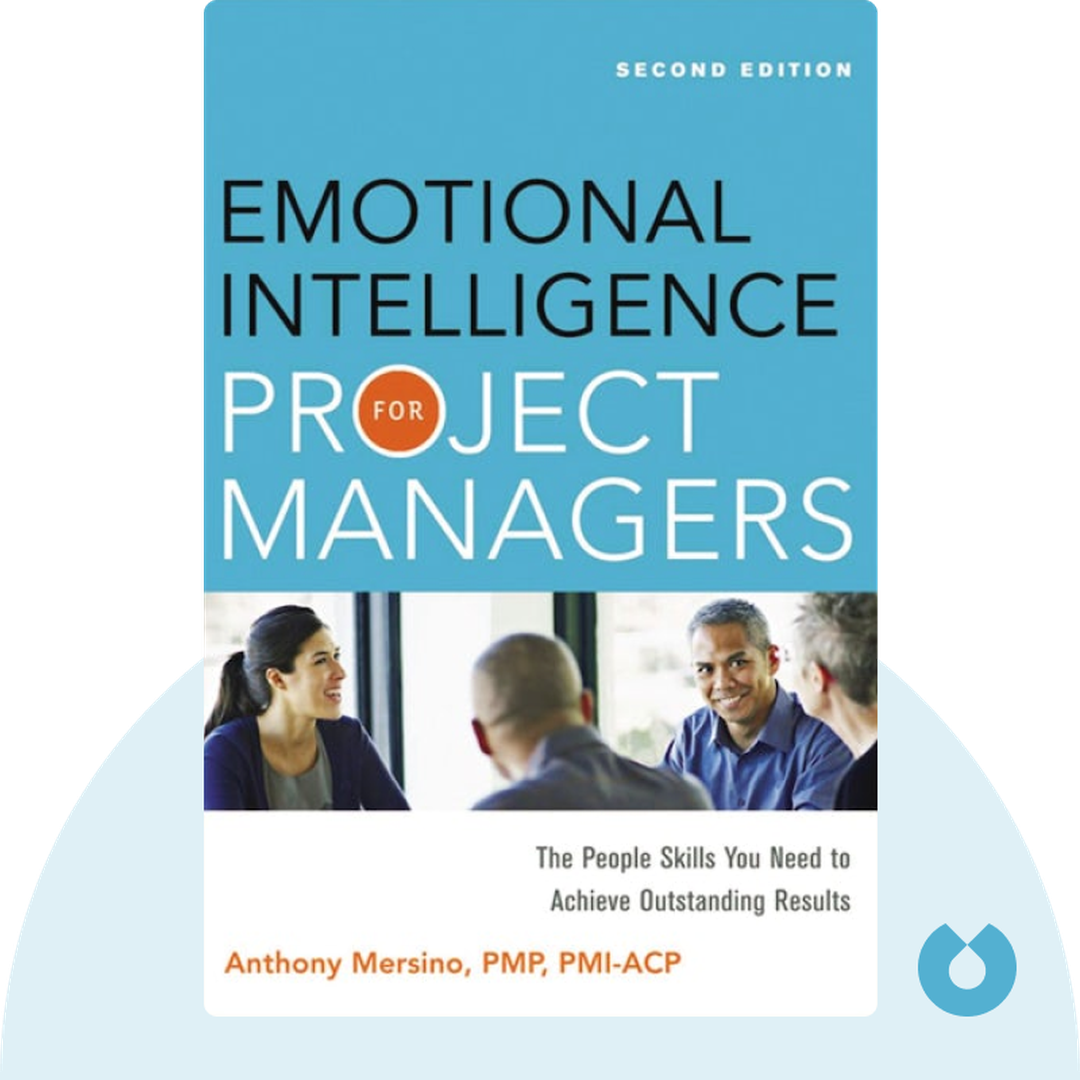
Emotional Intelligence for Project Managers
Start ListeningDownload Try free on iPhoneScan to start in 5 seconds
Categories:
If You're Curious About These Questions...
You should listen to this audiobook
- Have you ever wondered why some technically perfect projects fail while others thrive despite unexpected setbacks?
- Did you know that your emotional intelligence might be a more powerful predictor of project success than your mastery of scheduling tools?
- What's the secret to navigating high-stakes team conflicts without losing momentum or damaging professional relationships?
Listen to Emotional Intelligence for Project Managers — Free Audiobook
Loading player...
Key Takeaways from Emotional Intelligence for Project Managers
- Discover why emotional intelligence, rather than IQ, is the true differentiator for project success and advancing your career in a highly competitive market.
- Master the foundational skill of self-awareness by utilizing the SASHET framework to easily identify and explore your complex daily emotions.
- Learn how to prevent emotional breakdowns through self-management techniques, such as pausing to let your logical brain process triggers before you react.
- Understand your team on a deeper level by developing social awareness, combining empathetic listening with a clear, unbiased assessment of their strengths.
- Find out how to protect yourself from taking on other people's stress by setting strong emotional boundaries and adjusting your communication.
Learning Tools
Reinforce what you learned from Emotional Intelligence for Project Managers
Mind Map
Emotional Intelligence for Project Managers
Value of Emotional Intelligence+
Self-Awareness+
Self-Management+
Social Awareness+
Relationship Management+
Team Leadership+
Quiz — Test Your Understanding
Question 1 of 7
According to the text, what did a study reveal about the relationship between IQ, emotional intelligence, and project success?
Question 2 of 7
What is the primary purpose of the SASHET framework mentioned in the book?
Question 3 of 7
Why does the author suggest pausing to give your neocortex time to process situations?
Question 4 of 7
Which of the following is an example of setting a healthy emotional boundary through language, as recommended in the text?
Question 5 of 7
How should a project manager approach giving targeted feedback to team members?
Question 6 of 7
In the context of team leadership, what does "compromising" require from a project manager?
Question 7 of 7
What actionable advice does the author give for strengthening relationships with stakeholders?
Emotional Intelligence for Project Managers — Full Chapter Overview
- 1Recommendation
- 2Emotional intelligence can help advance your project management career.
- 3Self-awareness is the foundation of emotional intelligence.
- 4Manage your own emotions through self-management.
- 5Understand those around you with social awareness.
- 6Build positive team and stakeholder relationships through relationship management.
- 7Use your emotions to lead your team successfully.
- 8Final summary
Emotional Intelligence for Project Managers Summary & Overview
Emotional Intelligence for Project Managers (2007) builds on the writings of Daniel Goleman, who developed principles of emotional intelligence. Emotional intelligence is crucial in many aspects of life, and in these blinks Anthony Mersino tailors Goleman’s principles specifically to the needs of project managers.
Who Should Listen to Emotional Intelligence for Project Managers?
- Project managers
- Team leaders
- People longing for more humanity in the workplace
Books Similar to Emotional Intelligence for Project Managers
Readers who enjoyed this also liked these titles.