Theme Song
If You're Curious About These Questions...
You should listen to this audiobook
- Did you know that our modern ideas of equality and compassion are actually radical inventions that would have seemed completely alien to the ancient Greeks and Romans?
- Have you ever wondered why even the most secular Westerners are still thinking and acting like Christians, whether they realize it or not?
- Are you curious about how a gruesome instrument of Roman torture became the unlikely catalyst for the most successful cultural revolution in human history?
Listen to Dominion — Cinematic Audio Edition
Loading player...
Key Takeaways from Dominion
- Discover how ancient Persian, Greek, Roman, and Jewish belief systems formed the cultural and philosophical foundation necessary for Christianity to emerge.
- Understand how the Apostle Paul combined Jewish morality, Greek philosophy, and the Stoic concept of conscience to build a doctrine of universal love and redemption.
- Learn why early Christians' willingness to endure gruesome torture without fear scandalized Roman society and upended traditional views on strength and resolve.
- Find out how the ancient scholar Origen synthesized Jewish scriptures with Greek thought to enshrine the Old Testament and establish the concept of the Holy Trinity.
- See how Emperor Constantine's conversion fused Christian theology with Roman bureaucracy and transformed the previously scorned idea of charity into early social welfare systems.
Learning Tools
Reinforce what you learned from Dominion
Mind Map
Dominion
Antiquity & Origins+
Roman Integration+
Medieval Consolidation+
Conquest & Reformation+
Enlightenment & Science+
Modernity's Challenges+
Enduring Legacy+
Quiz — Test Your Understanding
Question 1 of 10
According to the text, how did the ancient Persians justify the gruesome practice of crucifixion?
Question 2 of 10
What was a central argument of Paul's teachings that offered a radical new identity to early Christians?
Question 3 of 10
How did wealthy Christians in the fourth century reconcile their riches with the selfless example of Christ?
Question 4 of 10
What was the primary outcome of the Council of Nicaea convened by Emperor Constantine in 325 CE?
Question 5 of 10
How did Pope Gregory VII significantly alter the power dynamics of Europe during his papacy?
Question 6 of 10
Why was the astronomer Galileo Galilei sentenced to house arrest by the Church?
Question 7 of 10
What paradox does the text highlight regarding the French Revolution and human rights?
Question 8 of 10
How did Charles Darwin’s concept of 'survival of the fittest' challenge a central tenet of Christianity?
Question 9 of 10
Why did Adolf Hitler eventually view Christianity as a challenge to his totalitarian mission?
Question 10 of 10
According to the text, what do the Beatles' music, Martin Luther King Jr.'s activism, and Nelson Mandela's forgiveness all have in common?
Dominion — Full Chapter Overview
- 1Recommendation
- 2Persian, Greek, Roman, and Jewish thought created the world from which Christianity could emerge.
- 3Paul interpreted Jesus’s story as a counterpoint to a weakening Roman society.
- 4When the Roman emperor Constantine converted to Christianity, the religion adopted the trappings of bureaucracy.
- 5As Christianity consolidated power, Christians increasingly saw others as evil – and responded with growing violence.
- 6Under Gregory VII, the Papacy redefined itself as the supreme judge of morality.
- 7The fifteenth century brought fresh challenges to the Papacy – and the Vatican brutally crushed them at every turn.
- 8The rise of Protestantism sparked violence across the world, but also fostered a new intellectualism.
- 9In the eighteenth century, Europeans began using Christianity to define their values.
- 10At the turn of the twentieth century, the Christian faith stood on increasingly shaky ground.
- 11Christian ideas still matter today.
- 12Final summary
Dominion Summary & Overview
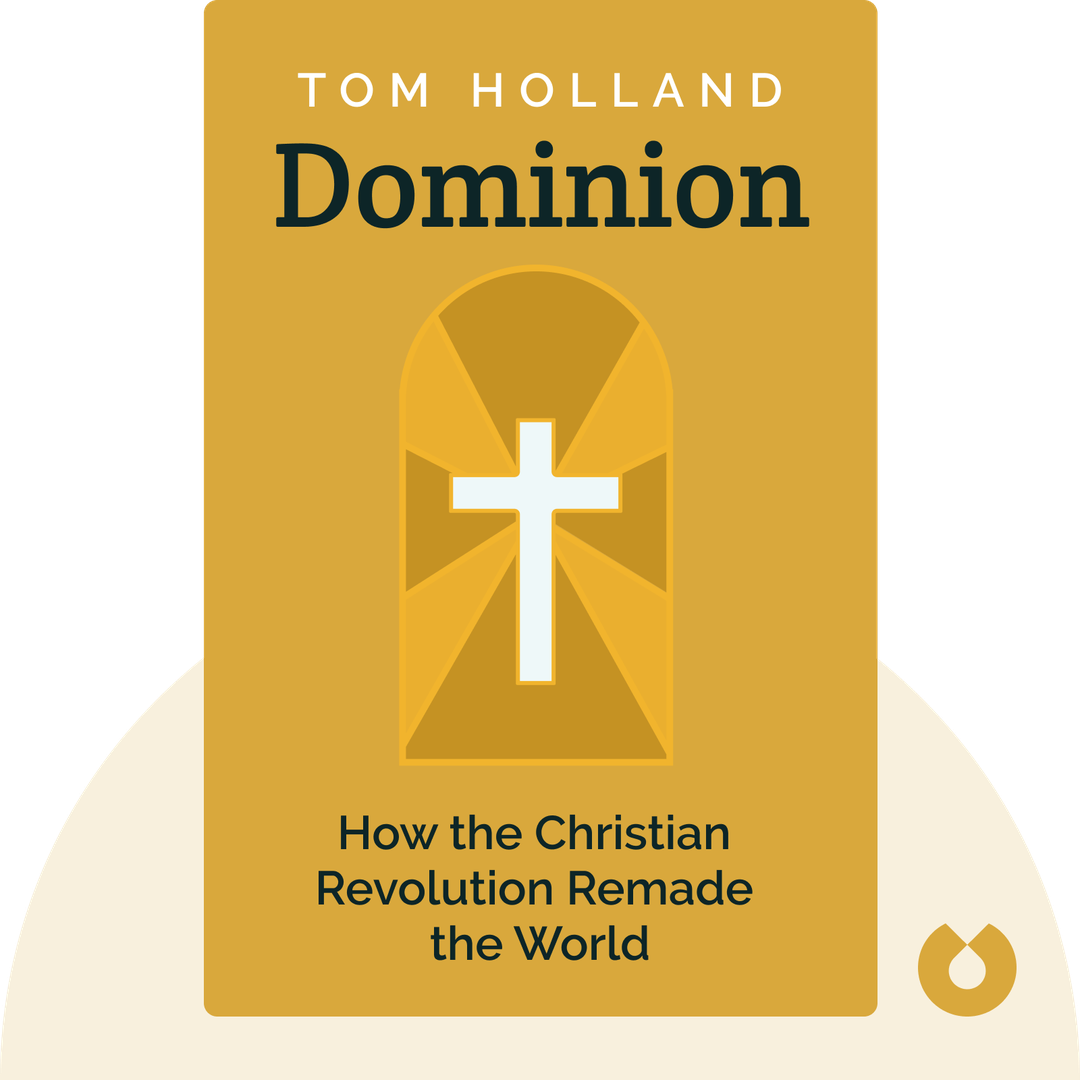
Dominion (2021) is a grandiose look at the impact Christianity has had on the development of the Western mind. From its roots in antiquity to the pop singles of the twentieth century, the story follows the dramatic development of Christian thought over three thousand years.
Who Should Listen to Dominion?
- Lovers of broad-sweep history
- Those looking for an insouciant take on European history
- Anyone who thinks they know what Christianity is all about
Books Similar to Dominion
Readers who enjoyed this also liked these titles.