If You're Curious About These Questions...
You should listen to this audiobook
- Did you know that the food choices you make today could actually reshape the physical health and appearance of your future children?
- Have you ever wondered what the 'four pillars' of human nutrition are, and why almost every modern diet completely ignores them?
- What if the ingredients we’ve been told are heart-healthy are actually the primary cause of modern illness and cellular damage?
Listen to Deep Nutrition — Free Audiobook
Loading player...
Key Takeaways from Deep Nutrition
- Understand why younger generations are experiencing age-related diseases earlier than their grandparents due to the modern shift toward processed, sugar-laden industrial foods.
- Discover how a misplaced fear of saturated fats and cholesterol caused us to replace beneficial, natural foods like butter with artificial trans fats that harm our cardiovascular health.
- Learn why traditional cultures prioritize highly nutritious, mineral-rich diets for expectant parents months before pregnancy to ensure the lifelong well-being of their children.
- Find out how processed vegetable oils introduce unstable polyunsaturated fats into your body, which deplete your brain's natural antioxidants and cause cellular inflammation.
- Recognize why sugar acts as a highly addictive drug that overwhelms your brain's sweetness receptors, leading to dependency and severe cellular damage.
Learning Tools
Reinforce what you learned from Deep Nutrition
Mind Map
Deep Nutrition
The Modern Health Crisis+
Traditional Wisdom+
Modern Dietary Villains+
The Human Diet (Four Pillars)+
Actionable Advice+
Quiz — Test Your Understanding
Question 1 of 7
Why are younger generations experiencing age-related medical issues earlier than their parents and grandparents?
Question 2 of 7
What specific health practice do traditional cultures like the Maasai use to ensure the wellbeing of their children?
Question 3 of 7
How do processed vegetable oils negatively impact brain health?
Question 4 of 7
According to the text, how does sugar physically damage the brain?
Question 5 of 7
Why is cooking meat on the bone considered a pillar of the 'Human Diet'?
Question 6 of 7
What was the root cause of the rise in dwarfism among children in Turkey in the 1960s?
Question 7 of 7
While most plant foods have their highest antioxidant content when eaten fresh and raw, why are carrots an exception to this rule?
Deep Nutrition — Full Chapter Overview
- 1Recommendation
- 2Despite major advances in medicine, our health is getting worse.
- 3Traditional eating habits were designed for health and longevity.
- 4Your brain has its own antioxidant system, but vegetable oils interfere with it.
- 5Sugar is addictive, harms your brain, and is found almost everywhere.
- 6For a healthier diet, eat meat cooked on the bone and organ meats.
- 7Sprouting or fermenting ingredients makes them more nutritious.
- 8The last pillar of the Human Diet: fresh plant foods rich in antioxidants.
- 9Final summary
Deep Nutrition Summary & Overview
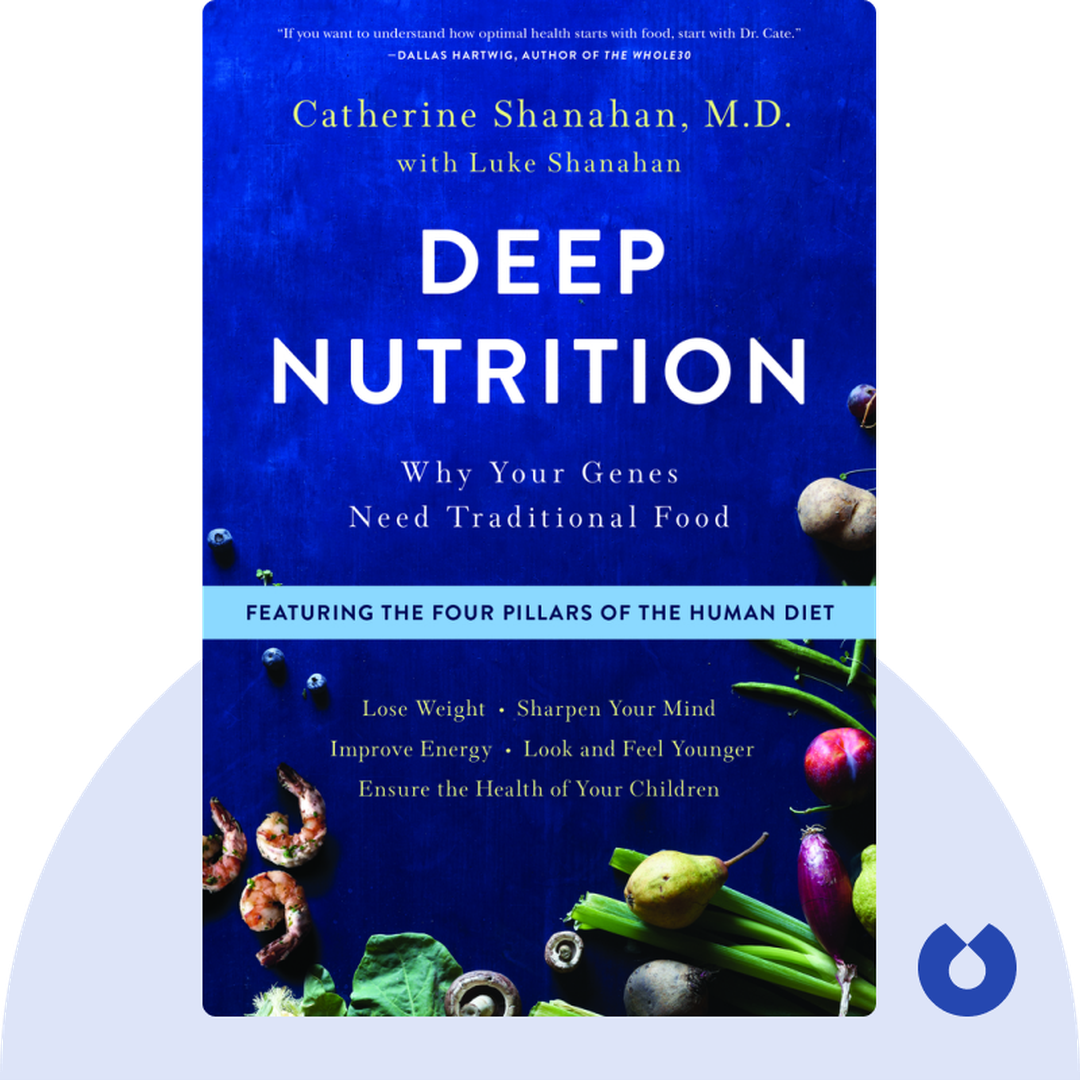
Deep Nutrition (2008) is about modern diets and how they’re making people sick. These blinks explain the danger of industrially produced food, what it’s doing to our bodies and how we can return to an earlier way of eating that will keep us healthier for years to come.
Who Should Listen to Deep Nutrition?
- Couples who want to have kids
- Sick people who can’t seem to get better
- Health enthusiasts
Books Similar to Deep Nutrition
Readers who enjoyed this also liked these titles.