If You're Curious About These Questions...
You should listen to this audiobook
- Have you ever wondered why the tech industry is obsessed with digital disruption while the fundamental systems that sustain our lives—like energy and food—remain stuck in the past?
- What if the next trillion-dollar opportunity isn't found in a new smartphone app, but in the 'Deep Tech' solutions that tackle the world's most ignored physical challenges?
- Did you know that our narrow focus on software might be blinding us to the massive, paradigm-breaking innovations needed to secure humanity’s long-term future?
Listen to Deep Future — Free Audiobook
Loading player...
Key Takeaways from Deep Future
- Discover why the shift from 'shallow' software applications to 'deep tech' is essential for solving humanity's monumental challenges in energy, water, and food production.
- Learn how five interconnected fields—AI, biotechnology, quantum computing, nanotechnology, and advanced materials—are revolutionizing our world by engineering physical atoms instead of digital bits.
- Understand why physical hardware innovation is significantly riskier than software but absolutely vital for creating transformative climate solutions, such as autonomous zero-emission cargo ships.
- Find out why overcoming the fear of nuclear energy is critical for solving the climate crisis, leveraging a clean power source where a fingertip-sized uranium pellet contains the energy of a ton of coal.
- Explore how microscopic deep tech engineering expands what is physically possible, enabling breakthroughs like bacteria that consume plastic waste and self-healing advanced materials.
Learning Tools
Reinforce what you learned from Deep Future
Mind Map
Deep Future
The Deep Tech Paradigm+
Five Pillars of Deep Tech+
Hardware Over Software+
Next-Gen Nuclear Energy+
Food System Innovation+
Reinventing Infrastructure+
Health Tech Revolution+
Quiz — Test Your Understanding
Question 1 of 7
According to the book, what is the primary distinction between 'shallow tech' and 'deep tech'?
Question 2 of 7
Why does the author argue that quantum computing is essential for the future of deep tech?
Question 3 of 7
What major environmental problem in the global shipping industry could deep tech hardware potentially solve?
Question 4 of 7
How do 'traveling-wave reactors' overcome the traditional challenges associated with nuclear energy?
Question 5 of 7
What profound inefficiency in the modern food system does the author believe 3D food printing and dehydration can solve?
Question 6 of 7
What ancient secret did MIT researchers discover about Roman cement that makes it outlast modern concrete?
Question 7 of 7
How does the wearable device developed by Aurnear Labs aim to treat severe inflammation, such as during a stroke?
Deep Future — Full Chapter Overview
- 1Recommendation
- 2Look beyond software
- 3Why deep tech is essential for a livable future
- 4Deep tech must embrace nuclear power
- 5Food and technology can work together
- 6Creating deep tech solutions
- 7The health tech revolution
- 8Final summary
Deep Future Summary & Overview
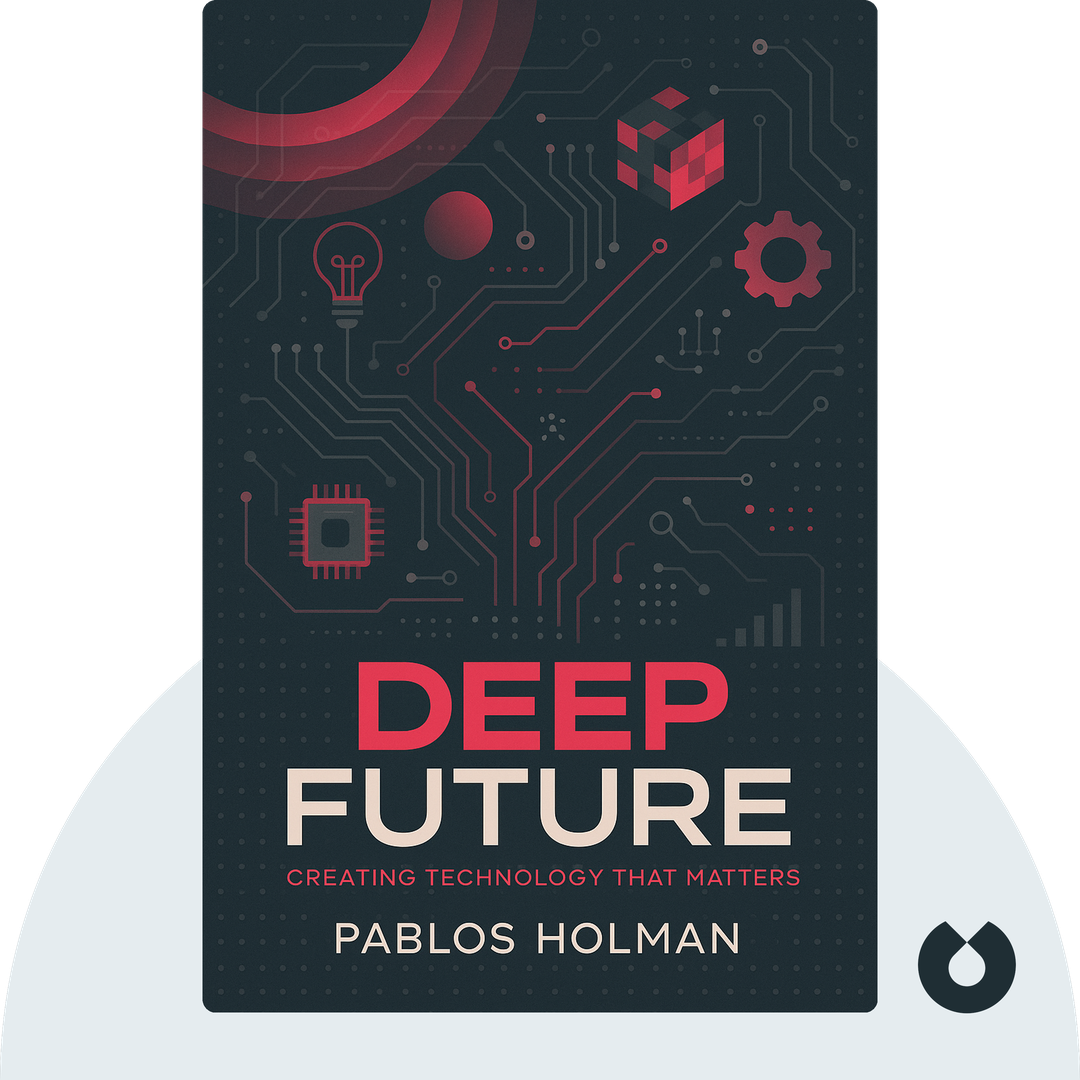
Deep Future (2025) argues that the tech industry has focused too narrowly on software and digital disruption while neglecting the fundamental physical industries that sustain human life: energy, manufacturing, food, and infrastructure. If we think bigger, we can enter an era of "Deep Tech," where advanced technologies will finally tackle these massive, previously ignored challenges that affect everyone on Earth.
Who Should Listen to Deep Future?
- Entrepreneurs who want to solve real problems instead of just launching apps
- Engineers who want to apply their technical skills to meaningful challenges
- Investors who want to identify paradigm-breaking opportunities
Books Similar to Deep Future
Readers who enjoyed this also liked these titles.