If You're Curious About These Questions...
You should listen to this audiobook
- Have you ever wondered why movies keep you on the edge of your seat while most business meetings leave you bored to tears?
- Did you know that the secret to a high-energy, productive meeting isn’t consensus, but actually a specific type of healthy conflict?
- What if you could transform your team's most dreaded hours into a series of engaging, high-stakes sessions that people actually look forward to attending?
Listen to Death by Meeting — Free Audiobook
Loading player...
Key Takeaways from Death by Meeting
- Discover how applying a screenwriting formula to your meetings by injecting early conflict and clearly defining structure can instantly capture your team's attention.
- Understand why embracing constructive conflict and dramatic tension is the essential secret to transforming monotonous gatherings into highly engaging discussions.
- Learn how to implement a structured framework with distinct meeting formats and lengths to ensure every session serves a specific, actionable purpose.
- Find out why scheduling more meetings can actually cure workplace apathy, provided each gathering is intentionally designed to spark debate and resolve issues.
- Master the art of replacing workplace complacency with palpable energy by openly inviting healthy debate and tension into your conference room.
Learning Tools
Reinforce what you learned from Death by Meeting
Mind Map
Death by Meeting
The Core Problem+
Essential Element: Drama & Conflict+
Essential Element: Contextual Structure+
The Transformation+
Quiz — Test Your Understanding
Question 1 of 7
According to the text, what is the primary reason meetings often feel like a monotonous time drain?
Question 2 of 7
Where did Casey's assistant, Will, find the inspiration to fix Yip Software's meeting problem?
Question 3 of 7
Why do many leaders instinctively avoid letting tension surface during meetings?
Question 4 of 7
In the proposed meeting framework, what is the primary purpose of 'regular tactical meetings'?
Question 5 of 7
How should a team handle big-picture, strategic issues that unexpectedly arise during a tactical meeting?
Question 6 of 7
What is the main benefit of implementing a short, daily check-in meeting?
Question 7 of 7
According to the final summary, what is the ultimate solution to the pervasive 'meetings problem'?
Death by Meeting — Full Chapter Overview
- 1Recommendation
- 2The central conflict
- 3A turning point
- 4Meetings require drama
- 5Meetings require contextual structure
- 6Final summary
Death by Meeting Summary & Overview
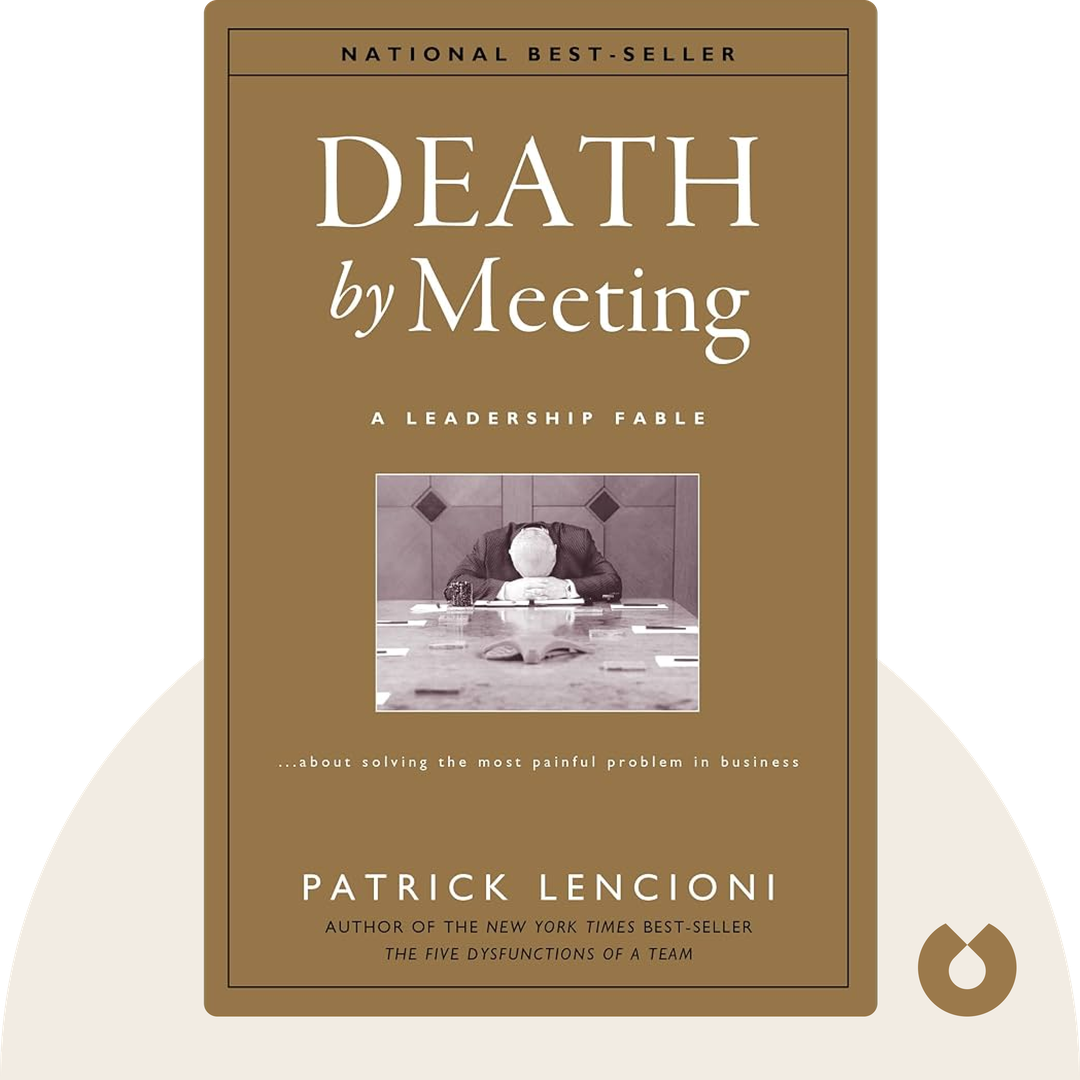
Death by Meeting (2004) is a part-fable, part-instruction guide to the pitfalls of dull and unproductive meetings. It highlights why meetings can be so damaging to team morale and proposes a fresh approach – relying on healthy conflict and a clear purpose – to keep leaders and participants engaged.
Who Should Listen to Death by Meeting?
- Team leaders wanting to enhance meeting effectiveness
- Executives striving to boost team engagement
- Consultants advising clients on best practices for organizational health
Books Similar to Death by Meeting
Readers who enjoyed this also liked these titles.