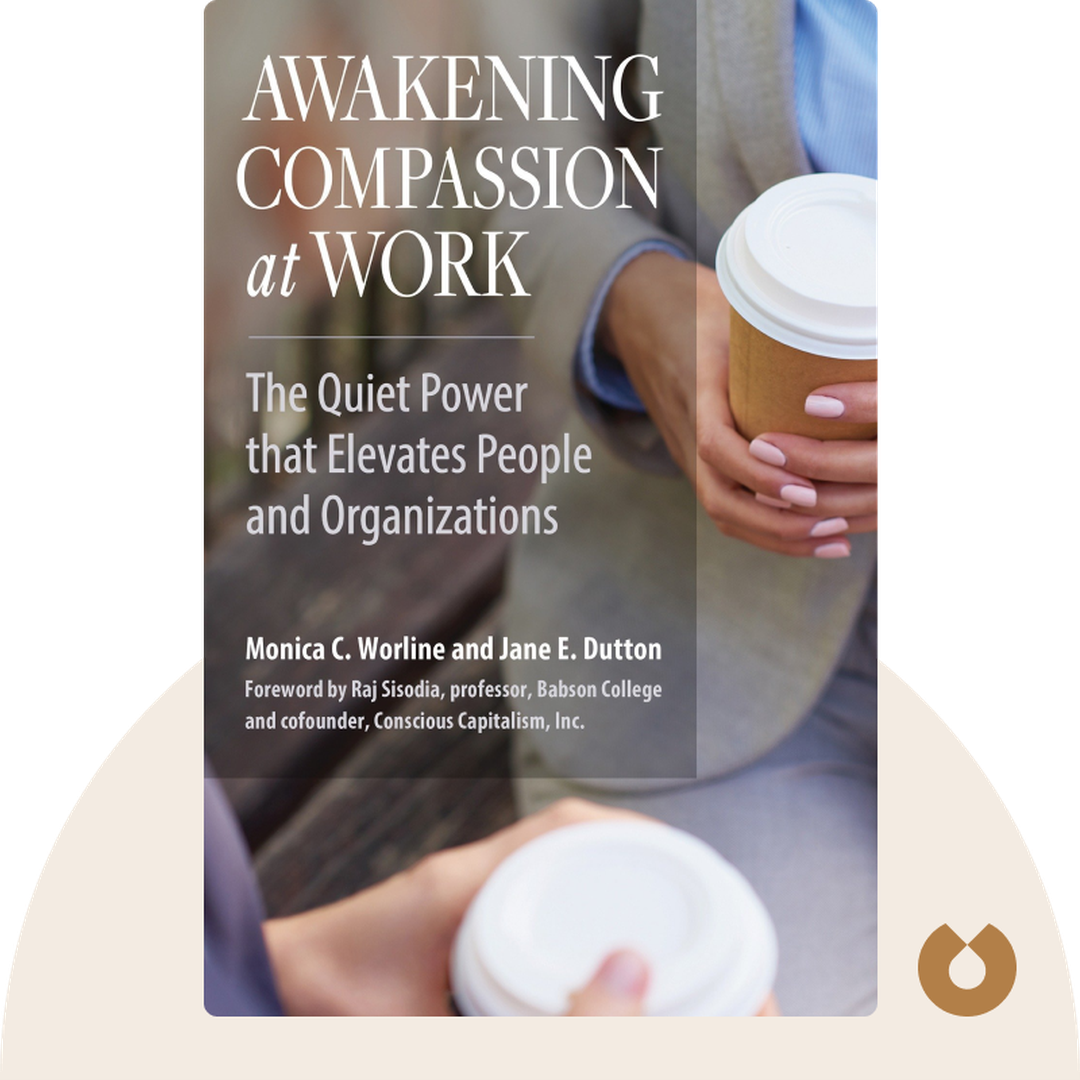
Awakening Compassion at Work
Start ListeningDownload Try free on iPhoneScan to start in 5 seconds
Categories:
If You're Curious About These Questions...
You should listen to this audiobook
- Did you know that the most successful and resilient organizations aren't just driven by metrics, but by a specific, learnable set of compassionate practices?
- What’s the secret to reducing employee burnout and turnover while simultaneously boosting your company’s creative potential?
- Have you ever wondered how a simple shift in communication could transform a toxic workplace culture into a sanctuary of empathy and peak performance?
Listen to Awakening Compassion at Work — Free Audiobook
Loading player...
Key Takeaways from Awakening Compassion at Work
- Understand how cultivating a compassionate workplace directly increases employee productivity, boosts retention, and ultimately improves a company's bottom line.
- Discover how thoughtless management decisions cause unnecessary suffering, and see why compassionate leadership is essential for minimizing this pain and supporting your team.
- Learn how empathy can drive groundbreaking business innovation, as demonstrated by a highly profitable hospital franchise built entirely on a compassionate 'pay what you can' model.
- Find out why companies that prioritize solidarity during crises experience sharp rises in worker motivation, proving that compassion is a core business asset.
- Master the vital tools of inquiry and curiosity to uncover hidden employee struggles, allowing you to offer meaningful support instead of punishing uncharacteristic behavior.
Learning Tools
Reinforce what you learned from Awakening Compassion at Work
Mind Map
Awakening Compassion at Work
The Business Case+
Recognizing Suffering+
Barriers to Compassion+
Cultivating Empathy+
Compassionate Action+
Organizational Culture+
Compassionate Leadership+
Quiz — Test Your Understanding
Question 1 of 8
What did administrative science expert Kim Cameron and a post-9/11 Gallup poll reveal about compassionate companies?
Question 2 of 8
How did Dr. Govindappa Venkataswamy's Aravind Eye hospitals demonstrate that compassion can be a source of business innovation?
Question 3 of 8
According to the authors, what are the vital tools managers need to successfully spot and address employee suffering?
Question 4 of 8
The book identifies three rapid mental 'appraisals' that can shut down compassion in the workplace. Which of the following is ONE of those harmful appraisals?
Question 5 of 8
How does the book define 'cognitive empathy'?
Question 6 of 8
Why do the authors compare showing compassion in the moment to being a jazz musician?
Question 7 of 8
How did Midwest Billing actively engineer a culture of communal compassion among its employees?
Question 8 of 8
What unique approach did Pat Christen, CEO of HopeLab, take to support her employees' personal development?
Awakening Compassion at Work — Full Chapter Overview
- 1Recommendation
- 2Work can be hard, but companies don’t have to make employees suffer.
- 3Compassion improves company performance and can spark innovation.
- 4Spotting suffering at work isn’t always easy, but curiosity and inquiry help.
- 5How people interpret and respond to suffering can either increase or diminish compassion.
- 6Empathy is natural to us, but without imagining others’ perspectives, it can fade.
- 7The goal is compassion in action, whether the gesture is big or small.
- 8Workplaces can be compassionate, and companies can actively foster that culture.
- 9Great leaders act with compassion and encourage others to be empathetic too.
- 10Final summary
Awakening Compassion at Work Summary & Overview
Awakening Compassion at Work (2017) considers the role of compassion in the workplace. It demonstrates the methods individuals and organizations can use to develop a culture of empathy and compassion, and shows how individuals and companies alike can benefit from such an approach.
Who Should Listen to Awakening Compassion at Work?
- Managers and leaders
- Business psychologists
- Overworked employees looking for a new company
Books Similar to Awakening Compassion at Work
Readers who enjoyed this also liked these titles.