If You're Curious About These Questions...
You should listen to this audiobook
- Have you ever wondered what specific economic maneuvers allowed China to transform from a struggling nation into a global superpower in just a few decades?
- Are you curious about the high-stakes strategies top officials use to navigate the delicate balance of competition and cooperation between the US and China?
- Did you know that China’s rapid economic rise came with a set of hidden costs that could determine the future of the global economy?
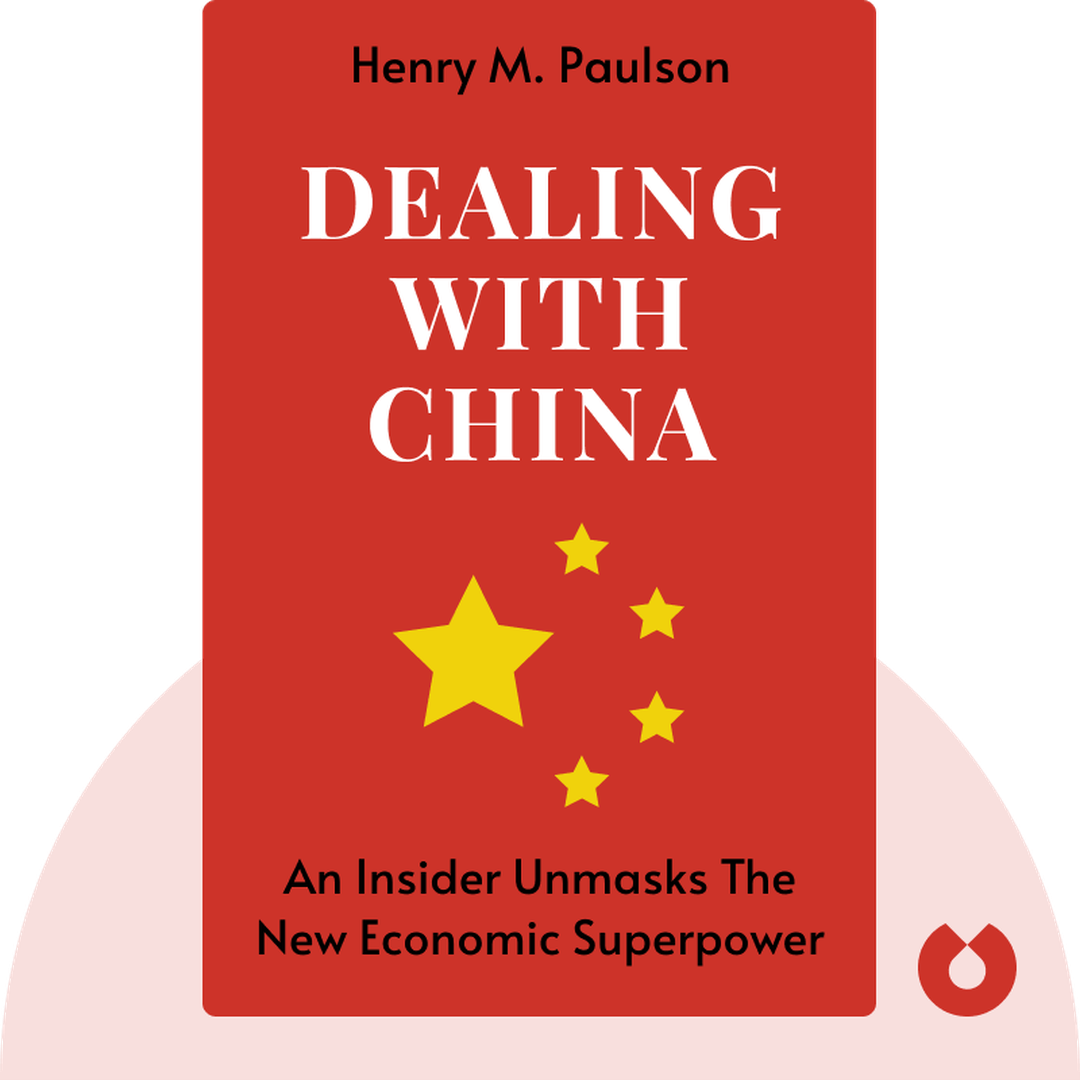
Listen to Dealing with China — Cinematic Audio Edition
Loading player...
Key Takeaways from Dealing with China
- Discover how Deng Xiaoping ignited China's explosive economic growth by empowering state-owned enterprises and creating Special Economic Zones to test Western business practices.
- Understand how the successful privatization of China's telecom sector forced state-owned companies to adopt global accounting standards and sparked widespread domestic competition.
- Learn why modernizing China's inefficient oil monopolies for the global market came at a steep human cost, resulting in tens of millions of devastating layoffs.
- Find out how Chinese universities overhauled their rigid educational models to prioritize western-style critical thinking in order to produce capable business managers.
- Explore how international deregulation trends inspired Chinese leaders to rescue debt-laden enterprises by aggressively selling shares to the public and global markets.
Learning Tools
Reinforce what you learned from Dealing with China
Mind Map
Dealing with China
Economic Reforms+
Industrial Privatization+
Institutional Modernization+
Internal Challenges+
US-China Relations+
Quiz — Test Your Understanding
Question 1 of 8
What was a core policy of Deng Xiaoping's economic reforms that sparked China's initial economic explosion?
Question 2 of 8
What role did Special Economic Zones (SEZs) play in China's economic transformation?
Question 3 of 8
Why was the privatization of state-owned enterprises (SOEs), starting with the telecom sector, considered highly beneficial beyond just raising capital?
Question 4 of 8
What was one of the greatest challenges in restructuring the China National Petroleum Company (CNPC) into a globally competitive entity?
Question 5 of 8
How did Tsinghua University reform its business education to better prepare capable managers for the global marketplace?
Question 6 of 8
According to the text, what is a necessary step for China to avoid an economic meltdown caused by its rapidly growing debt?
Question 7 of 8
Why was the Strategic Economic Dialogue (SED) established between the US and China in 2006?
Question 8 of 8
Why does the author argue that the US should actively support and work with China, despite them being competitors?
Dealing with China — Full Chapter Overview
- 1Recommendation
- 2China’s unmatched economic growth came from sweeping reforms.
- 3Restructuring telecom was crucial to modernizing China’s economy.
- 4China’s oil-sector restructuring shows its economic rise wasn’t entirely smooth.
- 5Banking and education reforms made China more compatible with the global marketplace.
- 6China needs broad political reform to create a sustainable economy.
- 7Better communication strengthened the US-China relationship.
- 8The US and China need to cooperate on global challenges.
- 9Final summary
Dealing with China Summary & Overview
Dealing With China reveals China’s journey to becoming the economic superpower it is today. These blinks explain the advantages and disadvantages of this rapid growth, and offer insights into how the US and China should work together to face today’s global challenges.
Who Should Listen to Dealing with China?
- Anyone interested in the rise of China on the international stage
- Politics buffs keen to learn more about US foreign policy
Books Similar to Dealing with China
Readers who enjoyed this also liked these titles.