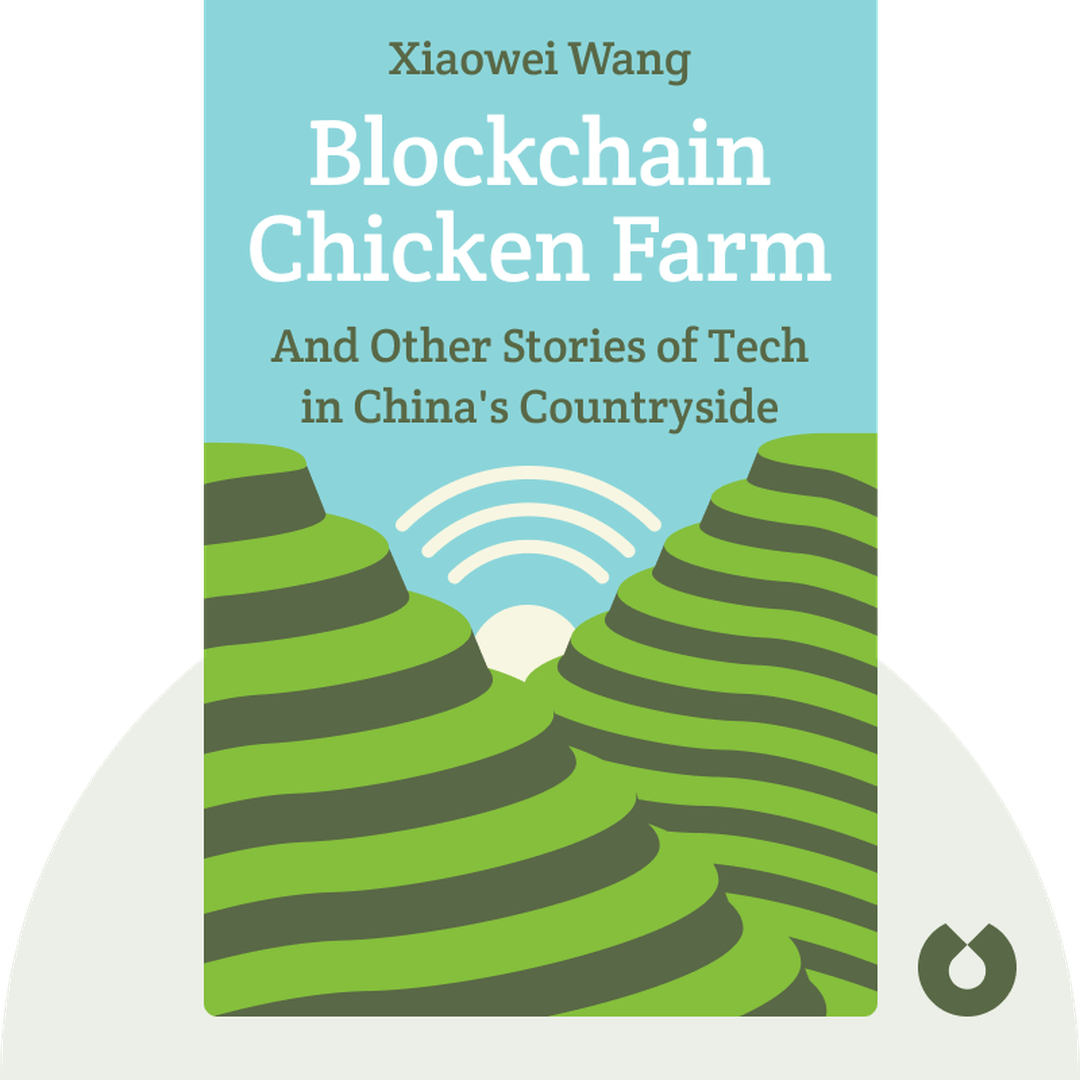
Blockchain Chicken Farm
Start ListeningDownload Try free on iPhoneScan to start in 5 seconds
Categories:
If You're Curious About These Questions...
You should listen to this audiobook
- Why are wealthy urban diners in China scanning blockchain codes to track the entire life cycle of free-range chickens raised in remote mountain villages?
- How has the Chinese concept of 'shanzhai'—traditionally dismissed as the manufacturing of cheap pirated knockoffs—actually fostered a unique, open-source culture of DIY technological innovation?
- What does a cigarette-smoking, nihilistic internet meme of Peppa Pig reveal about the deep economic anxieties and digital hustles of China's disillusioned rural youth?
Listen to Blockchain Chicken Farm — Free Audiobook
Loading player...
Key Takeaways from Blockchain Chicken Farm
- China's modern economic and social development is deeply rooted in the complex, ongoing relationship between its booming megacities and its expansive rural countryside.
- During the 1980s and 90s, flexible rural businesses called Town and Village Enterprises fueled China's economic boom by responding quickly to changing market demands.
- Feeding China's population is a massive logistical challenge, as the country houses 22 percent of the global population but possesses only 7 percent of the world's arable land.
- Due to a highly decentralized agricultural network and past safety scandals, Chinese consumers face significant challenges in trusting the quality and origins of their food.
- To combat food safety issues, rural farmers are using blockchain technology to create unalterable, transparent lifecycle records of premium poultry for urban consumers.
Learning Tools
Reinforce what you learned from Blockchain Chicken Farm
Mind Map
Blockchain Chicken Farm
Urban-Rural Interdependence+
Agricultural Tech & Food Safety+
Education & Opportunity+
Shanzhai Innovation Model+
Realities of State Surveillance+
E-commerce & Taobao Villages+
Youth Culture & Disillusionment+
Quiz — Test Your Understanding
Question 1 of 7
What role did the rural landscape play in China's economic boom of the 1980s and 1990s?
Question 2 of 7
Why did the Chinese company GoGoChicken implement blockchain technology in its farming practices?
Question 3 of 7
How is the company XAG attempting to transform precision agriculture in rural China?
Question 4 of 7
How does the book reframe the concept of 'shanzhai' (often translated as pirated goods)?
Question 5 of 7
What does the book reveal about the reality of China's surveillance state, particularly in places like Guiyang's urban villages?
Question 6 of 7
What is a primary consequence of the rise of 'Taobao Villages' in rural China?
Question 7 of 7
Why has the cartoon character Peppa Pig become a popular mascot for China's 'shehui ren' (society person)?
Blockchain Chicken Farm — Full Chapter Overview
- 1Recommendation
- 2China is shaped by complex urban-rural relationships.
- 3China is using new technologies to keep its food supply safe.
- 4Online learning is changing rural China.
- 5In China, innovation comes from sharing and adapting ideas.
- 6China’s surveillance state raises practical and ethical issues.
- 7Internet commerce connects remote villages to the global economy.
- 8China’s youth face life with both anxiety and ambition.
- 9Final summary
Blockchain Chicken Farm Summary & Overview
Blockchain Chicken Farm (2020) is an examination of the way technology is entangled with everyday life. This sweeping survey of life in rural China unpacks the social, political, and economic changes we can expect in the twenty-first century.
Who Should Listen to Blockchain Chicken Farm?
- Luddites skeptical about the impact of new technologies
- Techno-utopians eager for more critical insights
- Anyone interested in forecasting the future
Books Similar to Blockchain Chicken Farm
Readers who enjoyed this also liked these titles.