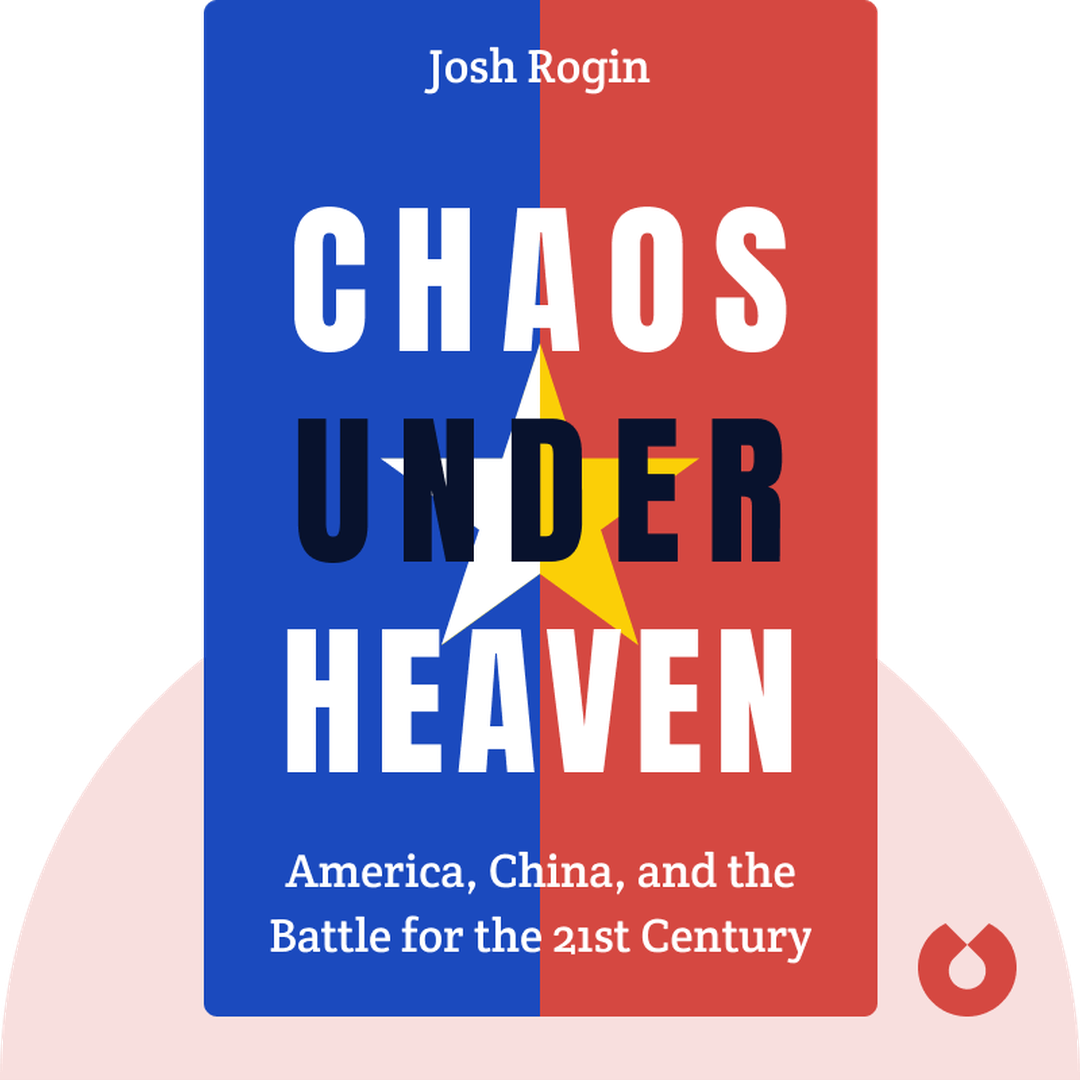
Listen to Chaos Under Heaven — Cinematic Audio Edition
Key Takeaways from Chaos Under Heaven
- 01
The Trump administration's China policy was defined by internal chaos, oscillating between the aggressive stances of 'hawks' like Steve Bannon and the market-friendly approaches of 'doves' like Steven Mnuchin.
- 02
President Trump frequently sidelined crucial geopolitical and human rights issues, such as the sovereignty of Taiwan and the Uyghur internment camps, in favor of pursuing personal rapport with Xi Jinping and a favorable trade deal.
- 03
The Chinese Communist Party actively expands its global influence by infiltrating international bodies like the UN and World Bank, and by funding Confucius Institutes at foreign universities to control global narratives.
- 04
Deep financial entanglement weakens America's negotiating power, as US index funds and retirement accounts funnel billions of dollars into Chinese companies that build military weapons and surveillance technology.
- 05
The early days of the COVID-19 pandemic highlighted Beijing's dedication to secrecy and propaganda, as the regime actively silenced scientists and destroyed evidence to suppress information about the virus's origins.
If You're Curious About These Questions...
You should listen to this audiobook
- How did the intense internal tug-of-war between the 'hawks' and 'doves' within the Trump administration ultimately derail a unified US strategy toward China?
- In what surprising ways are millions of everyday Americans, including former military personnel, unwittingly financing the Chinese military and surveillance state through their retirement funds?
- How does the Chinese Communist Party strategically infiltrate international organizations and foreign universities to expand its global influence and silence critics of its human rights abuses?
Chaos Under Heaven — Full Chapter Overview
- 1Recommendation
- 2The Trump administration grappled with complex challenges in its dealings with China.
- 3From day one, the Trump administration blended China hawks with more dovish voices.
- 4Xi’s visit to Mar-a-Lago signaled the start of drawn-out trade negotiations.
- 5US policy on China shifted whenever trade negotiations rose or fell.
- 6In 2018 and 2019, China’s full record of human rights abuses began to surface.
- 7China operates a highly structured system for exerting influence abroad.
- 8As China’s assertiveness escalated in 2019, efforts to curb its power remained limited.
- 9The onset of COVID-19 showed yet again how the Chinese Communist Party buries the truth.
- 10For the US, managing China is still difficult, not least because of deep financial entanglements.
Chaos Under Heaven Summary & Overview
Chaos Under Heaven (2021) brings to life the behind-the-scenes negotiations and deliberations that dictated the Trump administration’s policy toward China. America’s understanding of the inner workings of the Chinese state has changed a great deal, yet competing interests have so far led to a chaotic response as the US grapples with this foreign policy challenge.
Who Should Listen to Chaos Under Heaven?
- Policy wonks
- News junkies
- People interested in world affairs
Books Similar to Chaos Under Heaven
Readers who enjoyed this also liked these titles.