If You're Curious About These Questions...
You should listen to this audiobook
- Did you know that the 'therapeutic' roots of traditional coaching might actually be preventing your team from reaching its full potential in a high-stakes business environment?
- What if the secret to a professional breakthrough isn't comfort, but learning how to master the 'tension' and 'accountability' that most leaders try to avoid?
- Have you ever wondered how shifting from purely supportive to 'challenging' coaching could help you and your team achieve goals that currently seem impossible?
Listen to Challenging Coaching — Free Audiobook
Loading player...
Key Takeaways from Challenging Coaching
- Discover why traditional coaching's roots in support-oriented psychotherapy actually limit its effectiveness in the modern corporate world.
- Understand the three core principles of traditional coaching—being non-directive, sticking to the client's agenda, and building rapport—and why they hinder leader development.
- Learn how an overly supportive coaching style can lead to dangerous corporate consequences like coach-client collusion, irrelevant sessions, and leader self-obsession.
- Find out why coaches must abandon the non-directive myth and actively challenge robust clients to push them out of their comfort zones and break through growth barriers.
- Explore the FACTS approach to coaching, a modern alternative that replaces ego-fueling praise with honest feedback, accountability, and a focus on the organization's bigger picture.
Learning Tools
Reinforce what you learned from Challenging Coaching
Mind Map
Challenging Coaching
Origins & Flaws of Traditional Coaching+
The FACTS Approach+
Quiz — Test Your Understanding
Question 1 of 8
What is the primary problem with traditional coaching's roots in counseling and psychotherapy, according to the text?
Question 2 of 8
Which of the following is considered one of the three core principles of traditional coaching derived from person-centered therapy?
Question 3 of 8
According to the FACTS approach, what does the acronym 'ZOUD' stand for?
Question 4 of 8
Why do traditional coaches often avoid giving honest feedback to their clients?
Question 5 of 8
How does the FACTS approach suggest coaches handle client accountability differently than traditional coaching?
Question 6 of 8
Why does the FACTS model criticize traditional goal-setting frameworks like SMART or PRISM?
Question 7 of 8
What lesson does the FACTS approach draw from the story of wrestler Alexander Karelin?
Question 8 of 8
What is the main purpose of 'System Thinking' in the FACTS coaching model?
Challenging Coaching — Full Chapter Overview
- 1Recommendation
- 2Traditional coaching was mainly shaped by support-oriented professions.
- 3This support-oriented foundation created three core coaching principles.
- 4These core principles restrict progress and carry serious risks.
- 5FACTS-based coaching is far more effective than traditional coaching.
- 6F: Coaches must get past their fear of giving Feedback.
- 7A: Clients must be held Accountable for what they commit to.
- 8C: Courageous Goals are essential for success in today’s business environment.
- 9T: Tension is necessary for peak performance.
- 10S: System Thinking helps stop individuals from bringing down entire companies.
- 11Final summary
Challenging Coaching Summary & Overview
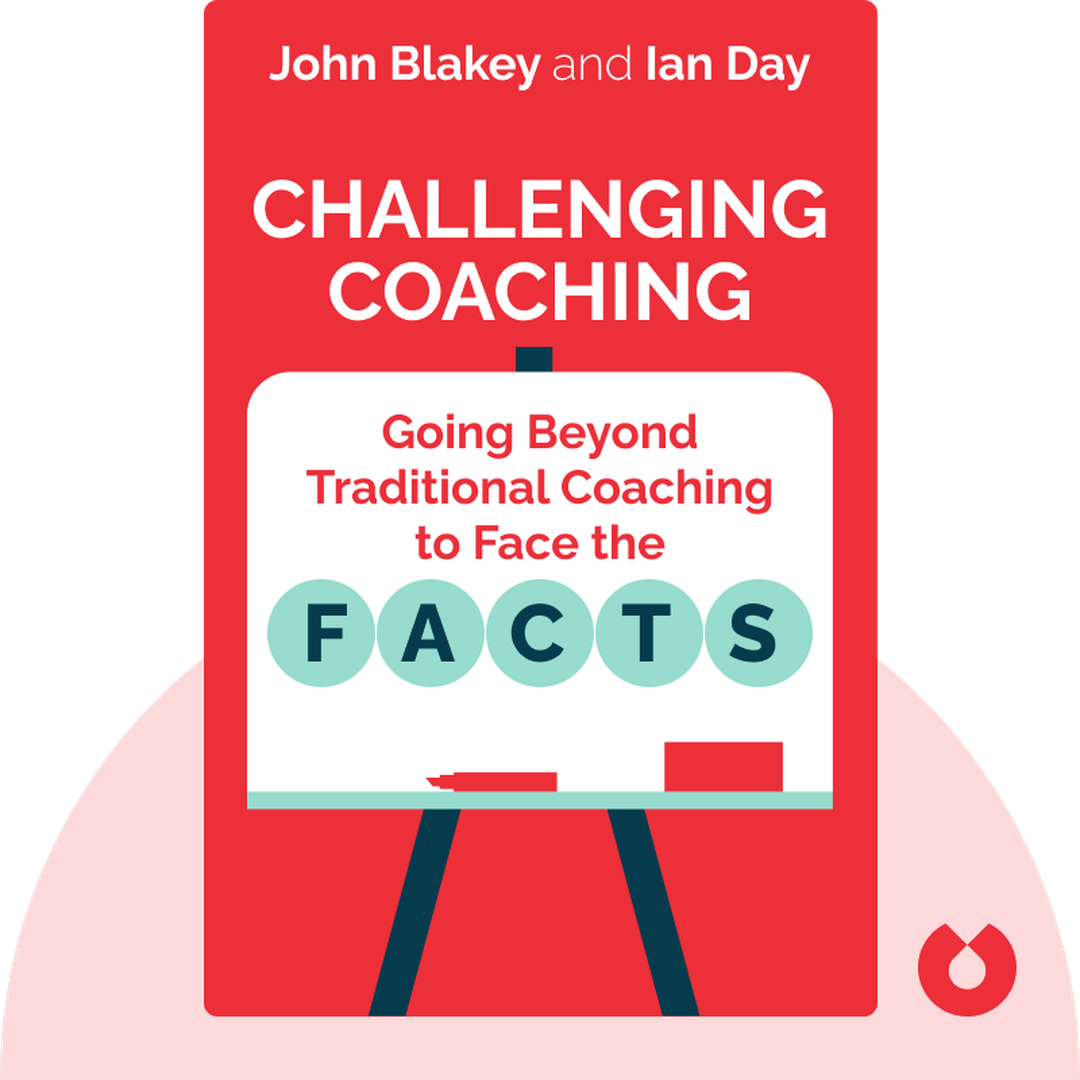
Challenging Coaching argues that traditional coaching is limited by its therapeutic origins. Blakey and Day introduce a better alternative for the twenty-first century business environment: the FACTS approach. Its emphasis on demanding challenging Feedback, Accountability, Courageous Goals, Tension and Systems Thinking drives a client to achieve their full potential.
Who Should Listen to Challenging Coaching?
- Anyone interested in coaching or being coached
- Anyone interested in peak performance
Books Similar to Challenging Coaching
Readers who enjoyed this also liked these titles.