If You're Curious About These Questions...
You should listen to this audiobook
- Did you know that every human is hardwired with eight basic biological desires that dictate almost every buying decision we make?
- Have you ever wondered why some simple, low-budget ads generate massive profits while expensive, flashy campaigns often fall flat?
- What’s the secret to using specific psychological triggers in your advertising to bypass a customer’s skepticism and spark an immediate urge to buy?
Listen to Cashvertising — Cinematic Audio Edition
Loading player...
Key Takeaways from Cashvertising
- Understand the eight hard-wired human desires, known as the Life-Force 8, and learn how to trigger them to transform unmet needs into guaranteed sales.
- Master the four-ingredient recipe for using fear in advertising by scaring your audience just enough before providing a highly effective, easy-to-implement solution.
- Discover how to tap into consumers' need for social approval by intentionally associating your products with desirable traits like success, youthfulness, and attractiveness.
- Learn how to instantly boost your ad's credibility by successfully transferring the trusted authority of established institutions or celebrities directly to your brand.
- Find out why you don't need outstanding creativity to write irresistible ads once you master the biological process of turning customer tension into purchasing action.
Learning Tools
Reinforce what you learned from Cashvertising
Mind Map
Cashvertising
Core Psychology (Life-Force 8)+
The Fear Recipe+
Ego and Authority+
Elaboration Likelihood Model+
Copywriting Tactics+
Visuals and Aesthetics+
Placement and Conversion+
Quiz — Test Your Understanding
Question 1 of 10
According to the book, what is the biological pattern that marketers rely on to drive consumer action?
Question 2 of 10
When using fear in an advertisement, why is it important not to create too much fear?
Question 3 of 10
How can a marketer effectively transfer authority to their product without hiring an actual expert or celebrity?
Question 4 of 10
According to the Elaboration Likelihood Model, how should an ad for a high-relevance, expensive product (like a house or car) be structured?
Question 5 of 10
What is the most critical element to include first in your ad's headline to entice people to keep reading?
Question 6 of 10
According to a Gallup Research Bureau study on image preferences in ads, which type of picture do readers prefer most?
Question 7 of 10
What did the Dr Pepper Snapple Group discover when they changed the background color of their Sugar-Free Root Beer cans from blue to beige?
Question 8 of 10
Contrary to the belief that modern consumers are too busy to read, what is the truth about using long copy in advertising?
Question 9 of 10
Based on research by Starch INRA Hooper, where is the most effective place to put a single-page magazine ad for maximum recall?
Question 10 of 10
If you can only afford a half-page ad, what technique can you use to increase the attention it receives by 76 percent?
Cashvertising — Full Chapter Overview
- 1Recommendation
- 2Great advertising appeals to your customers’ deepest desires.
- 3Fear-based ads rely on four simple ingredients.
- 4People buy to satisfy their egos, and marketers can use that.
- 5Authority makes your ad more credible.
- 6Different products call for different types of ads.
- 7Build the perfect headline in three simple steps.
- 8Use images in your ads — but choose them carefully.
- 9The right colors can make a big difference.
- 10Don’t fear longer copy; it won’t drive customers away.
- 11Effective ad placement is backed by science.
- 12Final summary
Cashvertising Summary & Overview
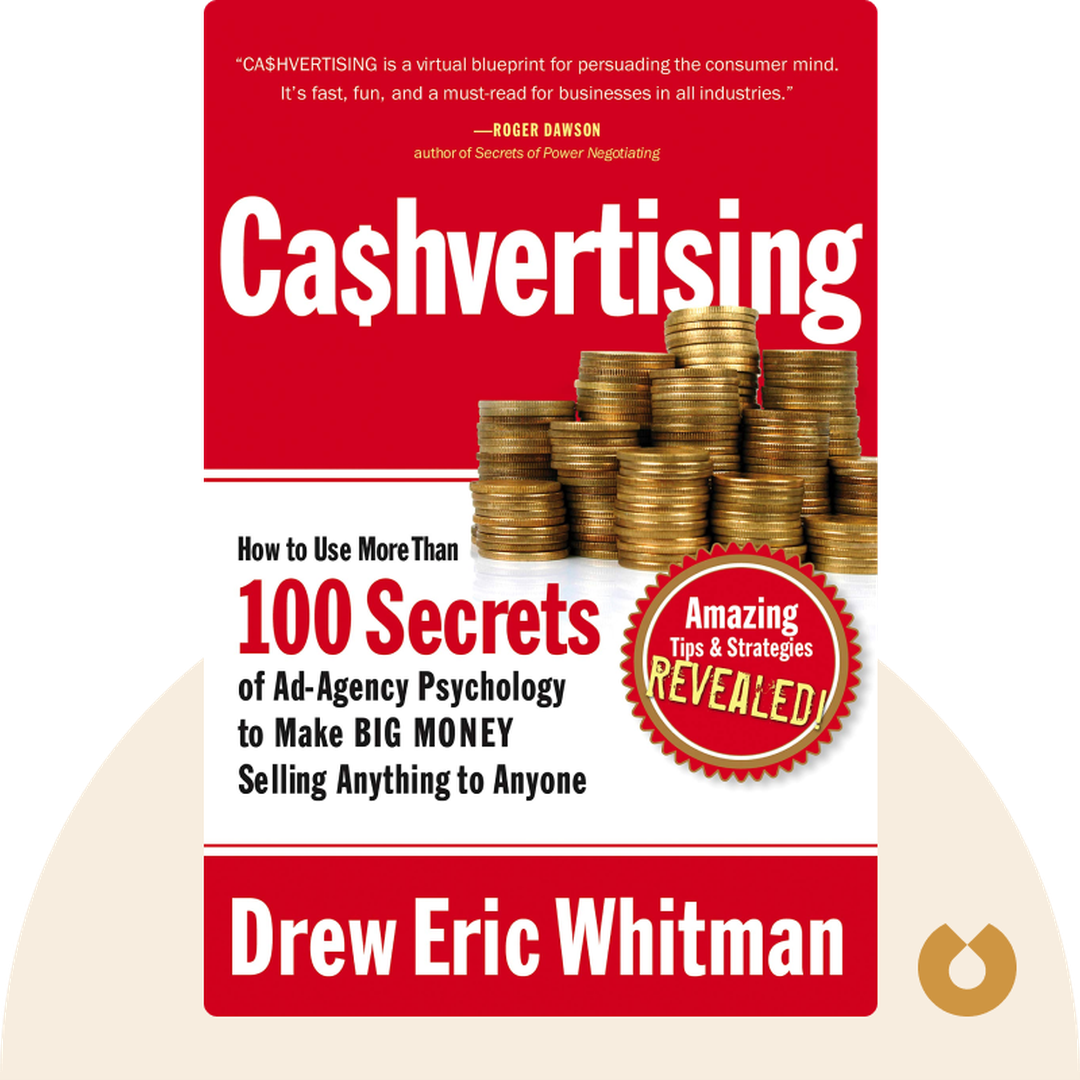
Cashvertising (2009) shows how you don’t need a million dollar ad campaign to bring in the customers. All you need to know is how and why we make buying decisions. Full of instantly actionable tips, this book tells you everything you need to know about how to turn your ads into profits.
Who Should Listen to Cashvertising?
- Businesspeople who want to know more about consumer marketing
- Anyone interested in the psychological secrets behind advertising
- Professionals eager to become savvier marketers
Books Similar to Cashvertising
Readers who enjoyed this also liked these titles.