If You're Curious About These Questions...
You should listen to this audiobook
- Have you ever wondered why it’s often easier to imagine a global apocalypse than it is to imagine a world without capitalism?
- Did you know that the modern mental health crisis might be deeply linked to the way our economic system 'privatizes' stress?
- Are you curious about how the logic of the marketplace has quietly taken over non-business spaces like schools, hospitals, and even our personal identities?
Listen to Capitalist Realism — Free Audiobook
Loading player...
Key Takeaways from Capitalist Realism
- Understand the concept of 'capitalist realism' and why it conditions society to believe that envisioning the end of the world is easier than imagining an alternative to capitalism.
- Discover how global capitalism transforms culture into mere commodities, evaluating art and literature solely by their market value rather than their intrinsic human significance.
- Learn why today's youth suffer from 'reflexive impotence,' a deep-seated sense of powerlessness where systemic obstacles make meaningful societal change feel like an unrealistic fantasy.
- Recognize how treating modern mental health crises as isolated individual failures distracts us from the larger societal and capitalist structures that actively contribute to these conditions.
- Explore the shift toward 'societies of control,' where bureaucratic loops and consumer-oriented education systems stifle critical thinking and condition individuals to police their own behavior.
Learning Tools
Reinforce what you learned from Capitalist Realism
Mind Map
Capitalist Realism
The Concept of Capitalist Realism+
Reflexive Impotence & Control+
Market Stalinism+
The Marxist Supernanny+
Quiz — Test Your Understanding
Question 1 of 7
How does the text define the core concept of 'capitalist realism'?
Question 2 of 7
According to the text, how has capitalist realism affected cultural artifacts like art, music, and literature?
Question 3 of 7
What does the term 'reflexive impotence' refer to in the context of today's youth?
Question 4 of 7
In Deleuze's 'societies of control,' how is the educational experience primarily altered?
Question 5 of 7
What is the central paradox of 'Market Stalinism'?
Question 6 of 7
Which of the following best describes the outcome of 'bureaucratic anti-production'?
Question 7 of 7
How does the concept of the 'Marxist Supernanny' critique modern parenting and societal norms?
Capitalist Realism — Full Chapter Overview
- 1Recommendation
- 2Imagining a world beyond capitalism
- 3Freeing ourselves from reflexive impotence
- 4The paradox of market Stalinism
- 5The Marxist supernanny
- 6Final summary
Capitalist Realism Summary & Overview
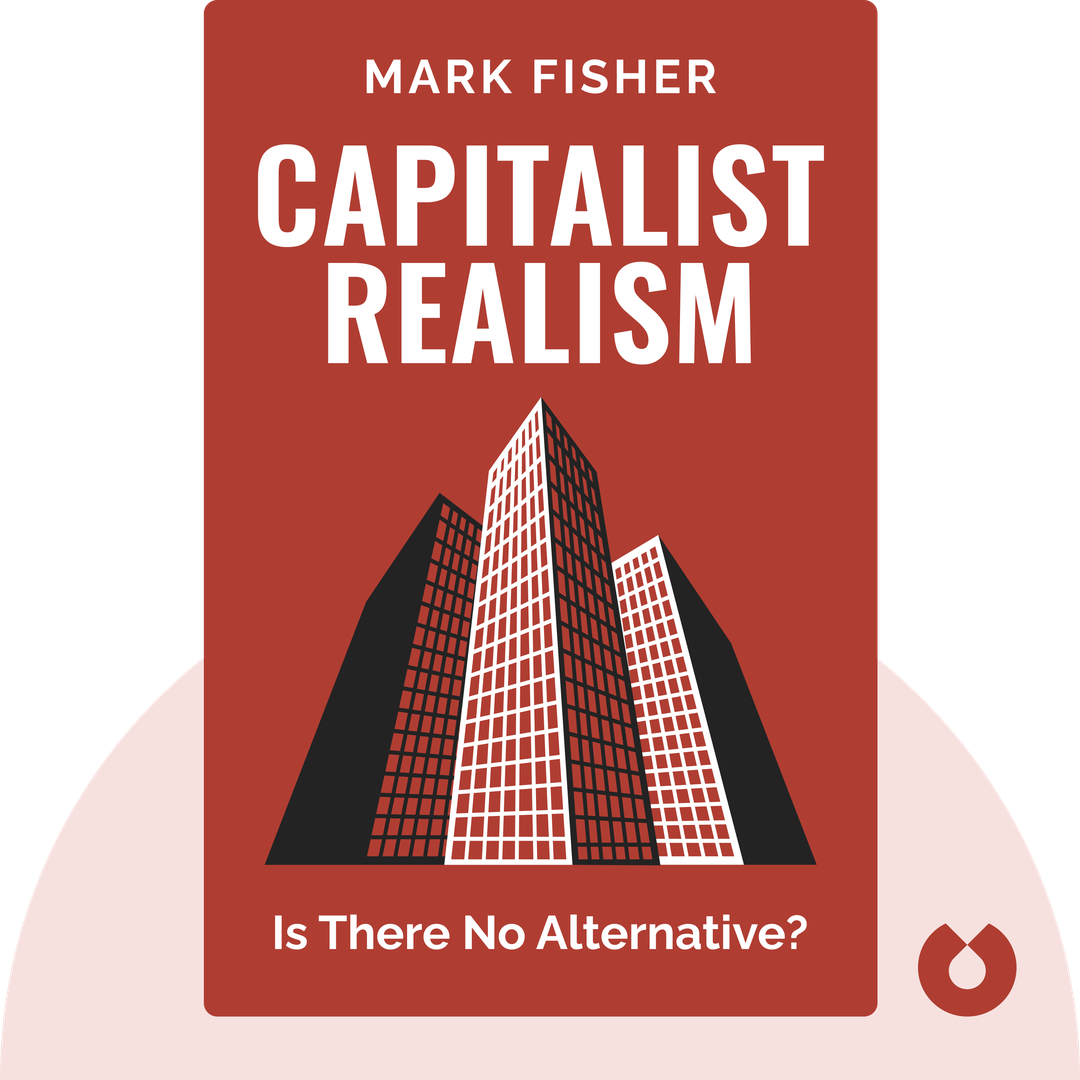
Capitalist Realism (2009) offers an analysis of how contemporary society is shaped and constrained by capitalist ideology. You'll explore the concept of “capitalist realism” – the pervasive sense that no alternative to capitalism is possible. This influential work challenges you to consider the psychological and cultural impacts of living under such a dominant economic system, prompting a reevaluation of societal structures and personal beliefs.
Who Should Listen to Capitalist Realism?
- Anyone feeling let down by our current social or economic systems
- Activists seeking insights on capitalist influence in society
- Students of political theory or philosophy
Books Similar to Capitalist Realism
Readers who enjoyed this also liked these titles.