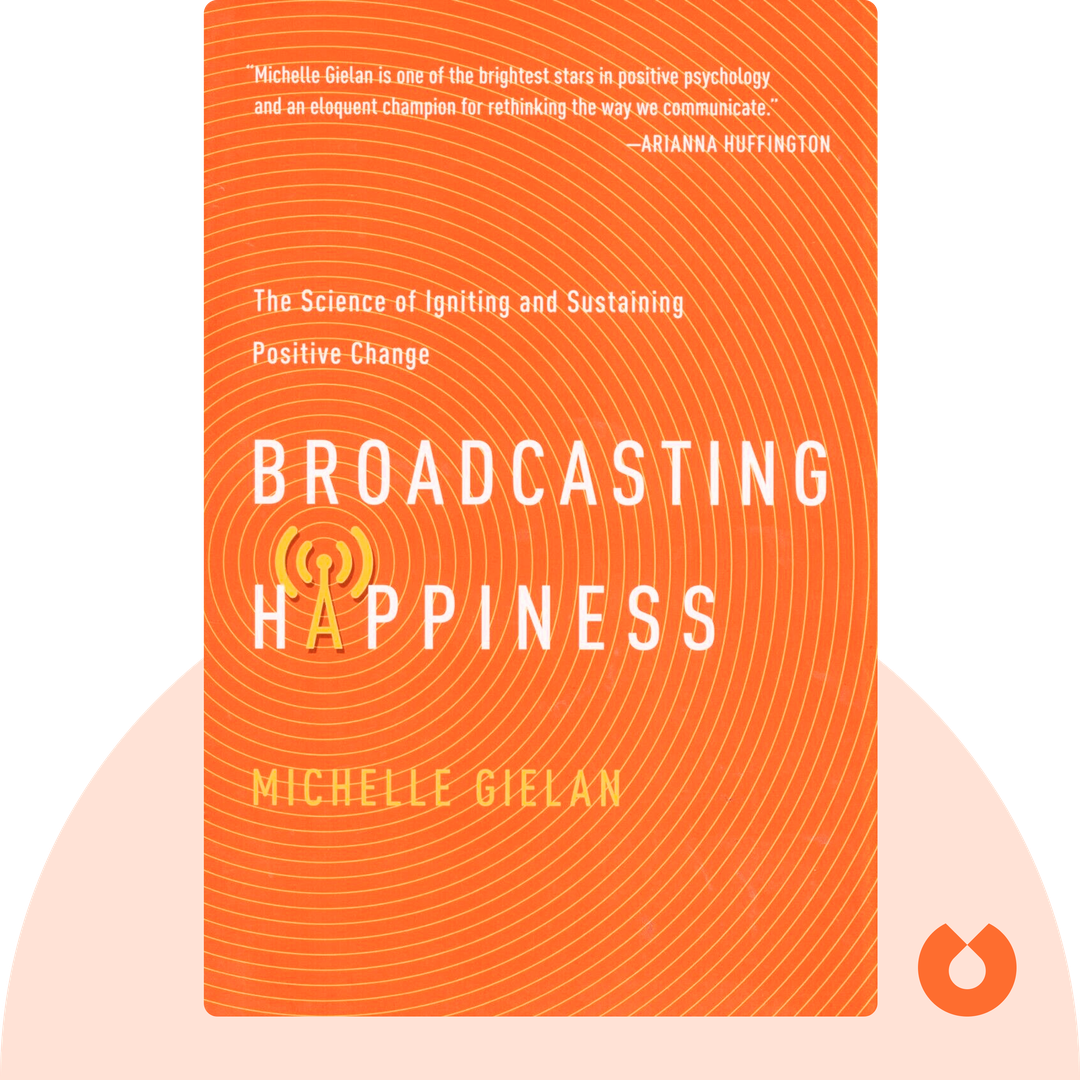
Broadcasting Happiness
Start ListeningDownload Try free on iPhoneScan to start in 5 seconds
Categories:
If You're Curious About These Questions...
You should listen to this audiobook
- What if you could boost your team’s productivity and well-being just by changing the way you start a conversation?
- Have you ever wondered why some people have the power to instantly shift the mood of an entire room and spark a positive ripple effect?
- What’s the secret to communicating stressful news in a way that actually inspires action instead of causing anxiety?
Listen to Broadcasting Happiness — Free Audiobook
Loading player...
Key Takeaways from Broadcasting Happiness
- Discover how creating positive "flash memories" through shared success stories can dramatically transform a negative culture and shape future achievements.
- Understand why positive storytelling is so powerful that it can actually improve your physical health, memory, and intelligence, as proven by a remarkable Harvard study.
- Learn how to deliver optimistic, solution-oriented messaging during difficult times to engage and uplift others without artificially sugarcoating reality.
- Find out why simply being internally optimistic isn't enough, and learn how to uncover "shy optimists" in your workplace to overpower vocal pessimists and build a contagious, positive team culture.
- Master the art of priming your team for effective collaboration by strategically using positive words that subconsciously encourage respectful and cooperative behavior.
Learning Tools
Reinforce what you learned from Broadcasting Happiness
Mind Map
Broadcasting Happiness
The Broadcasting Concept+
Flash Memories & Attitudes+
Power of Positive Storytelling+
Building Positive Teams+
Priming for Cooperation+
Sharing Bad News (The 4 Cs)+
Quiz — Test Your Understanding
Question 1 of 8
According to the text, what is the core concept of 'broadcasting' as applied to personal communication?
Question 2 of 8
How did Dr. Richard Cole successfully transform the culture and graduation rate at Sunnyside High School?
Question 3 of 8
What surprising result emerged from Dr. Ellen Langer’s 1979 'Welcome to the year 1959!' experiment?
Question 4 of 8
Why did the author and Dr. Martin Seligman pioneer CBS’s 'Happy Week' during the 2008 financial crisis?
Question 5 of 8
According to the cross-industry study mentioned in the text, what is a common barrier to building a positive team?
Question 6 of 8
What did the Stanford University 'language test' and the 'intelligent professor' study demonstrate about human behavior?
Question 7 of 8
When delivering bad news constructively, what does the principle of 'Social capital' refer to?
Question 8 of 8
How does the author suggest handling a situation where a person's negativity becomes too overwhelming during a conversation?
Broadcasting Happiness — Full Chapter Overview
- 1Recommendation
- 2Your memories of past experiences shape how you face future challenges.
- 3Sharing positive messages through storytelling can be powerful enough to improve your health.
- 4How can you build a positive team? Encourage positive talk and let optimism spread.
- 5Sharing motivating thoughts can prime your team to work together effectively.
- 6Bad news is unavoidable, but sharing it the right way can always improve the situation.
- 7Final summary
Broadcasting Happiness Summary & Overview
Broadcasting Happiness (2015) reveals the huge impact positivity has on productivity, teamwork and well-being. These blinks explain how you can communicate positive thoughts to send ripples of happiness through your community, your workplace and within your relationships.
Who Should Listen to Broadcasting Happiness?
- Anyone wanting to improve their communication skills
- Journalists, bloggers or anyone addressing a large audience
- Business leaders and managers looking to inspire employees
Books Similar to Broadcasting Happiness
Readers who enjoyed this also liked these titles.