If You're Curious About These Questions...
You should listen to this audiobook
- Have you ever wondered how viewing the natural world as a collection of 'gifts' rather than 'resources' could be the key to solving our climate crisis?
- What if you could combine the rigor of modern science with the ancient wisdom of indigenous traditions to truly understand the language of plants?
- What's the secret behind the 'Three Sisters' of Native American agriculture, and how does their relationship hold the blueprint for a more sustainable future?
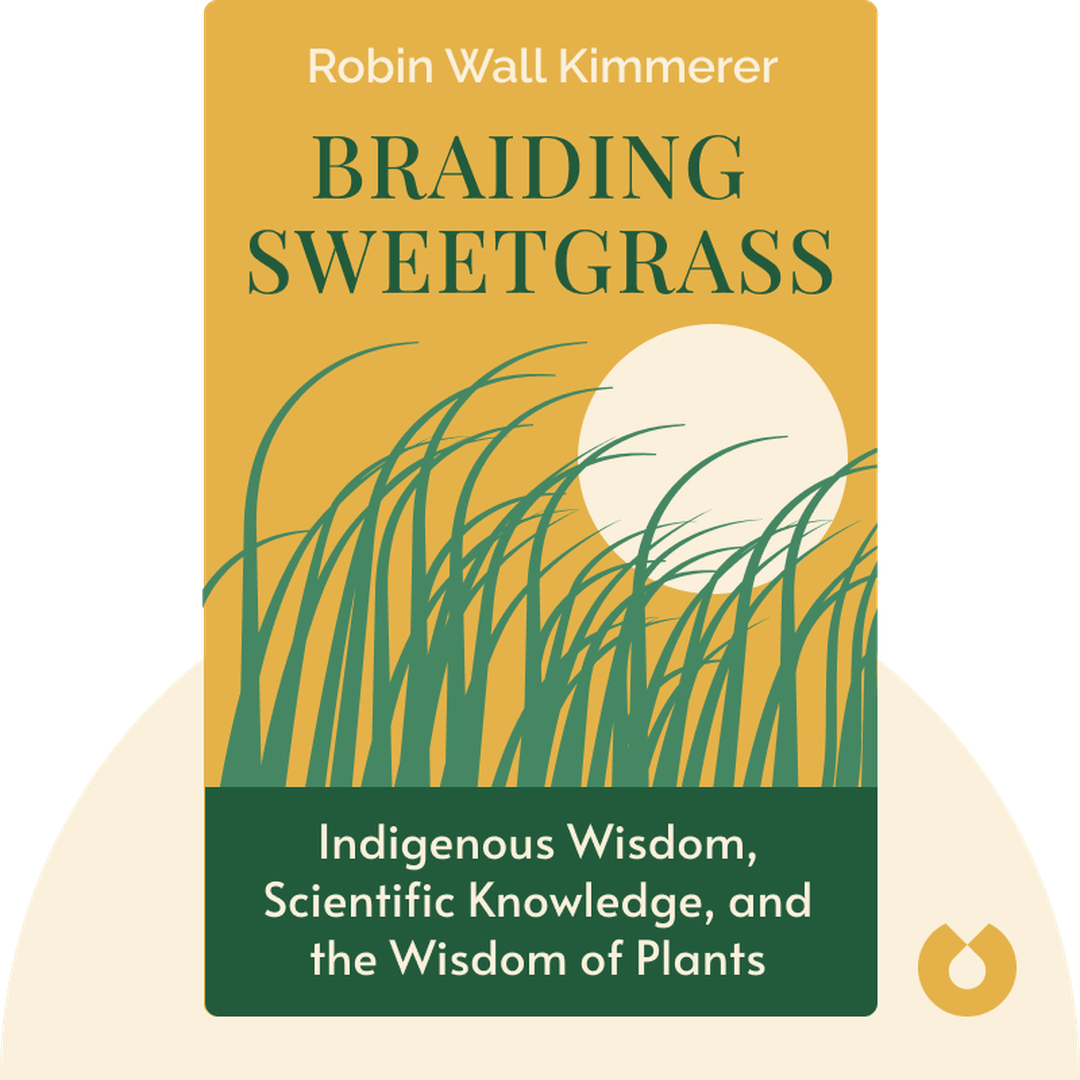
Listen to Braiding Sweetgrass — Cinematic Audio Edition
Loading player...
Key Takeaways from Braiding Sweetgrass
- Discover how the human body is biologically wired to bond with the Earth, evidenced by the oxytocin released when we breathe in the scent of healthy soil.
- Understand why viewing the Earth as a community of kin rather than a hierarchy of resources is the most profound step you can take toward lasting environmental care.
- Learn how older nations of plants and forests communicate through chemical signals and share nutrients via underground fungal networks to ensure collective survival.
- Find out how respectful human interaction can actually benefit nature, proven by research showing that carefully harvesting sweetgrass helps it thrive more than leaving it untouched.
- Explore why combining Western science with Indigenous traditions—like the resilient 'Three Sisters' planting method—creates a more complete, holistic understanding of the natural world.
Learning Tools
Reinforce what you learned from Braiding Sweetgrass
Mind Map
Braiding Sweetgrass
The Gift Economy+
Sweetgrass & History+
Cycles of Reciprocity+
The Honorable Harvest+
Science & Tradition+
Protecting the Future+
Quiz — Test Your Understanding
Question 1 of 10
According to the book, what surprising biological response in humans suggests a deep, ancestral connection to the Earth?
Question 2 of 10
What was the surprising discovery from Kimmerer's scientific study on sweetgrass, which validated Potawatomi teachings?
Question 3 of 10
The book highlights a key difference between the Potawatomi and English languages. What is the significance of Potawatomi being a verb-based language?
Question 4 of 10
What is the core principle of the 'Honorable Harvest' as described in the book?
Question 5 of 10
How does the practice of the Thanksgiving Address serve as an 'antidote to consumer culture'?
Question 6 of 10
According to Kimmerer, what is the crucial difference between simply planting vegetation on damaged land and 'true restoration'?
Question 7 of 10
What was one of the most effective tools of assimilation used against the Potawatomi people, leading to the near-loss of their language?
Question 8 of 10
The book concludes by suggesting small, practical ways to rebuild a relationship with the Earth. Which of the following is NOT one of the suggested practices?
Question 9 of 10
The book uses the 'Three Sisters' (corn, beans, and squash) as a metaphor for what?
Question 10 of 10
Why is referring to the natural world as 'it' considered problematic from a Potawatomi perspective?
Braiding Sweetgrass — Full Chapter Overview
- 1Recommendation
- 2Growing up in a Native American family, the author lived between two very different worlds.
- 3The decline of sacred sweetgrass reflects the history of Native Americans.
- 4Humanity’s relationship with nature should be grounded in gratitude and reciprocity.
- 5To sustain the environment, we must live in harmony with nature.
- 6Traditional methods can help us achieve sustainability and reduce harmful practices.
- 7To safeguard our future, we must teach the next generation gratitude and respect.
- 8Final summary
Braiding Sweetgrass Summary & Overview
Braiding Sweetgrass (2013) offers a profound and insightful look at the relationship between humans and Mother Earth. With the growing concerns about climate change, deforestation and the depletion of our natural resources, it is more important than ever to reevaluate how we treat the world around us. Find out how the traditional practices of Native Americans can help us make the world a better place for future generations.
Who Should Listen to Braiding Sweetgrass?
- Environmentalists
- Students of anthropology or botany
- Readers who appreciate a holistic approach to science
Books Similar to Braiding Sweetgrass
Readers who enjoyed this also liked these titles.