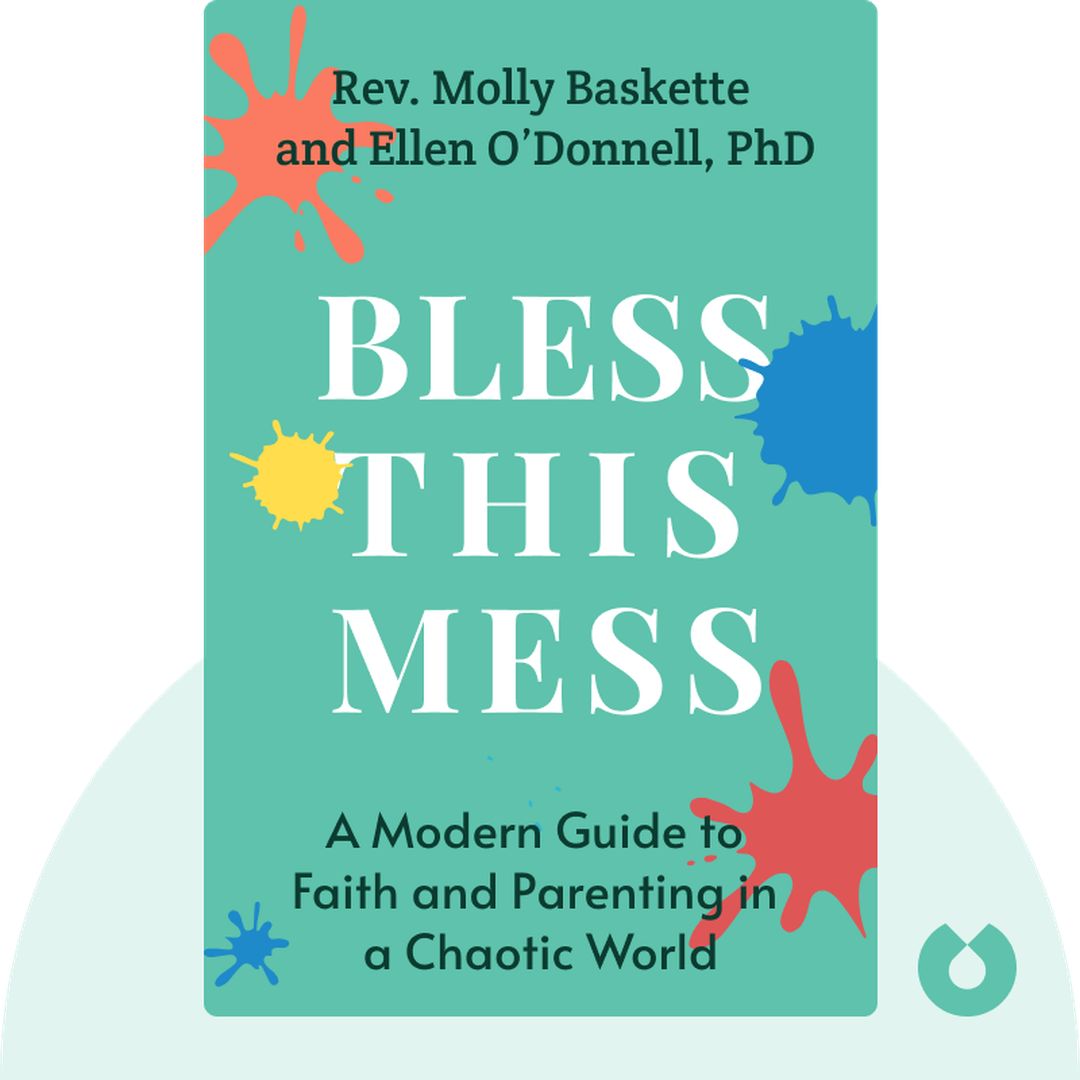
If You're Curious About These Questions...
You should listen to this audiobook
- Have you ever wondered how to raise children who embrace both modern progressive values and a deep, meaningful Christian faith?
- What if you could combine the latest insights in child psychology with ancient spiritual wisdom to navigate the "mess" of modern parenting?
- Are you curious about the secret to helping your kids develop a resilient faith, even if you’ve personally felt disconnected from the church of your childhood?
Listen to Bless This Mess — Free Audiobook
Loading player...
Key Takeaways from Bless This Mess
- Learn how to effectively raise progressive Christian children by combining psychological expertise with faith to tackle sensitive topics without authoritarianism.
- Discover why you should adapt your parenting style to fit your child's unique personality rather than projecting your own ambitions and ego onto their future.
- Understand how to harness your child's inner motivation by using self-determination theory to balance autonomy with structured limits and loving involvement.
- Master the art of teaching moral ambiguity by moving away from black-and-white 'good guys vs. bad guys' narratives to show that everyone is capable of good and bad choices.
- Cultivate deep empathy in your kids by encouraging them to consider the underlying experiences and emotions that drive the behavior of bullies and difficult people.
Learning Tools
Reinforce what you learned from Bless This Mess
Mind Map
Bless This Mess
Tailored Parenting+
Self-Determination Theory+
Morality & Empathy+
Family Values+
Money & Generosity+
Social Justice & Diversity+
Sensitive Topics+
Faith & Rituals+
Managing Anxiety+
Quiz — Test Your Understanding
Question 1 of 9
According to the authors, what does 'ego-involvement' refer to in the context of parenting?
Question 2 of 9
Based on self-determination theory, how can parents best foster their child's inner drive and autonomy?
Question 3 of 9
Why do the authors recommend introducing children to the concept of 'moral ambiguity'?
Question 4 of 9
What is the primary reason the authors advise against relying on rewards and punishments to influence a child's behavior?
Question 5 of 9
When giving younger children an allowance, why do the authors suggest providing an amount that is divisible by three?
Question 6 of 9
To help children develop a caring attitude and pursue social justice, what specific conversational habit should parents adopt?
Question 7 of 9
How do the authors suggest parents handle sensitive topics like sex, drugs, and alcohol?
Question 8 of 9
According to the book, what is an important psychological benefit of parents praying together with their children?
Question 9 of 9
What does psychological research suggest parents should do when their child suffers from anxiety?
Bless This Mess — Full Chapter Overview
- 1Recommendation
- 2Rather than trying to reshape your children, adapt your parenting to fit their personalities.
- 3Build a home environment that nurtures your child’s independence and self-motivation.
- 4Move beyond simple moral claims by teaching moral ambiguity and encouraging empathy.
- 5Teach your children to act in line with your family values, even without a reward.
- 6When teaching children about money, encourage both generosity and good sense.
- 7Follow Jesus’s example by teaching children to care for others and pursue social justice.
- 8Nuance matters most when talking about sensitive issues like sex, drugs, and alcohol.
- 9Small shifts in ritual, prayer, and Bible reading can bring God into your family life.
- 10Ease worry by trusting in prayer and helping children face their fears.
- 11Final summary
Bless This Mess Summary & Overview
Bless This Mess (2019) is a parents’ guide to raising Christian children in a bewildering age. Combining spiritual wisdom with the latest thought in child psychology, the authors aim to show that there’s no reason to think of the terms “progressive” and “Christian” as contradictory when it comes to child-rearing.
Who Should Listen to Bless This Mess?
- Prospective parents who want to raise their children to be both Christian and progressive
- Current parents who have lost touch with their own childhood faith
- Anyone interested in twenty-first century Christianity
Books Similar to Bless This Mess
Readers who enjoyed this also liked these titles.