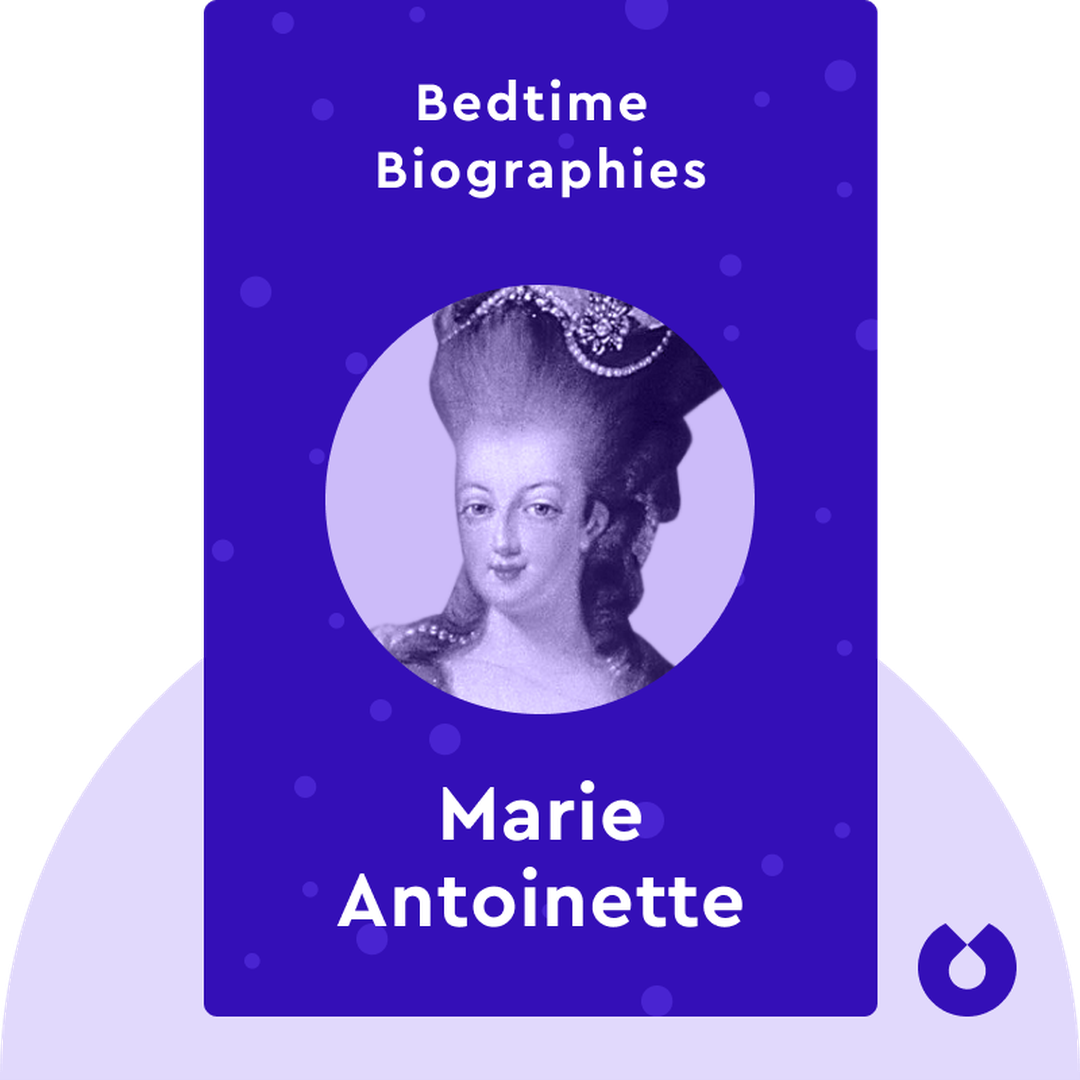
Bedtime Biography: Queen of Fashion
Start ListeningDownload Try free on iPhoneScan to start in 5 seconds
Categories:
If You're Curious About These Questions...
You should listen to this audiobook
- Did you know that Marie Antoinette used her daring wardrobe not just for style, but as a calculated political weapon to challenge the rigid power structures of the French court?
- Have you ever wondered how a queen’s choice of fabric and silhouette could actually spark the fires of a national revolution?
- Are you curious about the hidden messages tucked into Marie Antoinette’s most iconic outfits and how they forever changed the relationship between fashion and power?
Listen to Bedtime Biography: Queen of Fashion — Free Audiobook
Loading player...
Key Takeaways from Bedtime Biography: Queen of Fashion
- Understand how high fashion and strict etiquette were used as political tools at Versailles to project absolute power and royal supremacy.
- Discover the extreme physical transformations Marie Antoinette underwent, from mastering the grueling 'Versailles-glide' to wearing millions of dollars in haute couture.
- Learn why the iconic marriage between Marie Antoinette and Louis-Auguste was actually a strategic political maneuver to unite rival empires.
- Explore the stifling and highly ritualized daily life at Versailles, where every mundane action was monitored and controlled by aristocratic attendants.
- Find out the hidden reasons behind the young queen's early struggles, including the intense pressure to produce an heir with an awkward, distant husband.
Learning Tools
Reinforce what you learned from Bedtime Biography: Queen of Fashion
Mind Map
Bedtime Biography: Queen of Fashion
Early Life & Austrian Roots+
Stifling Court Life & Rebellion+
Fashion as Influence+
Petit Trianon & New Trends+
Downfall & Revolution+
Quiz — Test Your Understanding
Question 1 of 9
According to the text, what unique lens does this biography use to examine the life and history of Marie Antoinette?
Question 2 of 9
Why was Marie Antoinette chosen to marry Louis-Auguste at the age of 15?
Question 3 of 9
What was the primary political purpose of the strict rules, high fashion, and highly ritualized etiquette enforced by King Louis XV at Versailles?
Question 4 of 9
How did Marie Antoinette initially rebel against the stifling and restrictive customs of the Bourbon court?
Question 5 of 9
How did Marie Antoinette use her famous 'pouf' hairstyle to make a political statement?
Question 6 of 9
Why did Marie Antoinette's management of her private sanctuary, Petit Trianon, cause controversy among the French public and court?
Question 7 of 9
What was the public's initial reaction to Marie Antoinette's 1783 portrait in which she wore a simple muslin dress called a 'gaulle'?
Question 8 of 9
In the late 1780s, why did French critics and silk workers blame Marie Antoinette's clothing choices for contributing to the nation's economic problems?
Question 9 of 9
What was the symbolic significance of the simple white gown Marie Antoinette wore on the day of her execution?
Bedtime Biography: Queen of Fashion — Full Chapter Overview
- 1Recommendation
- 2Chapter One
- 3Chapter Two
- 4Chapter Three
- 5The End
Bedtime Biography: Queen of Fashion Summary & Overview
Narrated by Marston York
Music by Federico Coderoni
Queen of Fashion (2006) unveils the untold ways in which Marie Antoinette, with her iconoclastic sense of fashion and rebellious nature, challenged the status quo of 18th century French court. Expressing herself through daring originality, her story reveals a great deal about the revolutionary politics that make up the history of both fashion and France.
Who Should Listen to Bedtime Biography: Queen of Fashion?
- Fashionistas wanting to know more about the link between power and clothing
- Francophiles obsessed with Marie Antoinette
- History students interested in the French Revolution
Books Similar to Bedtime Biography: Queen of Fashion
Readers who enjoyed this also liked these titles.