If You're Curious About These Questions...
You should listen to this audiobook
- Have you ever wondered what single, defining quality links world-changers as diverse as anthropologist Jane Goodall and billionaire Warren Buffett?
- What if you could unlock the specific mindset that transforms your deepest fears into the fuel for game-changing innovation?
- Are you curious about the core principles that allow ordinary people to take extraordinary risks and achieve massive success in business and philanthropy?
Listen to Be Fearless — Cinematic Audio Edition
Loading player...
Key Takeaways from Be Fearless
- Discover why history-makers aren't actually fearless, but instead possess a powerful willingness to reframe failures into valuable educational opportunities.
- Understand how a deep desire to improve the world trains your mind to spot hidden solutions and serendipitous opportunities where others only see obstacles.
- Learn why you must begin before feeling fully prepared, using small, imperfect actions to instantly generate momentum and transform daydreams into reality.
- Uncover the secret to making audacious 'big bets' that prioritize real-world impact over ego, allowing you to confidently ignore critics and push past familiar limits.
- Master the art of improvising when reality doesn't match your initial plan, preventing the deceptive safety of your comfort zone from shrinking your potential.
Learning Tools
Reinforce what you learned from Be Fearless
Mind Map
Be Fearless
Core Mindset+
Principle 1: Make a Big Bet+
Principle 2: Be a Bold Risk-Taker+
Principle 3: Make Failures Matter+
Principle 4: Reach Beyond Your Bubble+
Principle 5: Let Urgency Conquer Fear+
Quiz — Test Your Understanding
Question 1 of 10
According to the book, what is a core value that often separates people who create breakthroughs from those who stay in the status quo?
Question 2 of 10
What is the main message from the story of Dr. Barbara Van Dahlen, who started the 'Give an Hour' movement?
Question 3 of 10
The book quotes Josh Linkner: 'It turns out that playing it safe has become recklessly dangerous.' What does this statement imply?
Question 4 of 10
How does the book recommend you should view failure?
Question 5 of 10
What is the primary benefit of seeking diversity and partnerships, according to the book?
Question 6 of 10
The book emphasizes acting with 'urgency, not panic.' What is the danger of too much planning?
Question 7 of 10
Which of the following best summarizes the book's 'gentle path to fearless momentum'?
Question 8 of 10
When faced with a negative label from others, such as 'not good enough,' what is the book's central message?
Question 9 of 10
How does the book suggest you can structurally practice risk-taking without being overwhelmed?
Question 10 of 10
What is the key takeaway from the example of the partnership between the Gates Foundation and Coca-Cola?
Be Fearless — Full Chapter Overview
- 1Recommendation
- 2Behind major change, there’s usually a Big Bet, which can be audacious and start from wherever you are now.
- 3Big Bets can also begin by challenging assumptions and seeing what lies just ahead.
- 4Greatness doesn’t come from staying comfortable, so it’s better to embrace risk.
- 5Build on other people’s work and avoid regrets by saying yes to bold chances.
- 6Make your failures count by learning from them and keeping the bigger picture in view.
- 7Look beyond your bubble, remove blind spots, and build unlikely partnerships.
- 8Use urgency to your advantage by seizing the moment and responding to crises.
- 9Don’t overthink your way into inaction – just do it!
- 10Final summary
Be Fearless Summary & Overview
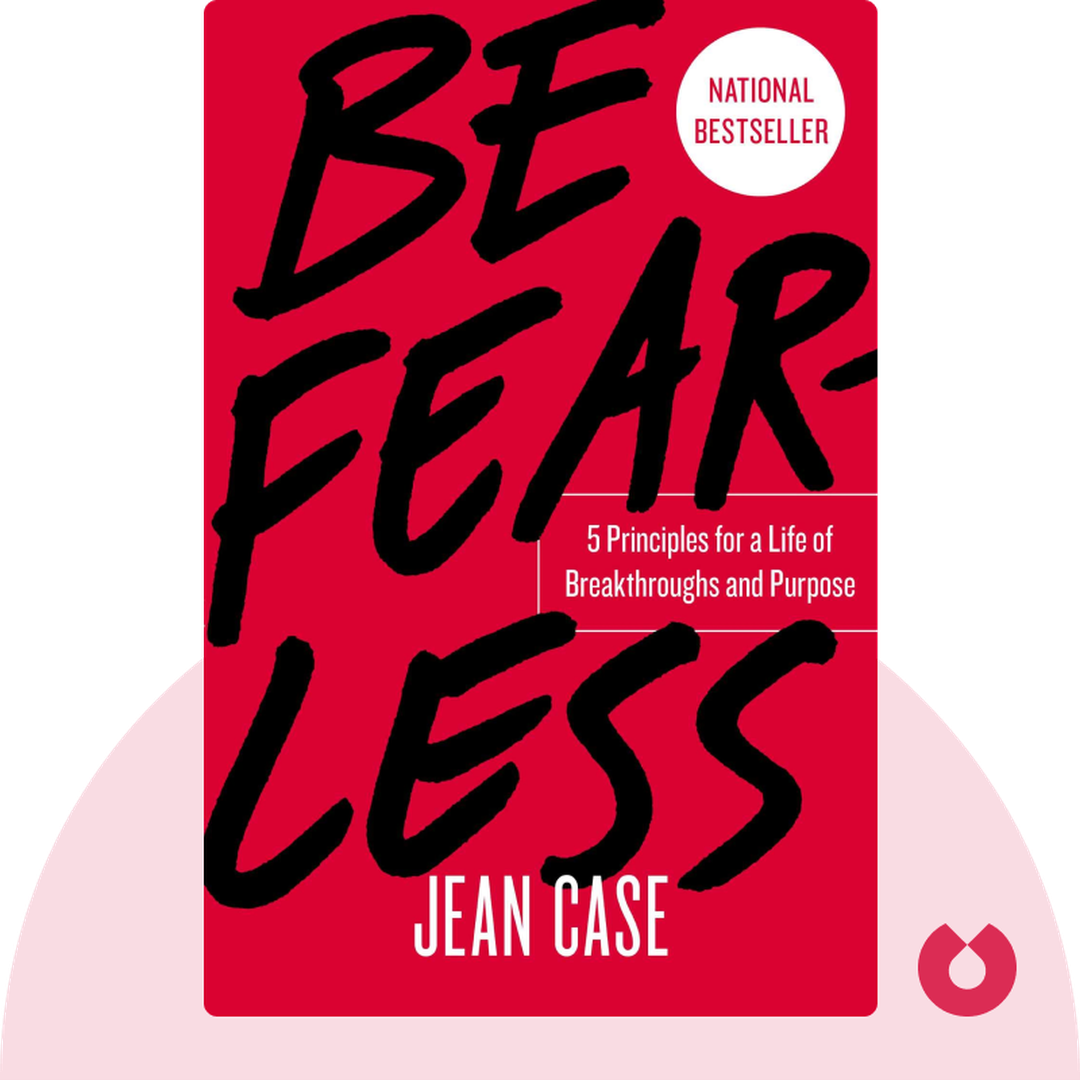
Be Fearless (2019) offers an inspirational look at what it takes to change the world. Author Jean Case looks to her own experience with game-changing technology as well as those she admires in areas such as business, exploration and philanthropy. Whether it’s anthropologist Jane Goodall or investor Warren Buffett, Case shows that all of the most influential people are characterized by one significant quality: fearlessness.
Who Should Listen to Be Fearless?
- Those who feel that fear is holding them back
- Entrepreneurs and philanthropists
- People eager to make a difference in the world
Books Similar to Be Fearless
Readers who enjoyed this also liked these titles.