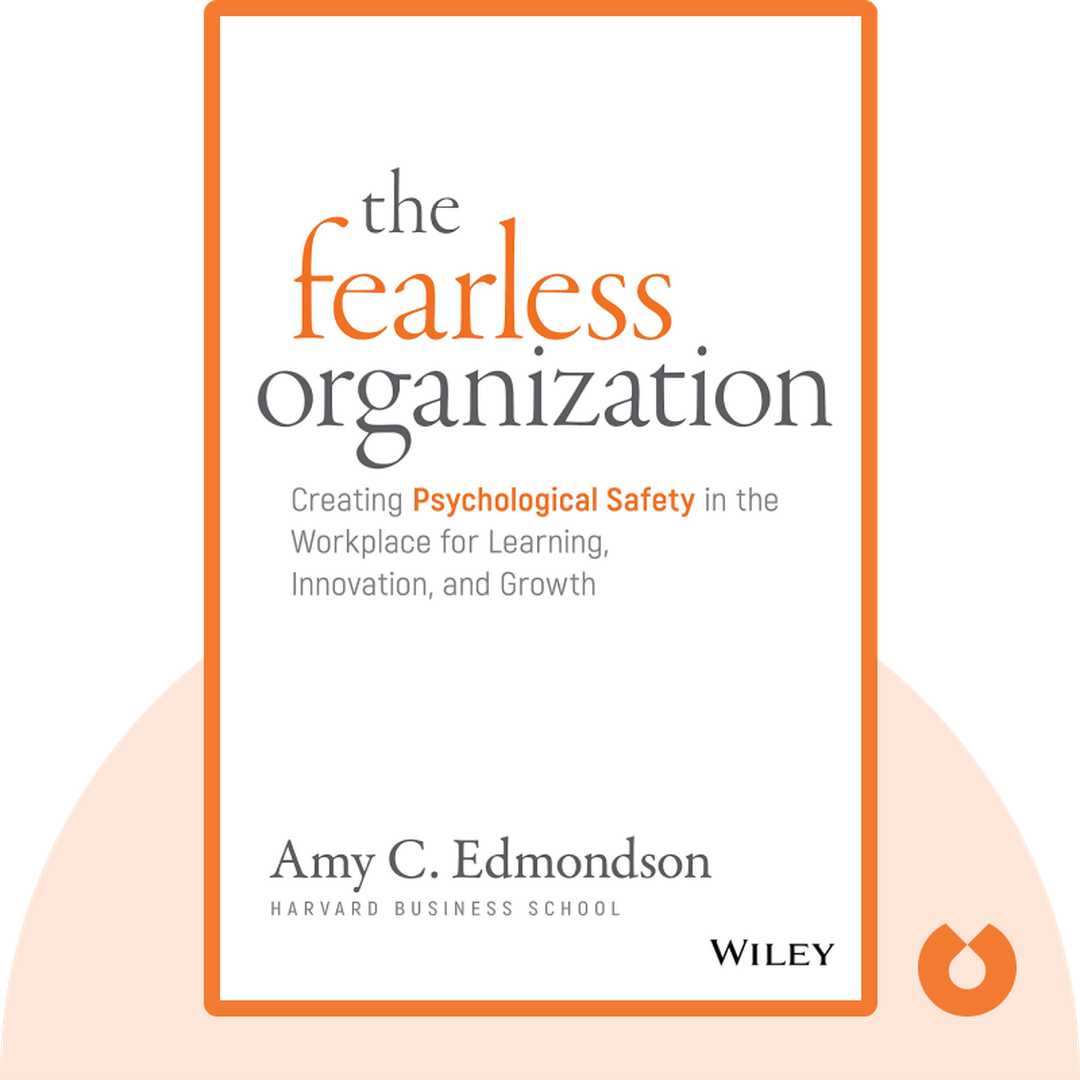
The Fearless Organization
Start ListeningDownload Try free on iPhoneScan to start in 5 seconds
Categories:
If You're Curious About These Questions...
You should listen to this audiobook
- Have you ever wondered why your most talented team members often stay silent during crucial meetings?
- What’s the secret to creating a workplace where admitting a mistake is actually seen as a path to innovation?
- What if you could unlock your organization's full potential by simply removing the hidden fear of speaking up?
Listen to The Fearless Organization — Free Audiobook
Loading player...
Key Takeaways from The Fearless Organization
- Understand why the childhood habit of worrying about peer perception follows us into the workplace and stifles our ability to share crucial ideas.
- Discover how psychological safety—the freedom to express thoughts and admit mistakes without judgment—drives continuous improvement, as seen in top-performing medical teams.
- Learn why tech giants like Google identified psychological safety as the single most important characteristic for building highly successful and innovative teams.
- Recognize the dangerous consequences of fear-based leadership, which can push employees toward extreme or unethical practices just to meet unrealistic targets.
- Find out how a lack of open communication and the fear of speaking truth to leadership caused industry giants like Nokia to ignore emerging threats and lose their market dominance.
Learning Tools
Reinforce what you learned from The Fearless Organization
Mind Map
The Fearless Organization
The Cost of Fear+
Psychological Safety+
Leadership's Role+
Responding Productively+
Everyone's Contribution+
Key Mindset+
Quiz — Test Your Understanding
Question 1 of 7
When Amy C. Edmondson initially studied medical teams in the 1990s, what surprising discovery led her to the concept of psychological safety?
Question 2 of 7
According to the book, what is a primary danger of leaders using fear to motivate their employees, as demonstrated by companies like Wells Fargo and Nokia?
Question 3 of 7
How do successful, innovative companies like Pixar and OpenTable approach the concept of failure in the workplace?
Question 4 of 7
Why was former Xerox CEO Anne Mulcahy nicknamed the 'Master of I Don't Know'?
Question 5 of 7
How should a leader in a psychologically safe environment respond when an employee fails because they ignored established company values or set processes?
Question 6 of 7
According to the text, how can an employee who is not in a leadership position help create a fearless work environment?
Question 7 of 7
What does the author mean by adopting a 'play to win' mindset?
The Fearless Organization — Full Chapter Overview
- 1Recommendation
- 2Concern over how we’re seen prevents us from doing our best work.
- 3Psychological safety results in better performance for both individuals and teams.
- 4A lack of psychological safety can bring serious consequences for a company, its employees, and its customers.
- 5A fearless workplace begins with reframing failure and redefining the leader’s role.
- 6When leaders show curiosity and admit they don’t know everything, then people feel encouraged to speak up.
- 7When people take risks and speak up, leaders should respond in consistently productive ways.
- 8You do not have to be a leader to help create a fearless workplace.
The Fearless Organization Summary & Overview
The Fearless Organization (2018) delves into psychological safety and how the workplace can become an environment in which everyone feels confident enough to pitch in and do their best. These blinks explain why people hold back on sharing their ideas at work, how this harms businesses, and how leaders can encourage a culture of openness, questioning, and experimentation that leads to learning and innovation.
Who Should Listen to The Fearless Organization?
- Forward-thinking leaders who want to encourage innovation and learning
- Human resources managers looking to get the most out of their talent
- Team players interested in creating a supportive workplace
Books Similar to The Fearless Organization
Readers who enjoyed this also liked these titles.