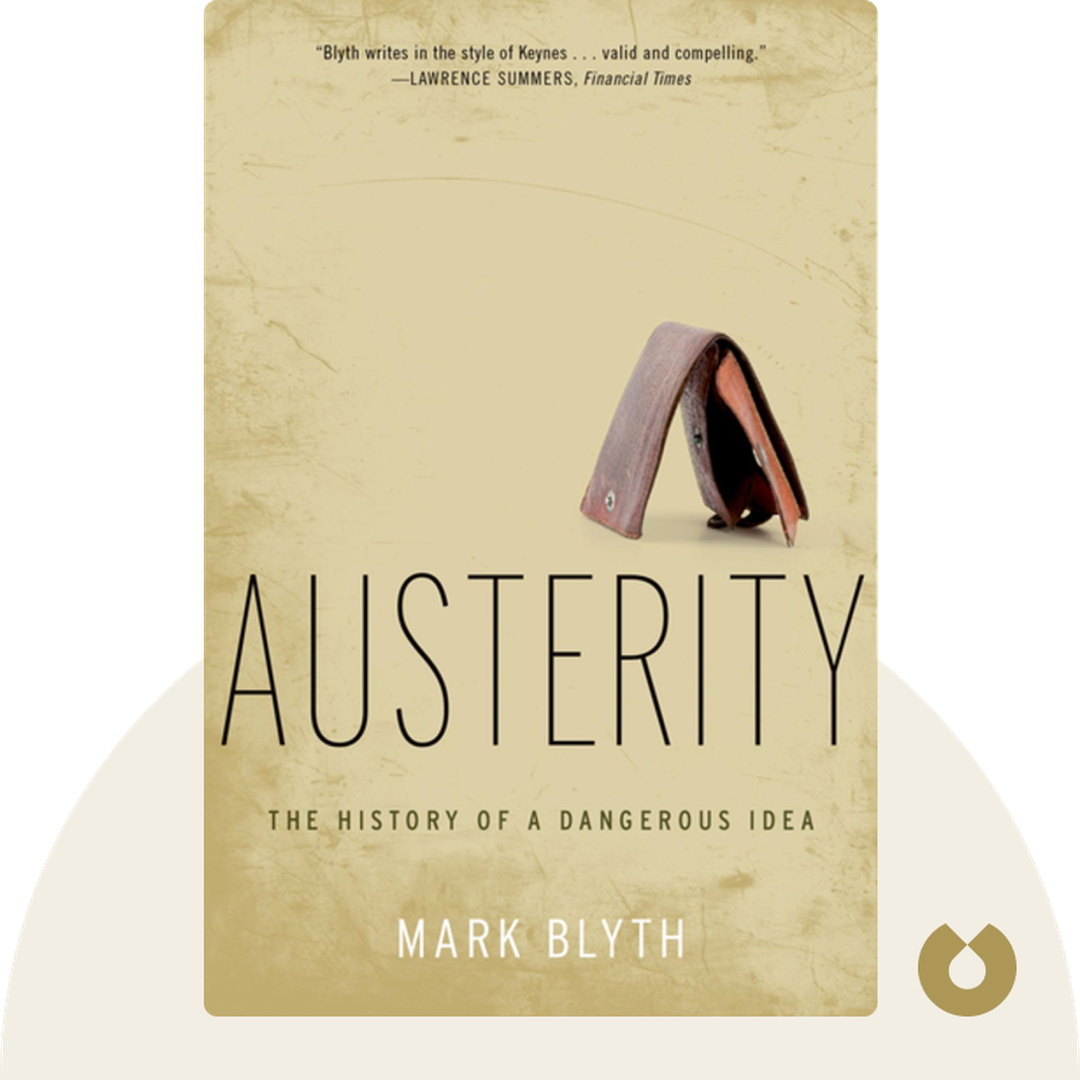
If You're Curious About These Questions...
You should listen to this audiobook
- Did you know that cutting government spending can actually trigger an economic boom instead of a recession?
- Have you ever wondered why some austerity measures lead to prosperity while others cause long-term decline?
- What’s the secret difference between austerity policies that stabilize an economy and those that crush it?
Listen to Austerity — Free Audiobook
Loading player...
Key Takeaways from Austerity
- Discover why not all austerity measures are created equal, and learn how cutting government spending often produces significantly better economic outcomes than raising taxes.
- Learn why politicians shouldn't fear implementing austerity policies, as correctly managed deficit reductions can stabilize the economy without costing them reelection.
- Understand where traditional Keynesian economics falls short by failing to factor in how austerity plans influence public expectations, work incentives, and investor confidence.
- Find out how cutting government programs can unexpectedly boost current consumer spending by creating the public expectation of lower taxes in the future.
- Explore how analyzing historical data through a narrative approach reveals the true long-term economic impacts of expenditure-based versus tax-based financial policies.
Learning Tools
Reinforce what you learned from Austerity
Mind Map
Austerity
Core Concepts & Context+
Methodology: Narrative Approach+
Flaws in Keynesian View+
Expenditure-Based (Spending Cuts)+
Tax-Based (Tax Hikes)+
Post-2008 Crisis Cases+
Political Realities+
Quiz — Test Your Understanding
Question 1 of 7
What is the main finding of the authors regarding the two different types of austerity?
Question 2 of 7
Why do the authors argue that traditional Keynesian models of austerity are incomplete?
Question 3 of 7
What does the 'narrative approach' to data analysis involve, as used by the authors?
Question 4 of 7
What does the term 'expansionary austerity' refer to?
Question 5 of 7
According to the text, why does tax-based austerity generally result in worse economic outcomes than expenditure-based austerity?
Question 6 of 7
What was a key difference in the application and outcome of austerity between the UK and Greece post-2008?
Question 7 of 7
If expenditure-based austerity is generally more effective, why do governments often choose tax-based austerity instead?
Austerity — Full Chapter Overview
- 1Recommendation
- 2When done correctly, austerity isn’t always bad news.
- 3Earlier research on austerity often overlooked expectation, incentive, and confidence.
- 4A narrative approach to the data can reveal new insights into austerity’s effects.
- 5Spending-based austerity can produce positive results.
- 6Tax-based austerity often causes deeper recessions.
- 7Austerity played a major role after the 2008 financial crash — for better and worse.
- 8The politics of austerity is complex, but not always a political “kiss of death.”
- 9Final summary
Austerity Summary & Overview
Austerity (2019) uses data analysis to look at one of the most controversial topics in economics today. An analysis of several countries’ austerity policies over the past several decades reveals that cutting spending can actually help the economy expand.
Who Should Listen to Austerity?
- Economists keen to learn more about austerity
- Politicians looking to brush up on their economics
- Anyone who wants to understand the numbers behind government policy
Books Similar to Austerity
Readers who enjoyed this also liked these titles.