If You're Curious About These Questions...
You should listen to this audiobook
- Did you know that the 'cloud' isn't as ethereal as it sounds, but is actually built on a massive, hidden network of physical extraction and exploited labor?
- Have you ever wondered how the rise of AI is quietly shifting global power away from democratic institutions and into the hands of a few centralized entities?
- Are you curious about the true environmental and social cost of the technology we use every day—and what it means for the future of our planet?
Listen to Atlas of AI — Free Audiobook
Loading player...
Key Takeaways from Atlas of AI
- Understand why artificial intelligence is not truly autonomous or capable of independent reasoning, but rather reflects the deeply ingrained biases and goals of its human creators.
- Discover the hidden environmental costs of the AI revolution, from destructive rare earth mining to the massive fossil fuel consumption of data centers that debunk the myth of 'clean tech'.
- Uncover the exploitation of unseen human labor that powers machine learning, including the low-paid workers who label massive datasets and assemble devices under harsh conditions.
- Learn how the tech industry's 'extractive logic' treats human expression as raw material, ruthlessly scraping personal data, text, and images from the internet without user consent.
- Recognize the urgent need to confront the material realities of AI dependence, shifting our focus toward sustainability, social equity, and justice instead of relentless corporate profit.
Learning Tools
Reinforce what you learned from Atlas of AI
Mind Map
Atlas of AI
The Illusion of Intelligence+
Material & Ecological Costs+
Human Labor Exploitation+
The Data Gold Rush+
Politics of Classification+
Quiz — Test Your Understanding
Question 1 of 5
What does the story of the horse 'Clever Hans' illustrate about artificial intelligence, according to the author?
Question 2 of 5
How does the author characterize the material reality of the current 'AI boom'?
Question 3 of 5
What major precedent did the creation of the 2009 ImageNet dataset set for the tech industry?
Question 4 of 5
According to the author, what is the danger of how AI datasets like UTKFace handle categories such as race and gender?
Question 5 of 5
Why does the author argue that striving for more 'diverse' or 'inclusive' datasets is an inadequate solution to the ethical problems of AI?
Atlas of AI — Full Chapter Overview
- 1Recommendation
- 2The hype around artificial intelligence?
- 3The material foundations of artificial intelligence
- 4The rush for data gold
- 5The politics behind classification
- 6Final summary
Atlas of AI Summary & Overview
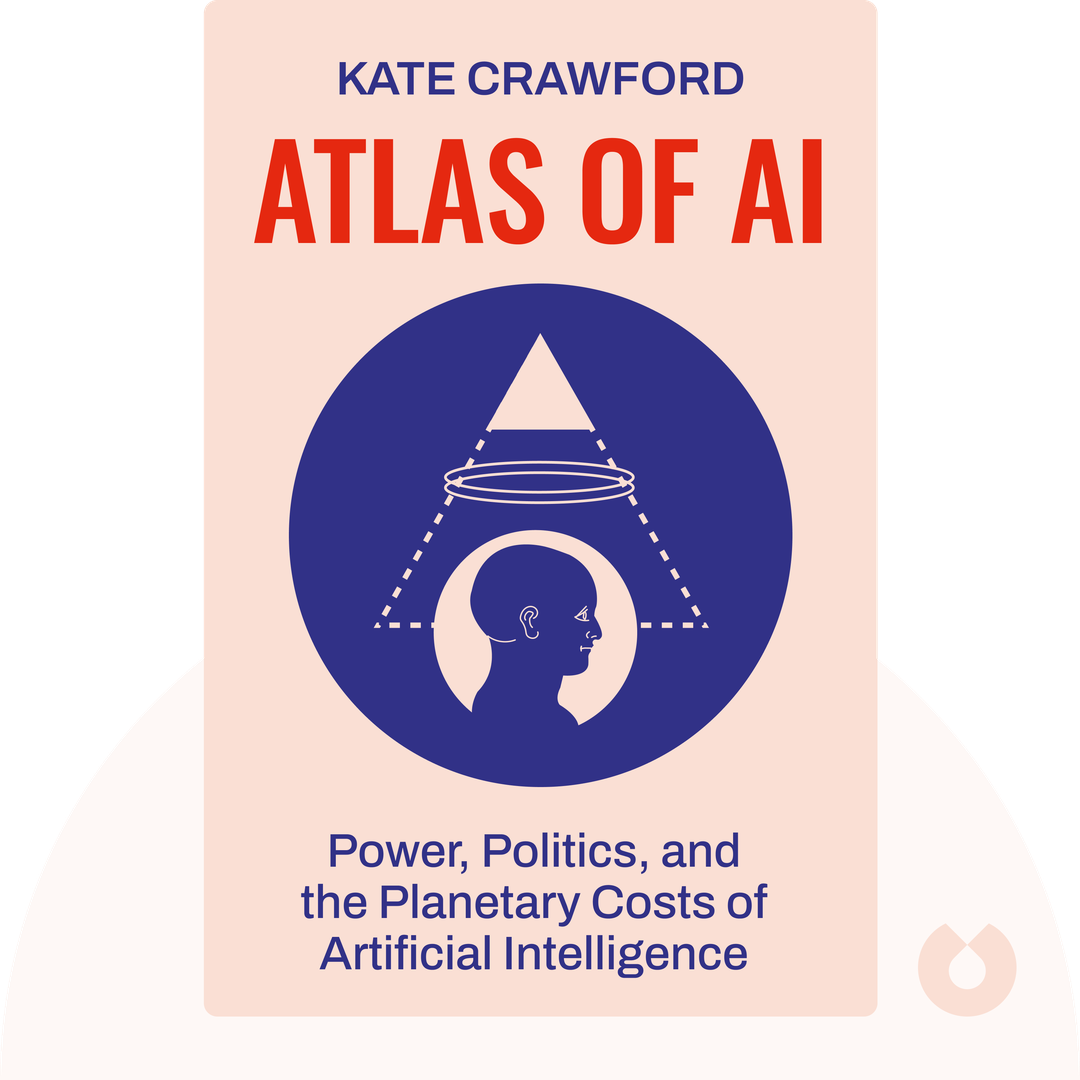
Atlas of AI (2021) reveals how AI is a technology of extraction, from minerals to labor to data. It presents AI as a global network which is driving a shift toward undemocratic governance and political centralization.
Who Should Listen to Atlas of AI?
- Entrepreneurs and policymakers seeking to inform themselves about the AI industry
- People interested in the intersection of technology, politics, and society
- Anyone concerned about the social and moral consequences of emerging technologies
Books Similar to Atlas of AI
Readers who enjoyed this also liked these titles.