If You're Curious About These Questions...
You should listen to this audiobook
- Why do experts argue that AI cyber weapons and autonomous systems pose a uniquely destabilizing threat to global security compared to Cold War-era nuclear deterrence?
- How are emotion-detection algorithms, such as the AI suicide prevention system used on South Korea's Mapo Bridge, challenging our philosophical understanding of human identity and empathy?
- In what ways do the algorithms powering modern digital platforms threaten democratic discourse, and why are current AI moderation tools struggling to solve the problem?
Listen to The Age of AI — Free Audiobook
Loading player...
Key Takeaways from The Age of AI
- AI has rapidly evolved from rule-based programming to advanced machine learning systems that can independently generalize data to make unprecedented scientific discoveries.
- Because large language models optimize for fluency rather than objective truth, they require strict human oversight to prevent the generation of confident but entirely invented or biased information.
- By prioritizing user engagement, the AI algorithms utilized by global digital platforms inadvertently curate echo chambers that accelerate the spread of sensational misinformation.
- The integration of artificial intelligence into military targeting and cyber warfare blurs human control and creates dangerous new ambiguities that undermine traditional international deterrence strategies.
- As AI encroaches on deeply subjective realms like art and emotional support, society must proactively establish ethical boundaries so technology augments rather than replaces authentic human experiences.
Learning Tools
Reinforce what you learned from The Age of AI
Mind Map
The Age of AI
Evolution & Capabilities+
Global Networks & Information+
Security & Defense+
Human Identity & Creativity+
The Future & Ethical Governance+
Quiz — Test Your Understanding
Question 1 of 6
What was the primary focus of Alan Turing's pioneering evaluation for machine intelligence, known as the Turing test?
Question 2 of 6
According to the text, why do large language models like ChatGPT sometimes generate confident but entirely invented or unethical text?
Question 3 of 6
What is a major challenge highlighted regarding AI's role in content moderation on social media platforms like Facebook?
Question 4 of 6
How does the integration of AI into defense technology differ from the traditional nuclear deterrence models of the Cold War?
Question 5 of 6
What potential risk does the book associate with children relying heavily on AI companions for personalized advice?
Question 6 of 6
What was the primary cause of the 96 percent error rate in the facial recognition system used by the Detroit police in 2020?
The Age of AI — Full Chapter Overview
- 1Recommendation
- 2From Turing to the present day
- 3Global connections
- 4Security and protection
- 5AI and what it means to be human
- 6AI and what lies ahead
The Age of AI Summary & Overview
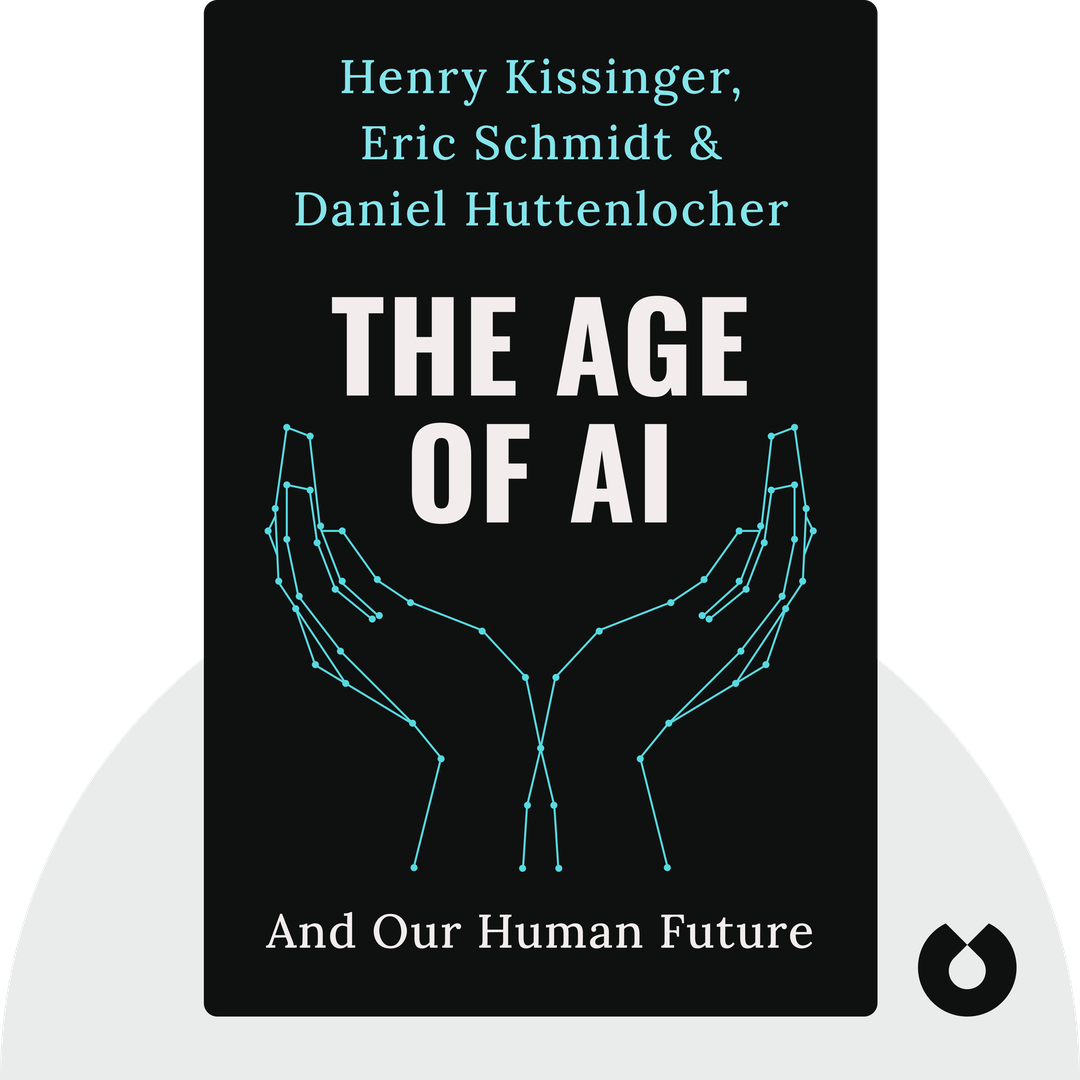
The Age of AI (2021) examines the evolution of artificial intelligence, how it’s increasingly integrated into all facets of life, and profound questions surrounding AI’s relationship to ethics, security, economics, and the human experience itself.
Who Should Listen to The Age of AI?
- Technology enthusiasts and professionals
- Business leaders and entrepreneurs
- Policymakers and ethicists
Books Similar to The Age of AI
Readers who enjoyed this also liked these titles.