If You're Curious About These Questions...
You should listen to this audiobook
- Did you know that failing to negotiate even one salary can result in a loss of hundreds of thousands of dollars over the course of your career?
- Have you ever wondered why women are often less likely to ask for what they deserve, and how this simple hesitation can shape their entire professional future?
- What's the secret to negotiating effectively while maintaining great relationships, even if the very idea of asking for more makes you nervous?
Listen to Ask For It — Free Audiobook
Loading player...
Key Takeaways from Ask For It
- Discover how to uncover your true desires and ambitions by asking yourself what is currently missing from your life.
- Understand why women often accept circumstances without complaint, and learn to shift your mindset to take control of your life and determine your own worth.
- Realize that negotiations happen every day, and master the fundamental rules of intelligent communication, attentive listening, and information exchange.
- Learn how to prepare for any negotiation by establishing your BATNA (Best Alternative to a Negotiated Agreement) so you always have a confident backup plan.
- Find out why information is your most powerful asset in a negotiation, and discover how to use concrete data to successfully justify your requests instead of bluffing.
Learning Tools
Reinforce what you learned from Ask For It
Mind Map
Ask For It
Discovering What You Want+
The Gender Mindset Gap+
Fundamentals of Negotiation+
Information and Value+
Interest-Based Cooperation+
Navigating Gender Bias+
Closing Tactics+
Quiz — Test Your Understanding
Question 1 of 9
According to the text, why do modern-day women often find it difficult to identify their true career desires and ambitions?
Question 2 of 9
What did psychologist Lisa Barron's 2006 study reveal about how men and women perceive their value in the workplace?
Question 3 of 9
In the context of preparing for a negotiation, what does the acronym BATNA stand for?
Question 4 of 9
Why did women in the author's studies perform better when negotiating entry-level salaries compared to end-of-year bonuses?
Question 5 of 9
What is the primary lesson from the story of Twyla, the aspiring director who tried to buy the rights to a novel?
Question 6 of 9
When negotiating, what is the main difference between 'position-based' and 'interest-based' negotiation?
Question 7 of 9
According to the author's 2007 study on job interviews, how did evaluators react to female interns who negotiated in a bold and aggressive manner?
Question 8 of 9
During a negotiation, why is it beneficial to focus on your 'upper target' rather than your 'reservation value'?
Question 9 of 9
According to the actionable advice on pricing, how should you respond if a buyer counters your initial asking price with a very low offer?
Ask For It — Full Chapter Overview
- 1Recommendation
- 2Discover what you want in life by asking what’s missing.
- 3Women often think they lack control over their lives, so they don’t ask for raises.
- 4Negotiation happens every day, so you need to be ready for it.
- 5Don’t ask for too much, but don’t sell yourself short either.
- 6In negotiations, focus on what you want and what matters to the other party.
- 7Cooperation is better than competition, so consider everyone’s interests.
- 8Unfortunately, women still feel pressure to watch their words and stay pleasant.
- 9In a negotiation, stay focused on your upper target and be patient.
- 10Final summary
Ask For It Summary & Overview
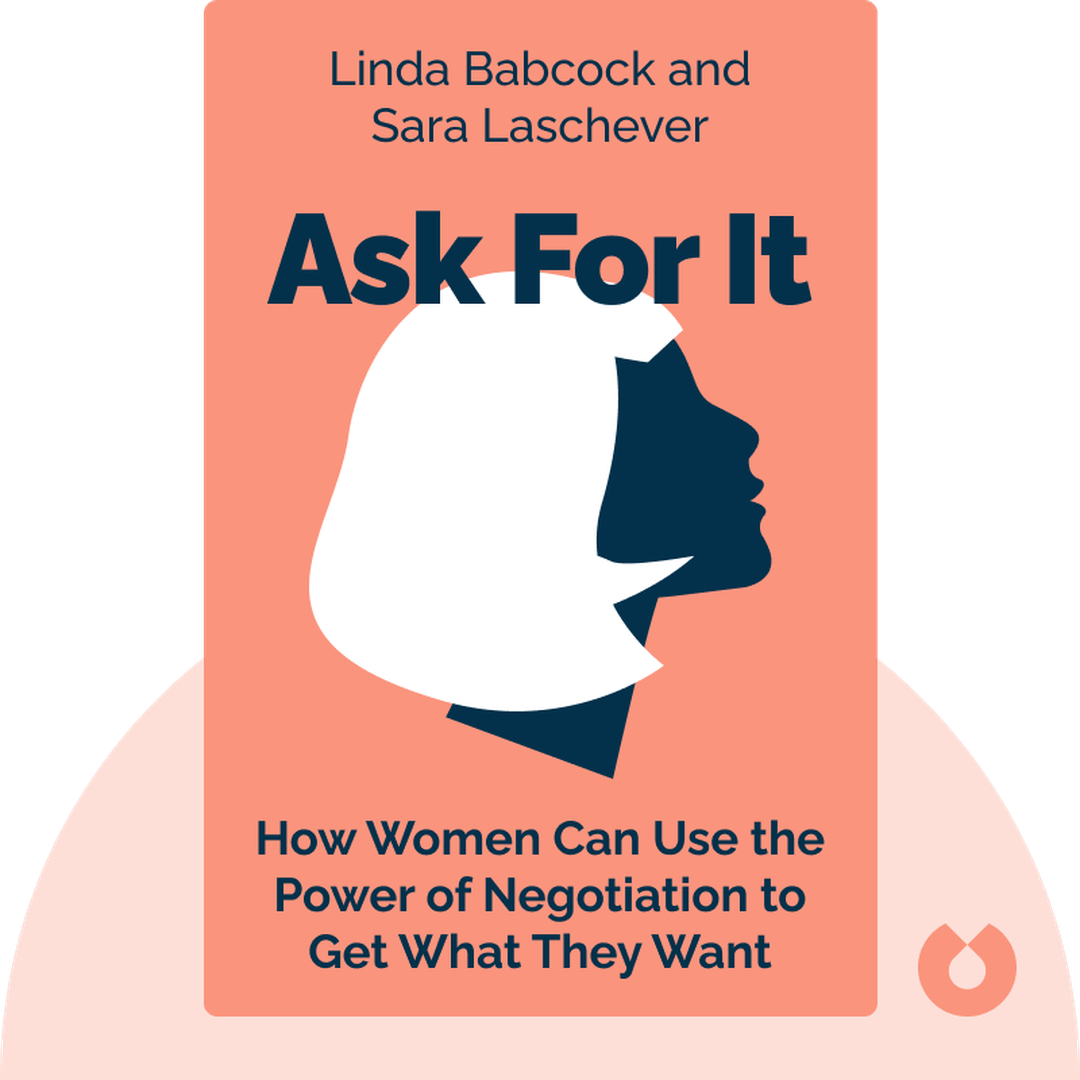
Ask For It (2008) gives women advice on how to successfully negotiate to get the jobs and salaries they want and deserve. These blinks outline the do’s and don’ts of negotiation so that those who aren’t used to asking for more can learn how to do so the right way.
Who Should Listen to Ask For It?
- Women who want to be better negotiators
- Anyone who’s afraid to ask for what they want
- Women looking to further their careers
Books Similar to Ask For It
Readers who enjoyed this also liked these titles.