If You're Curious About These Questions...
You should listen to this audiobook
- Have you ever wondered why some systems don't just survive chaos, but actually get stronger and more successful because of it?
- Did you know that our modern obsession with stability and avoiding small risks might actually be setting us up for a massive, unavoidable disaster?
- What if you could stop trying to predict the future and instead learn the secret to building a life that thrives on volatility and the unexpected?
Listen to Antifragile — Cinematic Audio Edition
Loading player...
Key Takeaways from Antifragile
- Understand the crucial difference between merely being resilient, which means surviving shocks, and being antifragile, which means actively growing stronger because of them.
- Discover why acute stress paired with adequate recovery builds your physical and mental capacity, while chronic stress without rest breaks you down.
- Learn how to assess whether areas of your life are fragile, robust, or antifragile, giving you the power to redesign them to benefit from unpredictability.
- Recognize that true character and ethical antifragility are only revealed when you are tested by pressure, temptation, or hardship.
- Master the ability to reframe manageable stress as useful information and training, using it as an ally to adapt and upgrade your capabilities.
Learning Tools
Reinforce what you learned from Antifragile
Mind Map
Antifragile by Nassim Nicholas Taleb
I. What is Antifragility?+
II. How to Leverage Antifragility+
III. Modernity's Attack on Antifragility+
Quiz — Test Your Understanding
Question 1 of 8
According to the book, what is the key difference between something that is 'antifragile' and something that is 'robust'?
Question 2 of 8
What factor does the book identify as crucial for making stress beneficial rather than harmful?
Question 3 of 8
The 'Procrustean bed' is used as a metaphor for what harmful modern tendency?
Question 4 of 8
Instead of trying to predict the future, what strategy does Taleb recommend for navigating uncertainty?
Question 5 of 8
What is the core idea behind 'subtractive epistemology' as a decision-making principle?
Question 6 of 8
What principle does Taleb suggest for evaluating the potential value of an idea or technology?
Question 7 of 8
What is the core ethical problem that the principle of 'skin in the game' aims to solve?
Question 8 of 8
According to the final chapter, how should one approach failure to become more antifragile?
Antifragile — Full Chapter Overview
- 1Recommendation
- 2A system’s antifragility depends on the fragility of its parts.
- 3Shocks and stressors strengthen antifragile systems by pushing them to build extra capacity.
- 4Calm environments create fragile systems; antifragility comes from volatility.
- 5To benefit from antifragility, you don’t need to understand every opportunity—just know when to seize it.
- 6To become antifragile, manage risk so you can benefit from unpredictable events.
- 7The bigger the organization or system, the harder unexpected crises will hit it.
- 8Many modern professions are antifragile, but at everyone else’s expense.
- 9Our drive to eliminate volatility from life will eventually make society more fragile.
- 10Modern teaching has a “turkey problem”: we misread the past to predict the future.
- 11We underestimate antifragility’s role in driving progress and advances in society.
- 12Final Summary
- 13Shareable Content
Antifragile Summary & Overview
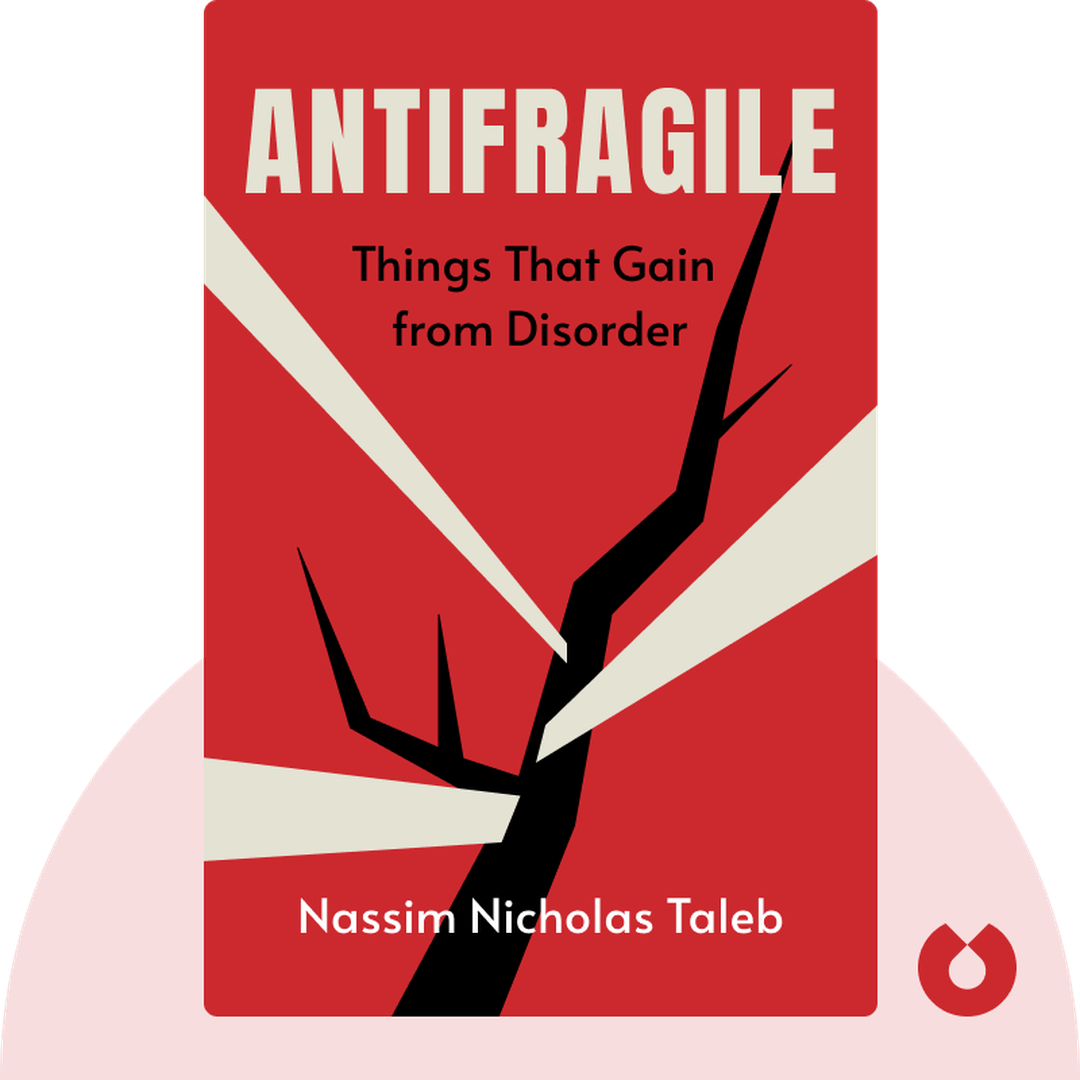
Some things seem to improve if they are placed in environments of volatility and unpredictability. Antifragile (2014) analyzes why this is the case. It suggests that this quality has been vital for the progress of human civilization since ancient times.
Nassim Nicholas Taleb takes a critical look at modern society and its aim to smooth out life by interfering in systems like the economy. Far from making society a better place, this interfering nature is destroying the volatile environment essential for antifragility to take place.
Who Should Listen to Antifragile?
- Anyone who wants to know why some systems improve over time
- Anyone who wants to know how to take advantage of uncertainty
- Anyone interested in why crises happen
Books Similar to Antifragile
Readers who enjoyed this also liked these titles.