If You're Curious About These Questions...
You should listen to this audiobook
- Have you ever wondered how a system of simple pictures evolved into a complex language capable of recording the secrets of a three-thousand-year-old empire?
- What’s the secret behind the elaborate process of mummification, and why was preserving the physical body considered so vital for a soul's journey through the afterlife?
- Did you know that Ancient Egyptian mythology wasn't just a collection of stories, but a practical framework that dictated every aspect of daily life and government?
Listen to Ancient Egypt — Free Audiobook
Loading player...
Key Takeaways from Ancient Egypt
- Understand how the Nile River's annual flooding and Egypt's arid climate worked together to nourish and preserve one of humanity's oldest civilizations.
- Discover the historical significance of the Narmer Palette, a 6,000-year-old artifact that serves as a vital prism for understanding the unification of Upper and Lower Egypt.
- Learn the mechanics behind ancient Egyptian hieroglyphs—including ideograms, phonetics, and determinatives—which remained a total mystery until they were finally deciphered in 1822.
- Find out why the ancient Egyptians believed written language held physical power, prompting them to deliberately erase bird legs from tomb inscriptions to paralyze malevolent entities.
- Explore how Egyptian rulers used art and state-controlled religion as divine propaganda, famously leading the rare female pharaoh Hatshepsut to be depicted with a traditional royal beard.
Learning Tools
Reinforce what you learned from Ancient Egypt
Mind Map
Ancient Egypt
History & Environment+
Language & Hieroglyphs+
Kingship & Cosmology+
Identity & Society+
Death & Afterlife+
Religion & Temples+
Pyramids & Speculation+
Quiz — Test Your Understanding
Question 1 of 7
What does the imagery of the two lions with intertwined necks on the Narmer Palette represent?
Question 2 of 7
Why did ancient Egyptians deliberately erase the legs from images of birds in some tomb inscriptions?
Question 3 of 7
How was the female pharaoh Hatshepsut primarily depicted in Egyptian art during her reign?
Question 4 of 7
According to recent DNA analysis and historical evidence, how did ancient Egyptians most likely define their identity?
Question 5 of 7
According to Egyptian mythology, what event provided the foundation for the practice of mummification?
Question 6 of 7
What was the primary relationship between ordinary commoners and the sacred temples in ancient Egypt?
Question 7 of 7
What does the text suggest is a sinister underlying motivation behind many of the outlandish conspiracy theories regarding the construction of the pyramids?
Ancient Egypt — Full Chapter Overview
- 1Recommendation
- 2Ancient Egypt was a Northeast African civilization that endured for thousands of years.
- 3Ancient Egyptian hieroglyphs were an early writing system used mainly for ceremonial purposes.
- 4Ancient Egyptian kingship was closely tied to the civilization’s cosmological worldview.
- 5Ancient Egyptian identity was likely rooted largely in culture and language.
- 6The cult of Osiris encouraged elaborate funerary practices to secure entry into the afterlife.
- 7Religious practice in Ancient Egypt centered on the concealment and revelation of sacred idols.
- 8The pyramids have inspired wild speculation for centuries.
- 9Final summary
Ancient Egypt Summary & Overview
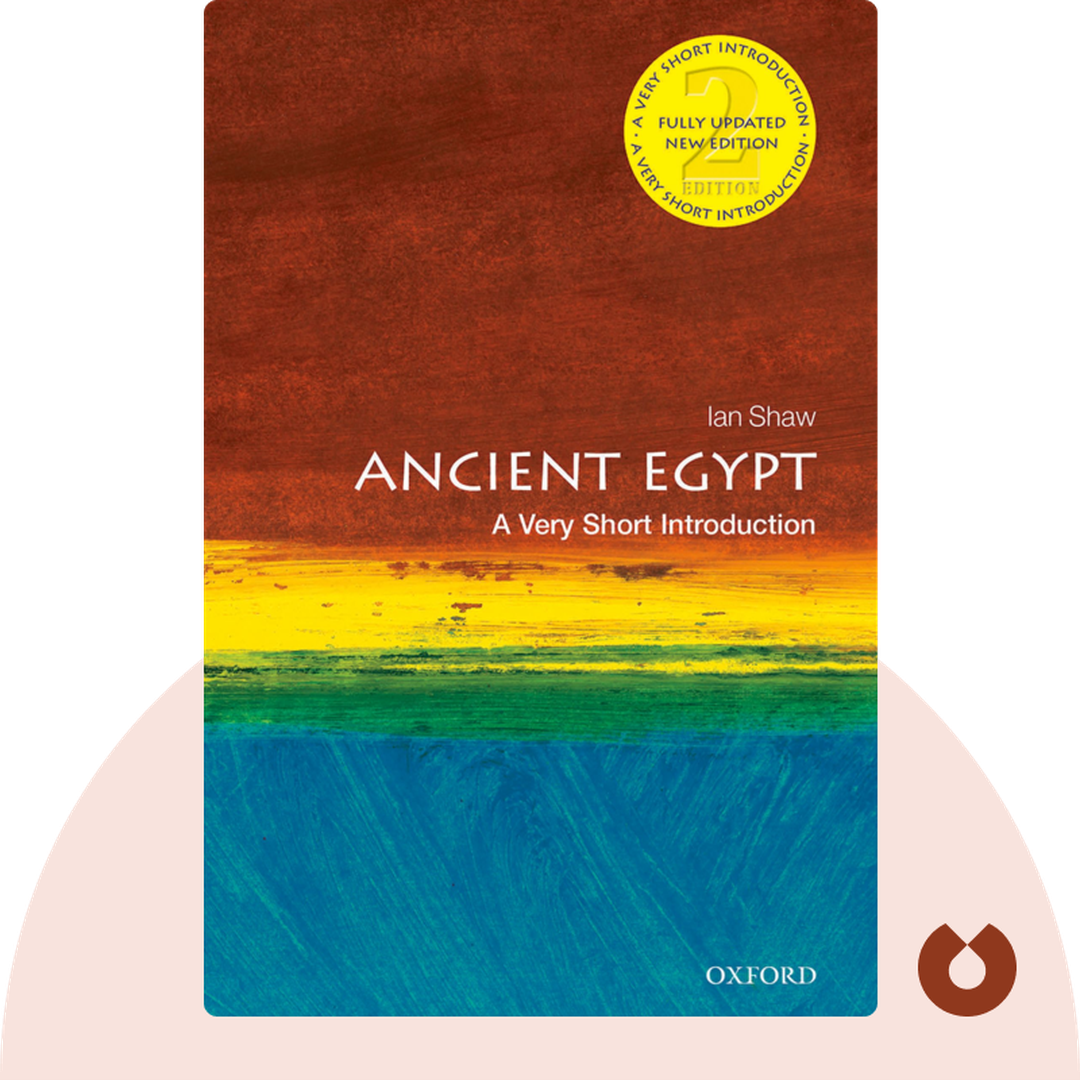
Ancient Egypt (2021) is a succinct introduction to the history and culture of one of humanity’s oldest civilizations. It touches on different aspects of Ancient Egyptian society and covers topics such as religion and mythology, the hieroglyphic writing system, and Egyptian ideas about death and mummification.
Who Should Listen to Ancient Egypt?
- Students of archeology or Egyptology looking for a primer on Ancient Egypt
- Museumgoers who want to learn more about the culture behind the exhibits
- History buffs who just can't get enough of the Land of the Pharaohs
Books Similar to Ancient Egypt
Readers who enjoyed this also liked these titles.