Theme Song
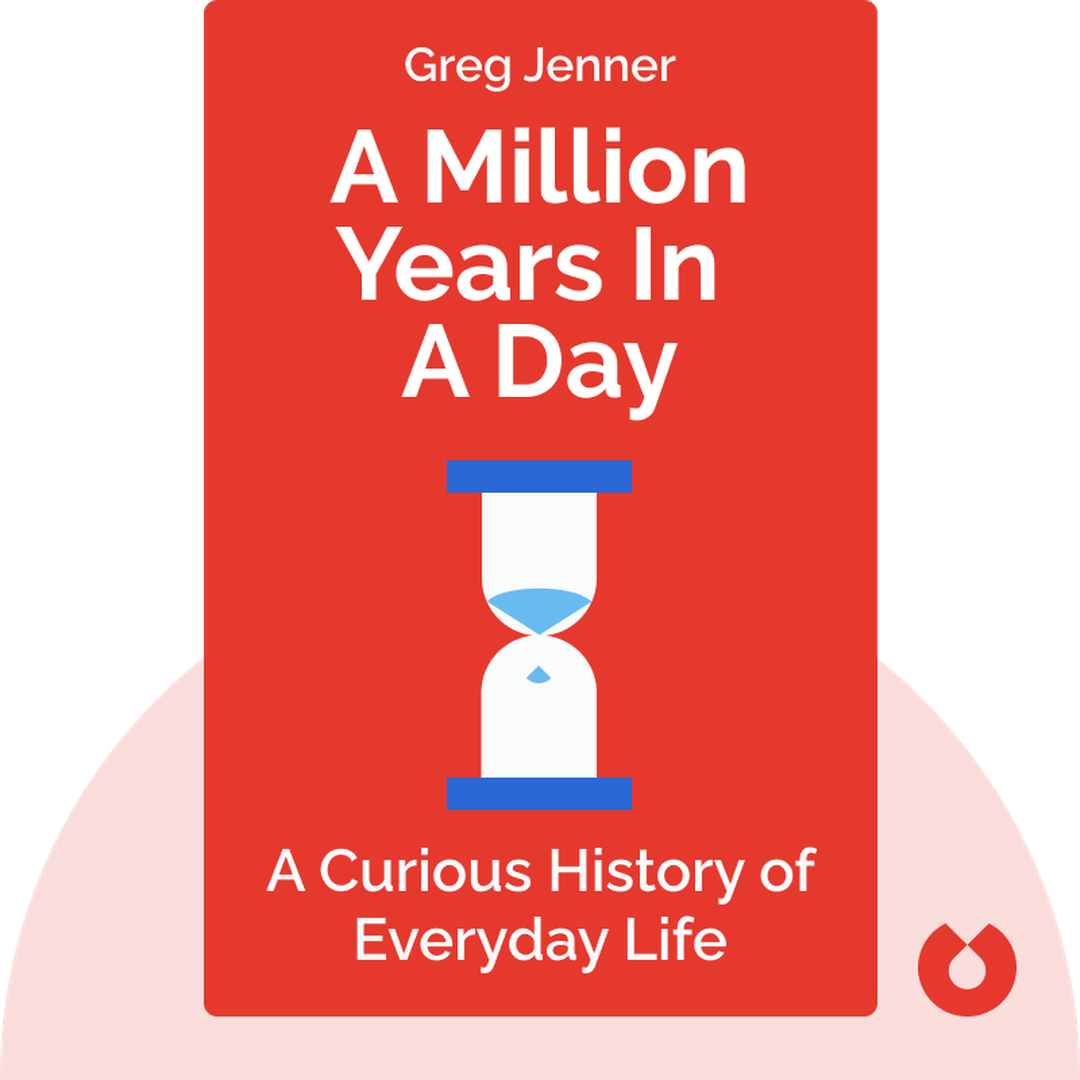
A Million Years In A Day
Start ListeningDownload Try free on iPhoneScan to start in 5 seconds
Categories:
If You're Curious About These Questions...
You should listen to this audiobook
- Have you ever wondered why we perform simple tasks like brushing our teeth, and just how many thousands of years ago these 'modern' habits actually began?
- Did you know that your typical Sunday routine is actually a living history lesson, with rituals that can be traced all the way back to the Stone Age?
- Are you curious about the bizarre and surprising origins of the everyday objects you use, from the bed you sleep in to the newspaper you read?
Listen to A Million Years In A Day — Free Audiobook
Loading player...
Key Takeaways from A Million Years In A Day
- Discover how your earliest morning routines, like checking the calendar and using a seated toilet, are rooted in Stone Age timekeeping and 4,500-year-old Harappan sewer systems.
- Learn the surprising history behind your breakfast foods, including how ancient Egyptian egg farming and a lucky 1894 mistake by Will Kellogg shaped our morning meals.
- Understand the bizarre and fluctuating evolution of human hygiene, from the beloved public baths of ancient Rome to seventeenth-century French thinkers who believed washing was dangerous.
- Find out why the bond between humans and their pets is millennia old, tracing back to 32,000-year-old domesticated dogs used for hunting and ancient Egyptian cat worship.
- Explore the ancient origins of everyday habits like sharing news and wearing clothes, revealing how Roman wax-tablet messages and 60,000-year-old bone sewing needles shaped modern life.
Learning Tools
Reinforce what you learned from A Million Years In A Day
Mind Map
A Million Years In A Day
Morning Routines+
Breakfast & Hygiene+
Companions & Communication+
Clothing Evolution+
Evening Social Rituals+
Bedtime Habits+
Quiz — Test Your Understanding
Question 1 of 8
How did the ancient Egyptians determine the day of the week and the approximate hour of the night?
Question 2 of 8
How were Kellogg’s Corn Flakes originally invented?
Question 3 of 8
Why did bathing fall out of favor in seventeenth-century Europe?
Question 4 of 8
What archaeological evidence suggests that dogs were likely humans’ earliest animal companions?
Question 5 of 8
How did ancient Romans primarily share news and communicate over long distances?
Question 6 of 8
How did the T-shirt transition from being mere underwear to a popular cultural icon?
Question 7 of 8
In the Babylonian Bronze Age, what was the primary significance of sharing a meal together?
Question 8 of 8
What evidence points to the existence of dentistry over 9,000 years ago in the neolithic town of Mehrgarh?
A Million Years In A Day — Full Chapter Overview
- 1Recommendation
- 2Timekeeping and toilets go back as far as the Stone Age.
- 3Our breakfast foods have a long history, while morning hygiene has changed greatly over time.
- 4Keeping pets and exchanging news have also been part of human life for ages.
- 5Humans started wearing clothes in the Stone Age, but trousers and T-shirts are much newer inventions.
- 6Eating together and drinking alcohol have been common customs throughout history.
- 7Dental care began in the Stone Age, and the alarm clock may also be an ancient invention.
- 8Final summary
A Million Years In A Day Summary & Overview
It’s easy to assume that our daily rituals are merely recent traditions that have taken shape in recent generations. In reality, a surprising amount of basic habits can be traced all the way back to the Stone Age. Greg Jenner’s A Million Years In A Day (2015) depicts a typical modern Sunday, from brushing one’s teeth to reading the newspaper, and reveals the long and hefty history behind our everyday lives.
Who Should Listen to A Million Years In A Day?
- People interested in cultural history
- Scholars of the Stone Age
Books Similar to A Million Years In A Day
Readers who enjoyed this also liked these titles.