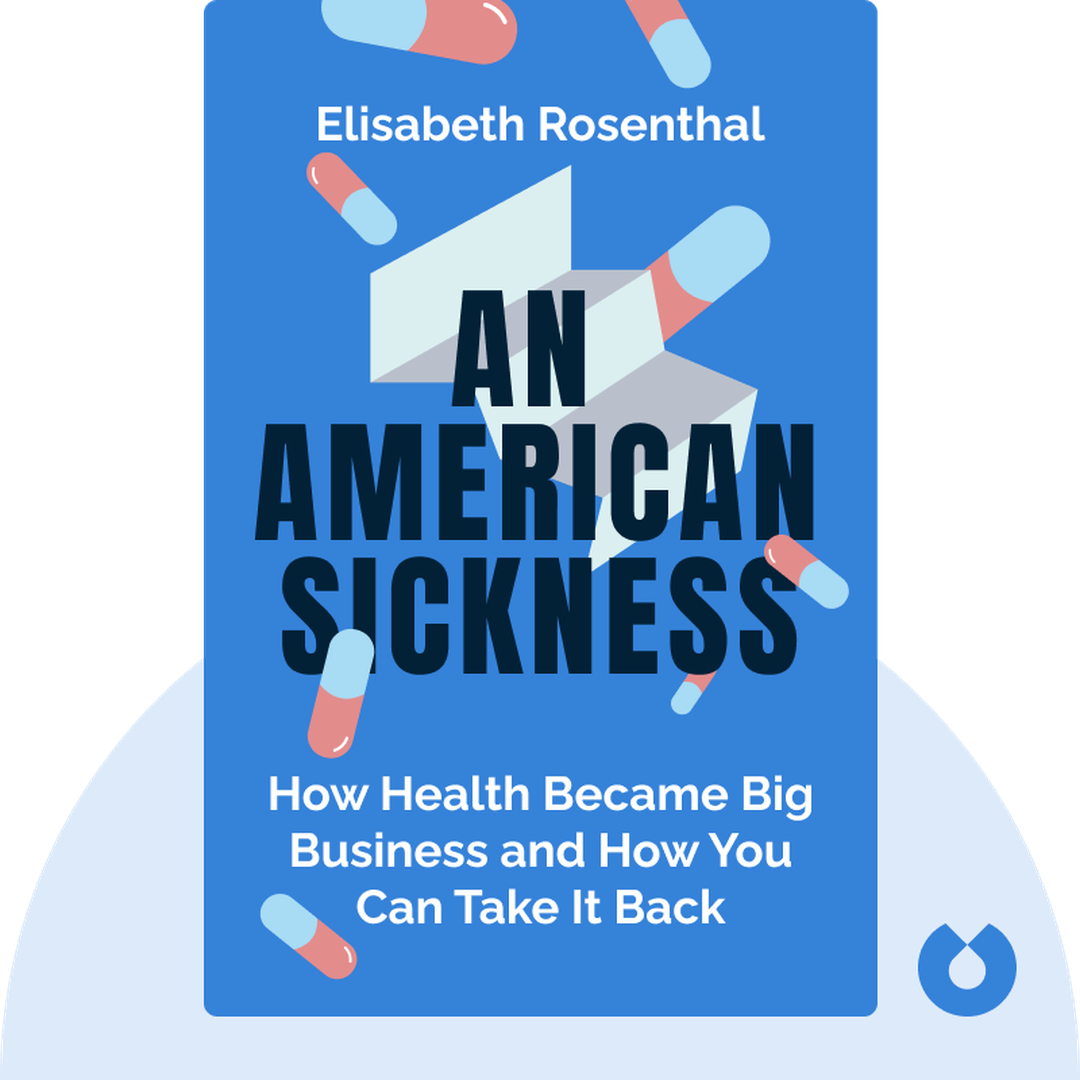
If You're Curious About These Questions...
You should listen to this audiobook
- Did you know that many of America's 'nonprofit' hospitals are actually operating like aggressive big businesses, and how is this shift impacting your wallet?
- Have you ever wondered why a simple medical procedure in the U.S. can cost ten times more than in other countries, and what secrets are hidden within those confusing medical bills?
- What if you could learn the insider strategies to push back against over-prescribing doctors and successfully slash your healthcare costs?
Listen to An American Sickness — Free Audiobook
Loading player...
Key Takeaways from An American Sickness
- Understand how the American health insurance industry transformed from a non-profit safety net into a highly lucrative business.
- Discover how hospitals transitioned from charitable institutions to profit-driven corporations by utilizing strategic pricing and offering doctors productivity bonuses.
- Learn how modern doctors maximize their wealth through entrepreneurial tactics, such as charging exorbitant facility fees at private surgery centers.
- Find out how pharmaceutical corporations manipulate patent laws and utilize fanciful marketing to artificially inflate the prices of once-affordable medications.
- Explore the unintended consequences of the Affordable Care Act, which inadvertently motivated insurance companies to approve massive medical bills simply to meet regulatory spending quotas.
Learning Tools
Reinforce what you learned from An American Sickness
Mind Map
An American Sickness
Industry Evolution+
Profit-Driven Players+
Systemic Impact & Reforms+
Actionable Patient Defense+
Quiz — Test Your Understanding
Question 1 of 10
How did the Affordable Care Act's requirement that insurers spend 80 to 85 percent of their earnings on patient care inadvertently affect insurance companies' attitudes toward high medical bills?
Question 2 of 10
What major shift occurred in the 1970s that transformed how American hospitals operate?
Question 3 of 10
Who are 'No Patient Contact' (NPC) specialists, and how have they maximized their revenue in recent years?
Question 4 of 10
How do pharmaceutical companies frequently manipulate patent laws to keep their profits high?
Question 5 of 10
Why are medical devices, such as knee implants and defibrillators, often the most expensive part of a medical bill?
Question 6 of 10
What is the typical financial impact on a town or city when a local hospital joins a large medical conglomerate?
Question 7 of 10
Why did Dr. Denise Faustman struggle to find funding from major foundations for her type 1 diabetes research?
Question 8 of 10
According to the text, what is a recommended strategy for patients to protect themselves from unexpected hospital costs upon admission?
Question 9 of 10
To reduce expenses on medical tests, what specific action does the book recommend regarding blood and fluid specimens?
Question 10 of 10
How do countries like Germany, Japan, and Belgium maintain reasonable healthcare costs compared to the United States?
An American Sickness — Full Chapter Overview
- 1Recommendation
- 2How the American health-care system grew from modest roots into a high-profit industry.
- 3Hospitals are run like other profit-seeking corporations.
- 4Doctors often act like entrepreneurs seeking new revenue streams.
- 5Pharmaceutical companies manipulate patents and pricing to keep profits flowing.
- 6Medical-device companies occupy a risky space with little competition or oversight.
- 7Hospitals have become greedy conglomerates, profiting from unnecessary tests and services.
- 8Health-care organizations put money ahead of patient care—a problem the Affordable Care Act tried to address.
- 9Americans can take steps to lower the cost of medical care.
- 10Pick your hospital and insurer carefully, and don’t hesitate to speak up.
- 11There are ways to lower the cost of medications and medical services.
- 12Final summary
An American Sickness Summary & Overview
An American Sickness (2017) takes an honest look at the state of the American health-care system and frankly diagnoses its many ailments. When big business started taking over what were once charitable organizations, things began to go truly wrong. Rosenthal presents valuable information on how to reduce health-care bills and not get taken for a ride by greedy hospitals and over-prescribing doctors.
Who Should Listen to An American Sickness?
- Americans, both healthy and sick
- Workers in the health-care and insurance industry
- Readers who want to save money
Books Similar to An American Sickness
Readers who enjoyed this also liked these titles.