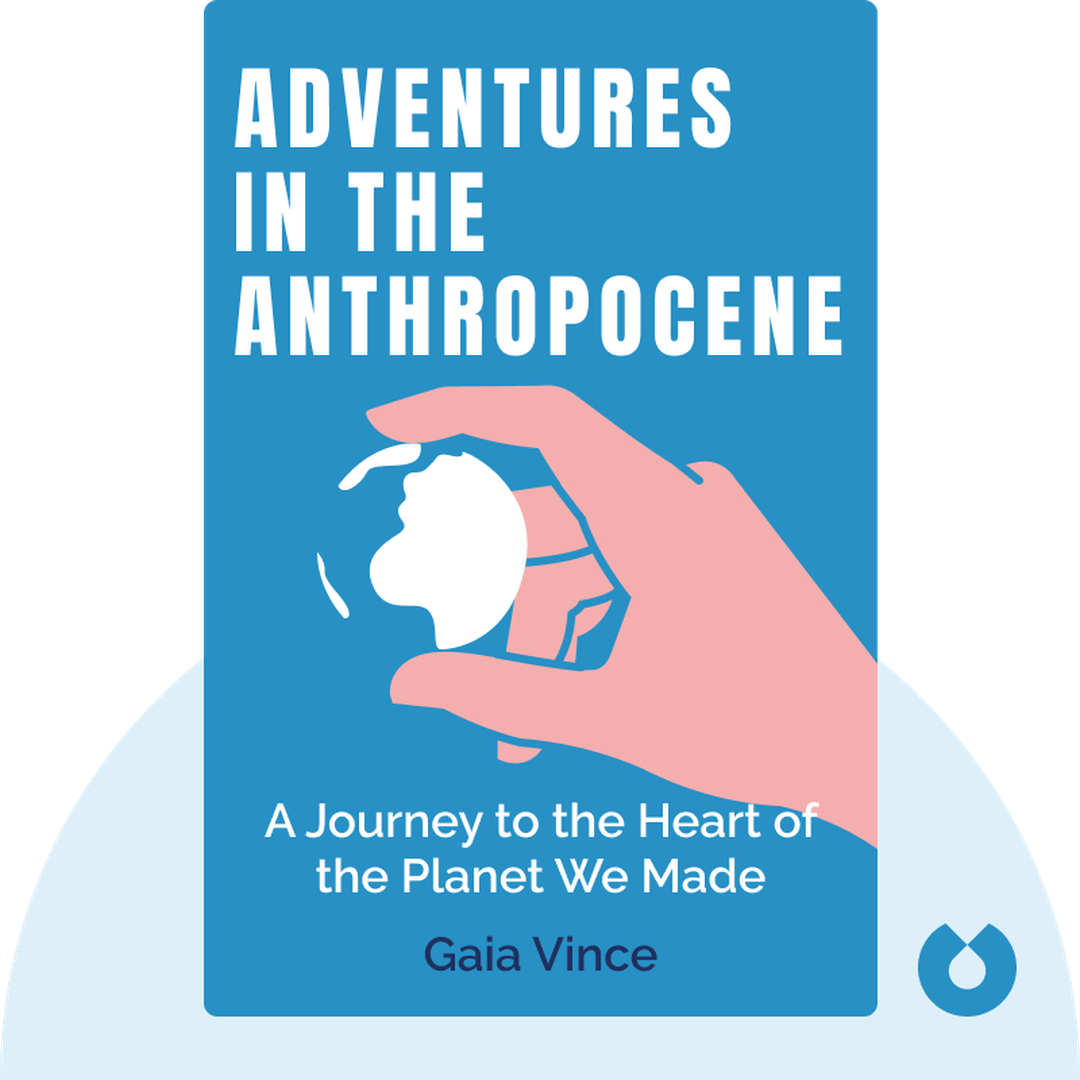
Adventures in the Anthropocene
Start ListeningDownload Try free on iPhoneScan to start in 5 seconds
Categories:
If You're Curious About These Questions...
You should listen to this audiobook
- Did you know that human activity has become so powerful it has triggered a brand-new geological epoch, fundamentally altering the very fabric of our planet?
- Have you ever wondered how communities from the Mekong River to the Kenyan desert are reinventing their way of life to survive in an environment we've radically reshaped?
- Are you curious about what it really means to live in the 'Age of Man' and whether our unprecedented impact on Earth holds the key to our future survival?
Listen to Adventures in the Anthropocene — Free Audiobook
Loading player...
Key Takeaways from Adventures in the Anthropocene
- Understand how human activity has transformed Earth so radically that we have entered the Anthropocene, becoming a natural force equal to ancient volcanoes and asteroids.
- Discover why unexpected sources like local wood and dung cooking fires create a deadly atmospheric haze, killing millions and forcing us to adapt to a permanently altered climate.
- Learn how the rapid melting of Himalayan and other mountain glaciers critically threatens over half of the world's freshwater supply.
- Explore radical geoengineering ideas like giant space mirrors to artificially cool the Earth, and grasp the catastrophic temperature risks associated with the 'termination problem'.
- Assess the hidden costs of hydropower dams, which act as highly efficient natural batteries but cause severe environmental damage by flooding fertile land and triggering earthquakes.
Learning Tools
Reinforce what you learned from Adventures in the Anthropocene
Mind Map
Adventures in the Anthropocene
The Anthropocene Era+
Atmosphere & Climate+
Water Systems+
Land & Ecosystems+
Resources & Urbanization+
Quiz — Test Your Understanding
Question 1 of 10
What is a significant, unexpected source of severe atmospheric pollution in Nepal and India mentioned in the text?
Question 2 of 10
What major risk is associated with using artificial cooling methods, such as releasing reflective particles into the atmosphere?
Question 3 of 10
While hydropower from dams provides efficient, constant energy, what is one of the major environmental and human costs mentioned in the text?
Question 4 of 10
How does the text suggest we can best feed a growing population in a warming world with unpredictable rainfall?
Question 5 of 10
According to the text, what is a surprising potential consequence of an ice-free Arctic for Europe?
Question 6 of 10
How are expanding deserts and droughts paradoxically contributing to new energy solutions in Africa?
Question 7 of 10
What radical, artificial method does the text propose as an example of how humans might restore balance to ecosystems?
Question 8 of 10
What does the text identify as the primary driver of deforestation worldwide?
Question 9 of 10
To reduce the devastating environmental impact of mining fossil fuels, what alternative does the text suggest is necessary for future energy demands?
Question 10 of 10
Why is urbanization in developing countries currently presenting a different sustainability challenge compared to richer countries?
Adventures in the Anthropocene — Full Chapter Overview
- 1Recommendation
- 2Humans are transforming the atmosphere beyond recognition.
- 3Dramatic changes in mountains are threatening our survival.
- 4Our rivers provide vital energy, but at major human and environmental cost.
- 5To feed a growing population in a warming world, farming must become more efficient.
- 6We’ve changed the oceans, and now we must face the consequences.
- 7Climate change is destroying desert traditions while opening up new energy sources.
- 8We’re no longer just part of nature; we control it, and its future depends on us.
- 9Forests have never faced greater threats.
- 10Humanity must rethink how it uses the earth’s mineral resources.
- 11This is the urban age, and cities are the future.
- 12Final summary
Adventures in the Anthropocene Summary & Overview
Adventures in the Anthropocene (2014) explores how humanity has altered the planet so radically in recent decades that a new geological epoch is said to be coming into being – we’re crossing over from the Holocene to the Anthropocene, or the Age of Man. Author Gaia Vince examines what the changes we’ve made really mean for the world. From disappearing islands to urban slums, from Mekong fishermen to ancient nomadic tribes in Kenya, these blinks tell the story of our new relationship with nature and our hopes for the future.
Who Should Listen to Adventures in the Anthropocene?
- Anyone who’d like to understand the human impact on the world
- Global citizens who want to learn about the effects of climate change
- Everyone who wonders about the future of human life on Earth
Books Similar to Adventures in the Anthropocene
Readers who enjoyed this also liked these titles.