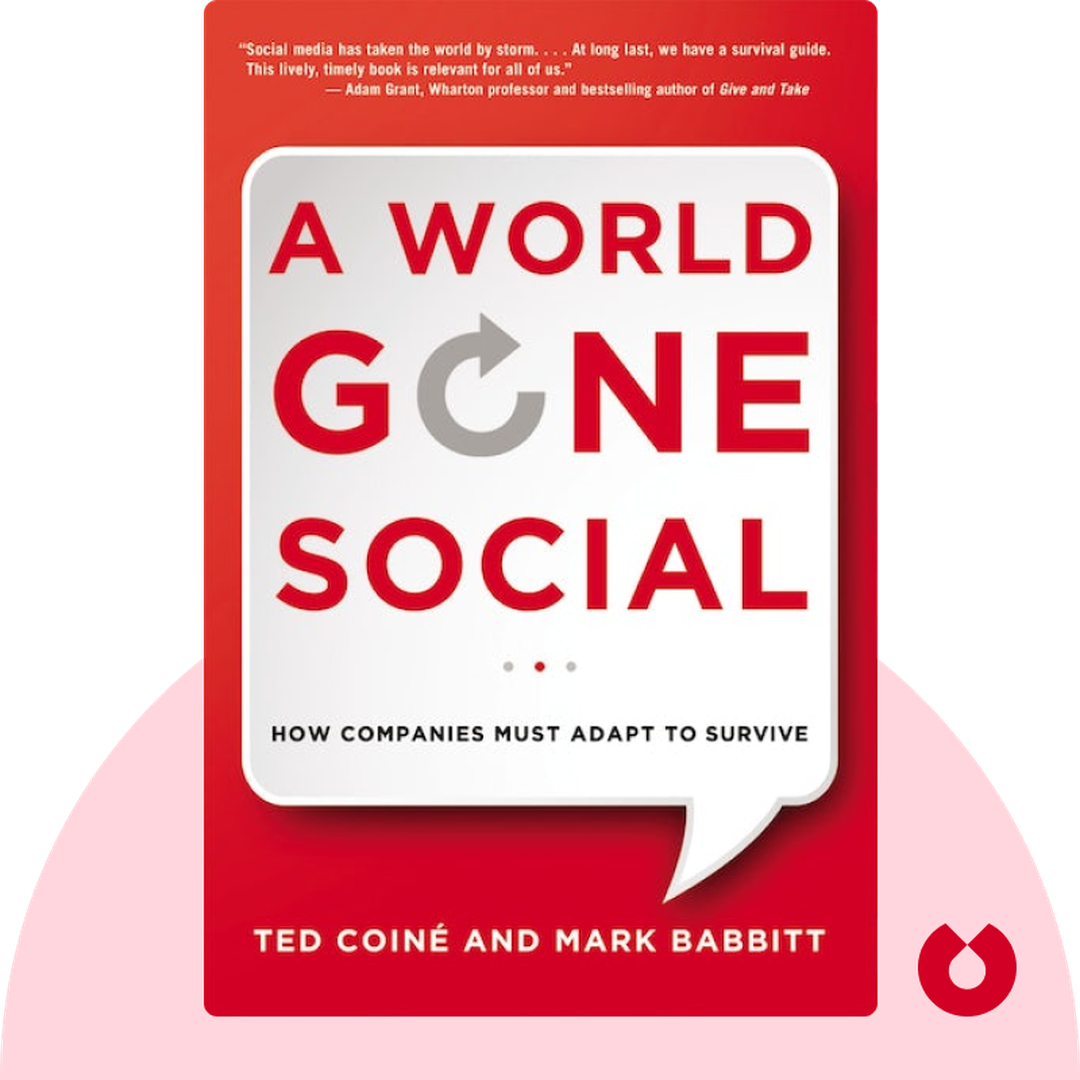
If You're Curious About These Questions...
You should listen to this audiobook
- Have you ever wondered why some companies effortlessly build massive, loyal communities while others struggle to be heard in the noise of the Social Age?
- What if you could transform your business culture from the inside out to turn social media into your most powerful competitive advantage?
- Did you know that the most successful modern leaders aren't just using social media—they’re fundamentally changing how their entire companies operate to thrive in a social-first world?
Listen to A World Gone Social — Free Audiobook
Loading player...
Key Takeaways from A World Gone Social
- Discover why prioritizing the human side of your business is now essential for attracting top talent and connecting with modern consumers.
- Understand the massive power shift between consumer and firm, where a single viral complaint can irreversibly destroy millions of dollars in marketing efforts.
- Learn why genuine employee engagement must start with top leadership, rather than HR, to effectively boost productivity, profits, and your company's public image.
- Master the art of directly engaging with individual customers on social platforms to outmaneuver massive competitors, generate word-of-mouth buzz, and secure fierce loyalty.
- Find out how to adopt the agility of small start-ups and 'nano corps' to rapidly innovate, lower operational costs, and swiftly adapt to a fast-moving marketplace.
Learning Tools
Reinforce what you learned from A World Gone Social
Mind Map
A World Gone Social
The New Social Reality+
The Human Side of Business+
Engagement as the Foundation+
Agile Organizational Structures+
The Network of Knowledge+
Universal Business Application+
Social Media Best Practices+
Quiz — Test Your Understanding
Question 1 of 8
According to the text, how has social media changed the way products are marketed and reviewed?
Question 2 of 8
What key lesson does the Dave Carroll 'United Breaks Guitars' story illustrate about the modern business landscape?
Question 3 of 8
Who does the author believe should be primarily responsible for establishing employee engagement within a company?
Question 4 of 8
How does the gaming firm Valve successfully operate without traditional managers?
Question 5 of 8
What is a 'nano corp' in the context of modern organizational agility?
Question 6 of 8
How did Tangerine bank benefit from using an internal social platform where employees could complain (e.g., 'The Right to B*@#h' blog)?
Question 7 of 8
When conducting a social media audit, which of the following practices does the text strongly advise AGAINST?
Question 8 of 8
What is the primary advantage of utilizing open networks and platforms like InnoCentive for businesses?
A World Gone Social — Full Chapter Overview
- 1Recommendation
- 2In the social media age, the human side of business matters more than ever.
- 3One viral video can permanently damage a company’s reputation.
- 4Engaging employees and customers through social media is the first step toward building a great business.
- 5Smaller companies have the agility needed to adapt to a fast-moving market.
- 6Companies that embrace flat hierarchies—and eventually eliminate managers—are richly rewarded.
- 7Ordinary people can unite to create an extraordinary network of knowledge.
- 8Social media isn’t only for tech start-ups—it’s essential to any company’s success.
- 9To maintain your reputation as a social leader, conduct regular social media audits.
- 10Final summary
A World Gone Social Summary & Overview
Social media isn’t a temporary fad – it’s changing business culture in a big way. A World Gone Social explains why it’s important for companies to evolve their own social media tactics, and includes helpful tips for business owners who want to embrace new technologies and build them into their gameplay.
Who Should Listen to A World Gone Social?
- Business owners who are looking for new ways to engage with customers
- Anyone who’s interested in the way technology has changed business culture
- Anyone who’s thinking about starting their own company
Books Similar to A World Gone Social
Readers who enjoyed this also liked these titles.