If You're Curious About These Questions...
You should listen to this audiobook
- Have you ever wondered why traditional brand accounts often struggle to get engagement while individual personalities seem to build massive followings overnight?
- What’s the secret to giving your business a 'human face' that actually earns the trust and attention of cynical social media users?
- Did you know that the most effective way to grow your brand in the modern age might involve doing the exact opposite of what traditional marketing textbooks teach?
Listen to The End of Marketing — Free Audiobook
Loading player...
Key Takeaways from The End of Marketing
- Understand why traditional marketing is dead and how humanizing your brand is the ultimate key to generating sales on social media.
- Learn to replace aggressive sales pitches with authentic human connections, waiting to offer your product via direct message only when the time is right.
- Discover how to beat unforgiving social media algorithms by actively interacting with followers and using engagement pods to boost your early visibility.
- Master the art of social listening by hunting down untagged mentions of your brand and competitors to find new opportunities to showcase your personality.
- Find out how to avoid talking into a void by choosing the right platforms for your target demographic and sparking conversations with relatable, educational content.
Learning Tools
Reinforce what you learned from The End of Marketing
Mind Map
The End of Marketing
The Shift in Marketing+
Building a Human Brand+
Engagement Over Vanity Metrics+
Advocates and Storytellers+
Platform Strategy & Future+
Quiz — Test Your Understanding
Question 1 of 7
According to the author, why is traditional marketing considered 'dead' in the era of social media?
Question 2 of 7
What is one 'under the radar' tactic the author suggests to ensure your social media posts circulate widely?
Question 3 of 7
Why does the author strongly advise against chasing 'vanity metrics' like a high follower count?
Question 4 of 7
How does the author distinguish between social media 'influencers' and brand 'ambassadors'?
Question 5 of 7
What is the author’s 'radical idea' for humanizing a brand's content on social media?
Question 6 of 7
How can a serious-minded company, such as an insurance firm, successfully show personality on social media without appearing 'weird'?
Question 7 of 7
According to the actionable advice in the summary, what should a brand do if its potential customers do not hang out on a specific social media platform?
The End of Marketing — Full Chapter Overview
- 1Recommendation
- 2In social media’s new era, traditional marketing is effectively dead now.
- 3Make your voice stand out by being human and building engagement.
- 4Personality is the key to a successful online presence.
- 5Rather than chasing vanity metrics, do whatever it takes to truly grow engagement.
- 6Social media personalities can help your brand, but only if they’re brilliant, relatable storytellers.
- 7Your most powerful advocates are the ones you already have—your own employees and customers.
- 8Technology is changing everything very quickly, but social media’s power will always still come from the human touch.
The End of Marketing Summary & Overview
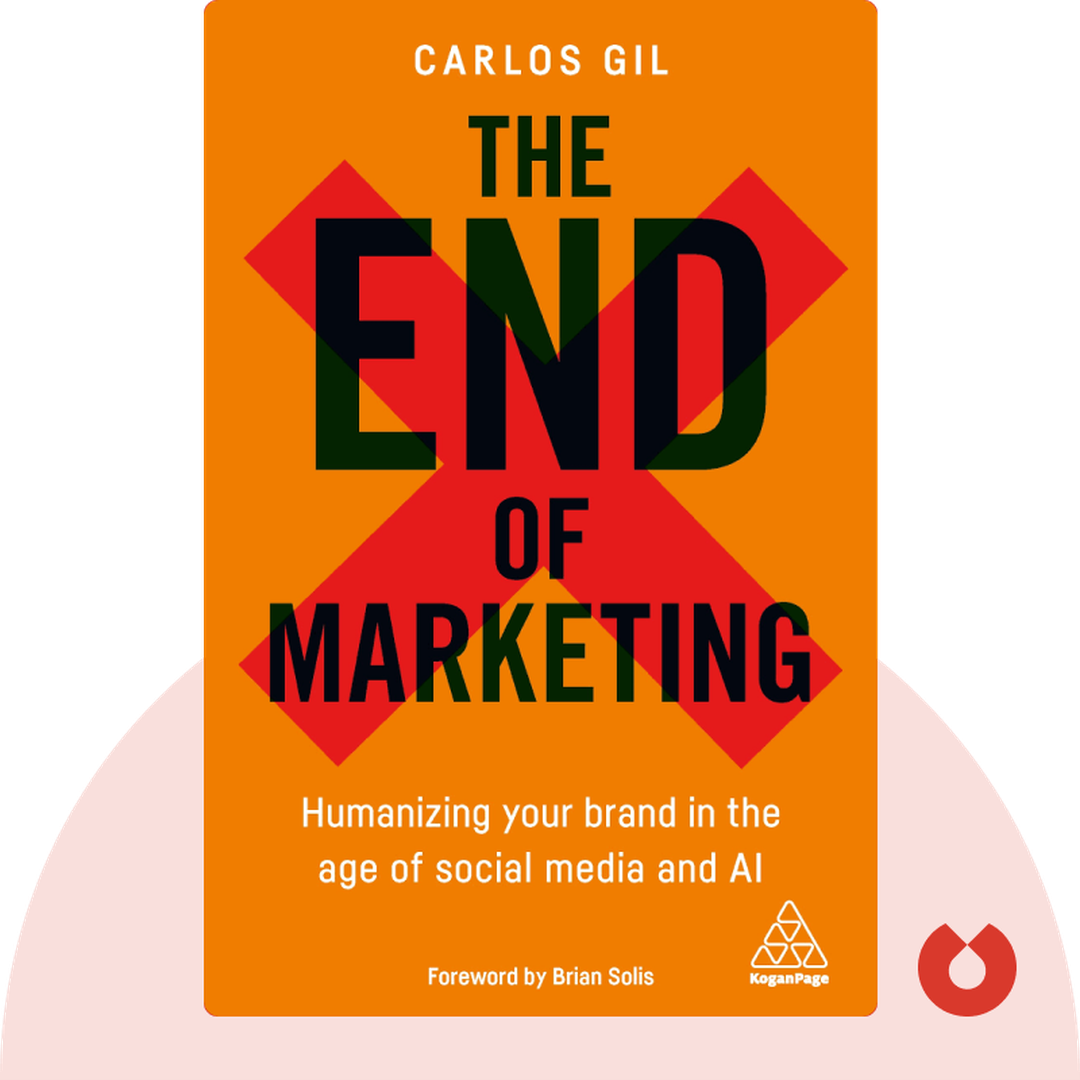
The End of Marketing (2020) is a guide to how brands should use social media. In an age when traditional marketing is no more, businesses must find ways to give their brands a human face, to capture the attention of social media users and win their trust.
Who Should Listen to The End of Marketing?
- Businesspeople who are unsure how to use social media
- Traditional marketers catching up with the changing marketplace
- Digital marketers who are looking to hone their strategies
Books Similar to The End of Marketing
Readers who enjoyed this also liked these titles.