Theme Song
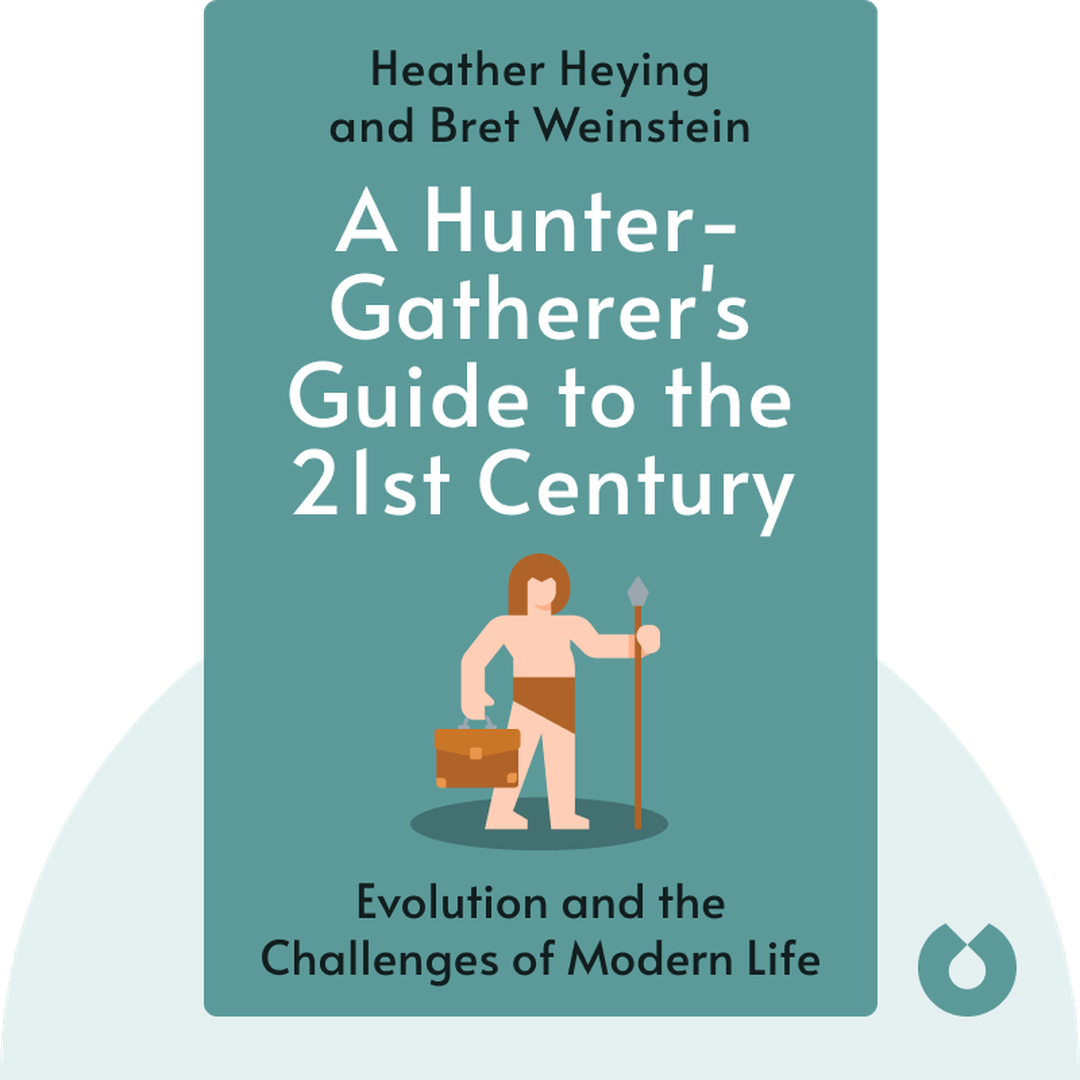
A Hunter-Gatherer's Guide to the 21st Century
Start ListeningDownload Try free on iPhoneScan to start in 5 seconds
Categories:
If You're Curious About These Questions...
You should listen to this audiobook
- How does growing up surrounded by perfectly straight lines and precise corners actually alter our visual perception and brain development?
- Why do evolutionary biologists believe that intelligent alien life forms would likely need to sleep, and how does this relate to the biological limitations of eyesight?
- In what ways are modern parenting habits, like highly scheduled activities and excessive screen time, actively working against millions of years of human brain evolution?
Listen to A Hunter-Gatherer's Guide to the 21st Century — Cinematic Audio Edition
Loading player...
Key Takeaways from A Hunter-Gatherer's Guide to the 21st Century
- Discover why modern conveniences are making us miserable by exploring the dangerous mismatch between our ancient evolutionary biology and the 21st-century world.
- Learn how growing up surrounded by the unnatural, perfectly straight geometry of industrialized societies can actually alter your visual perception and limit your natural abilities.
- Find out how overly sterile modern homes disrupt the delicate balance of our immune systems and gut bacteria, paradoxically leading to modern ailments like appendicitis.
- Understand why there is no single ideal human diet by tracing genetic lineages, and discover how the invention of cooking was a vital catalyst for human prosperity.
- Explore the evolutionary purpose behind sexual reproduction and learn how mixing genes equips future generations to adapt and survive in a volatile, unpredictable world.
Learning Tools
Reinforce what you learned from A Hunter-Gatherer's Guide to the 21st Century
Mind Map
A Hunter-Gatherer's Guide to the 21st Century
Evolutionary Mismatch+
Environment & Perception+
Diet & Nutrition+
Sex & Reproduction+
Childhood Development+
Sleep & Cognition+
Modern Medicine & Health+
Actionable Advice+
Quiz — Test Your Understanding
Question 1 of 8
Why do people from industrialized (WEIRD) nations often fall for certain line-length optical illusions, according to the text?
Question 2 of 8
What evolutionary purpose does the appendix serve in the context of our digestive system?
Question 3 of 8
What is the primary flaw in the argument for a universal 'paleo' or raw-food diet?
Question 4 of 8
According to the book, what was a major evolutionary advantage of cooking food?
Question 5 of 8
Why is sexual reproduction biologically advantageous despite the 'cost' of only passing on 50 percent of an individual's genes?
Question 6 of 8
Why do human children eventually lose the ability to hear certain language tones and sounds as they grow older?
Question 7 of 8
What was the original evolutionary reason that animals, including early humans, began to sleep?
Question 8 of 8
How does the text describe the danger of a 'reductionist' approach to modern medicine and health?
A Hunter-Gatherer's Guide to the 21st Century — Full Chapter Overview
- 1Recommendation
- 2WEIRD people are raised amid unnatural geometry.
- 3There’s no single ideal diet for all human beings.
- 4Sexual reproduction makes sense in an unpredictable world.
- 5Children need to explore and discover during childhood to mature into adults.
- 6Sleep is the body’s solution to a very specific problem.
- 7Scientists use a dangerously reductionist approach to health.
- 8Final summary
A Hunter-Gatherer's Guide to the 21st Century Summary & Overview
Hunter Gatherers (2021) explores the mismatch between our evolutionary tendencies and our modern environments. It outlines how seemingly innocuous aspects of contemporary living are harming us, and stifling our true nature and potential.
Who Should Listen to A Hunter-Gatherer's Guide to the 21st Century?
- Psychology buffs looking for fresh insights
- Anyone interested in evolutionary biology
- Fans of natural history
Books Similar to A Hunter-Gatherer's Guide to the 21st Century
Readers who enjoyed this also liked these titles.