Theme Song
If You're Curious About These Questions...
You should listen to this audiobook
- Did you know that the diverse regions of modern-day Nigeria were home to sophisticated civilizations and powerful empires long before the first colonial borders were ever drawn?
- Have you ever wondered how hundreds of distinct ethnic groups and ancient kingdoms were unified to form Africa’s most populous—and arguably most complex—modern nation?
- What is the secret behind Nigeria’s incredible resilience as it navigated through colonial rule and military coups toward its current democratic path?
Listen to A History of Nigeria — Cinematic Audio Edition
Loading player...
Key Takeaways from A History of Nigeria
- Discover the immense scale and cultural diversity of Africa’s most populous country, home to over 500 languages, a booming film industry, and 200 million people.
- Understand why the concept of 'precolonial Nigeria' is a myth, as the region was historically comprised of distinct, independent kingdoms and decentralized villages long before European borders were drawn.
- Learn how indigenous African slavery significantly differed from American chattel slavery, often allowing enslaved individuals to integrate into society, marry, and even achieve political power.
- Uncover the devastating scale of the transatlantic slave trade in the region, with Nigeria accounting for an astonishing 42 percent of all slaves shipped out of Africa during the late seventeenth century.
- Find out how the 19th-century Sokoto Caliphate revolutionized the region's political landscape, uniting fragmented communities under Islam and forging a cohesive cultural identity in northern Nigeria.
Learning Tools
Reinforce what you learned from A History of Nigeria
Mind Map
A History of Nigeria
Precolonial Era+
Slavery & Economic Shifts+
British Colonialism+
Independence & Civil War+
Oil, Corruption & Dictators+
Return to Democracy+
Quiz — Test Your Understanding
Question 1 of 10
Why is the term 'precolonial Nigeria' considered misleading according to the text?
Question 2 of 10
How did indigenous slavery in the Nigerian region generally differ from the chattel slavery that developed in the Americas?
Question 3 of 10
What was a major impact of the Sokoto Caliphate in the nineteenth century?
Question 4 of 10
How did southern Nigerian states adapt economically after the British parliament abolished the slave trade in 1807?
Question 5 of 10
What was the reality of the British 'Dual Mandate' system introduced in 1914?
Question 6 of 10
What was the historical significance of the Women's War of 1929?
Question 7 of 10
What was the primary cause of the Nigerian civil war that began in 1967?
Question 8 of 10
How did the reliance on massive oil reserves affect Nigeria in the 1970s?
Question 9 of 10
What was a major consequence of the IMF's Structural Adjustment Program implemented in Nigeria during the 1980s?
Question 10 of 10
Why was the 2007 Nigerian election considered a landmark event, despite being heavily flawed?
A History of Nigeria — Full Chapter Overview
- 1Recommendation
- 2The history of the region that is now Nigeria stretches back thousands of years.
- 3By the nineteenth century, the slave trade had become central to the Nigerian region’s economy.
- 4The nineteenth century brought major social, political, and economic change to the Nigerian region.
- 5British colonialism began in the region in the nineteenth century and helped create modern-day Nigeria.
- 6Early twentieth-century Nigeria underwent major social, economic, and political changes under British colonialism.
- 7In 1960, nationalist resistance to British colonialism led to Nigerian independence.
- 8Nigeria in the 1960s after independence was marked by corruption, interethnic tensions, and civil war.
- 9Oil dependence and widespread corruption troubled Nigeria throughout the 1970s.
- 10After enduring three military dictators, Nigerians finally regained democratic rights in 1999.
- 11The 2007 Nigerian elections marked the first peaceful transfer of power from one civilian leader to another.
- 12Final summary
A History of Nigeria Summary & Overview
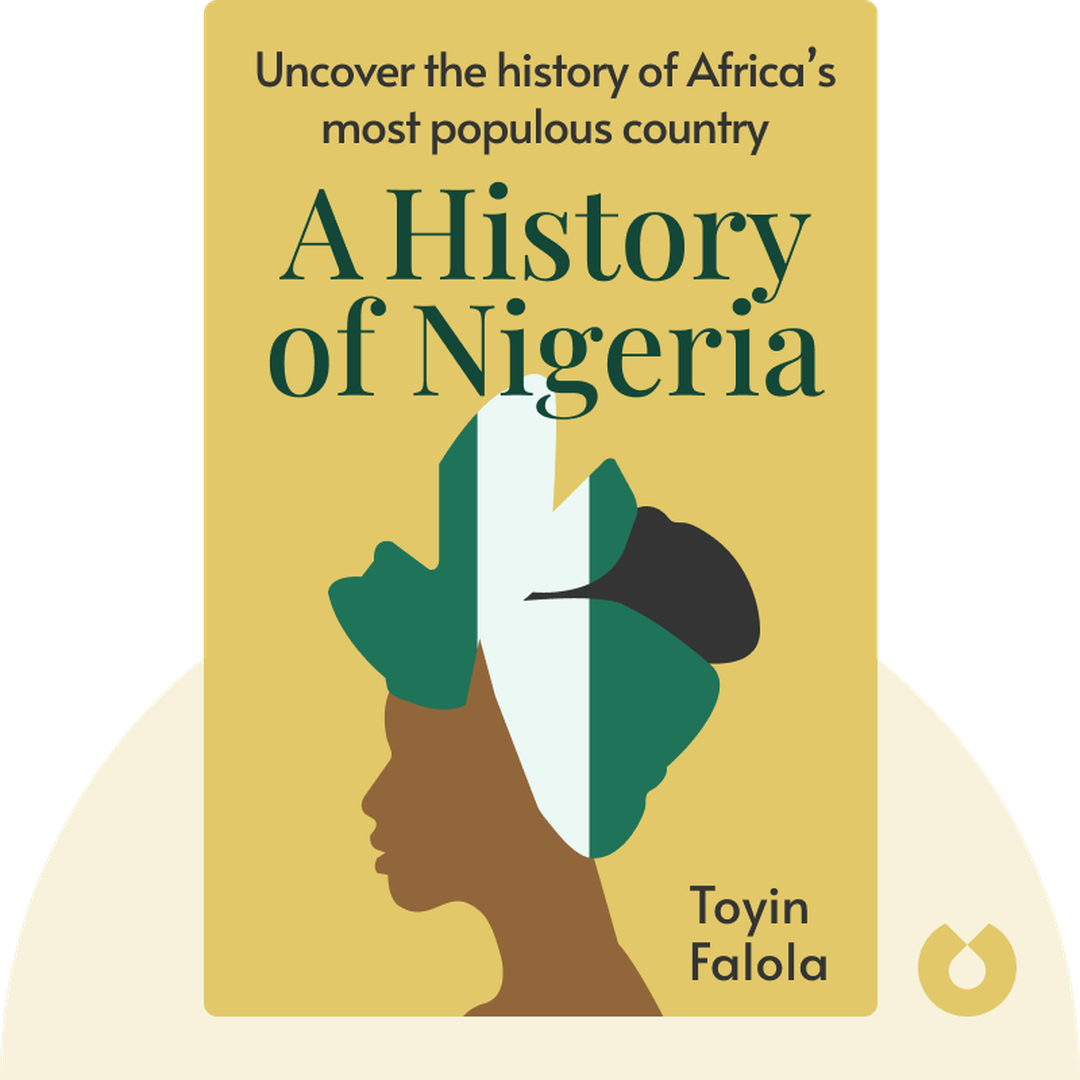
A History of Nigeria (2008) documents the millennia-long history of the areas that make up the modern nation of Nigeria, Africa’s most populous country. Going on an epic journey from the region’s precolonial past right up to the country’s recent transition toward democracy, the authors document the riveting history of a nation and, of course, its people – whose future looks bright.
Who Should Listen to A History of Nigeria?
- Students of history, international relations or politics
- Curious individuals wanting to discover the riveting story of Africa’s most populous nation
- Nigerians – or people of Nigerian descent – who would like to learn more about the country’s history
Books Similar to A History of Nigeria
Readers who enjoyed this also liked these titles.