If You're Curious About These Questions...
You should listen to this audiobook
- Did you know that the Black presence in Britain doesn’t start with modern immigration, but actually dates all the way back to the Roman Empire?
- Have you ever wondered how the transatlantic slave trade did more than just build wealth, fundamentally reshaping the very identity of the British nation?
- Are you curious about the forgotten figures of the African diaspora who were instrumental in major turning points of British history?
Listen to Black and British — Free Audiobook
Loading player...
Key Takeaways from Black and British
- Realize why the modern distinction between a 'white' and a 'Black' Britain is historically illusory, and how this deeply intertwined past reframes today's debates on identity.
- Understand Britain's often-overlooked role as the premier transatlantic slave-trading nation between 1618 and 1807, a dark history heavily obscured by the geographic distance of its Caribbean plantations.
- Learn how Black people were pivotal actors in major British historical events, from forming alliances with explorer Francis Drake to fighting alongside Admiral Lord Nelson at the Battle of Trafalgar.
- Discover archaeological proof that Black people lived in Britain as high-status citizens during the third-century Roman Empire, completely dismantling the myth that Black British history began after 1945.
- Explore the complex social dynamics of Tudor England, an era preceding the transatlantic slave trade where Black Britons like royal trumpeter John Blanke integrated into the highest levels of the royal court.
Learning Tools
Reinforce what you learned from Black and British
Mind Map
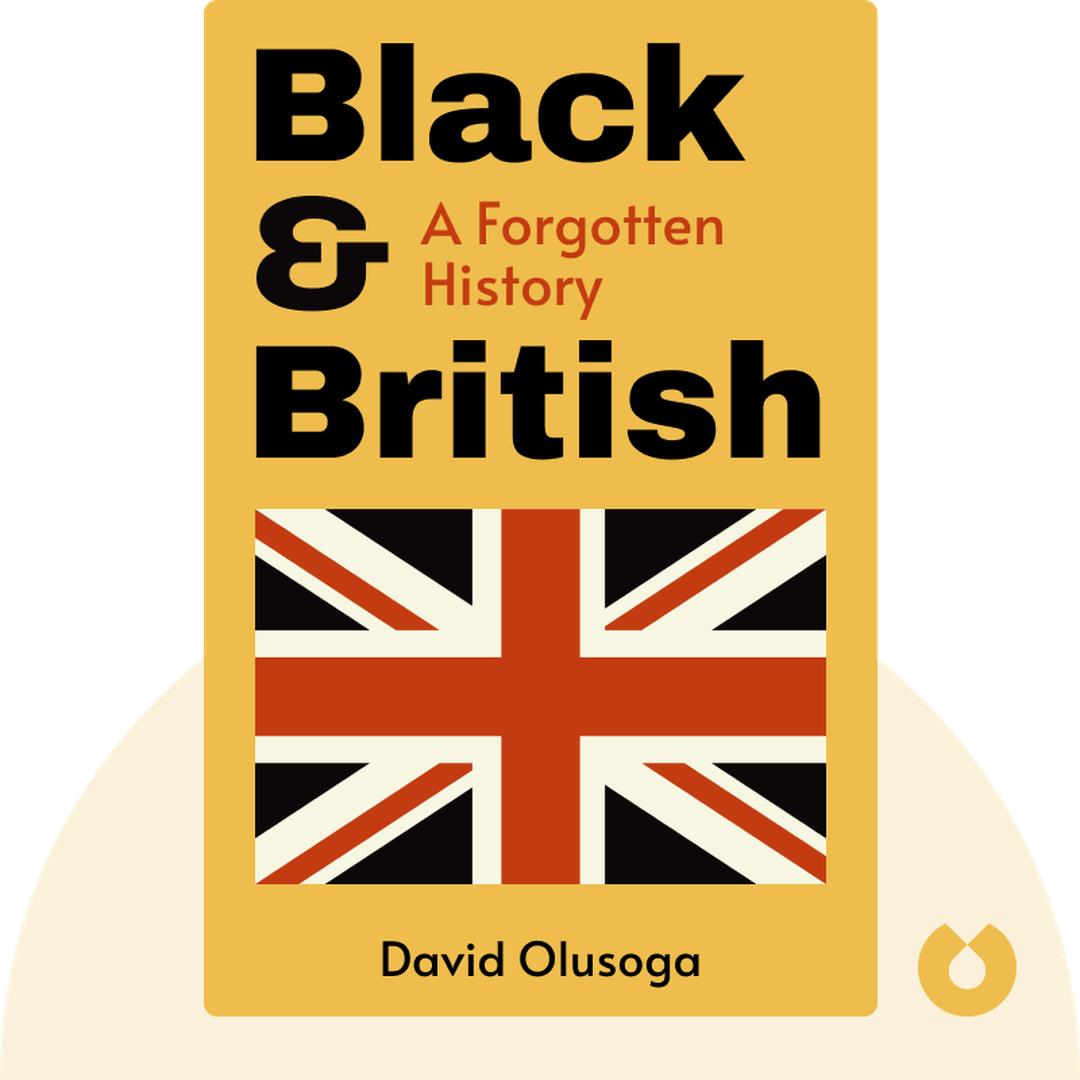
Black and British
Roman Era & Early Presence+
Tudor & Elizabethan Era+
Transatlantic Slave Trade+
Abolition & Economic Complicity+
Colonialism & Scramble for Africa+
World Wars & Windrush+
Historical Memory+
Quiz — Test Your Understanding
Question 1 of 10
Why does the author mention Bunce Island?
Question 2 of 10
What do the archaeological discoveries of the 'Ivory Bangle Lady' and the 'Beachy Head' woman demonstrate?
Question 3 of 10
How does Shakespeare's play 'Othello' reflect Elizabethan England's attitude toward Black people?
Question 4 of 10
What was the significant societal impact of the 1661 Barbados Slave Code?
Question 5 of 10
What was the outcome and significance of the Mansfield Judgment of 1772?
Question 6 of 10
Which tragic event played a crucial role in galvanizing the British abolitionist movement?
Question 7 of 10
Why did some British manufacturing towns, such as Liverpool, support the southern Confederacy during the American Civil War?
Question 8 of 10
Which of the following technological advancements was NOT mentioned as a key factor that enabled the rapid British colonization of Africa?
Question 9 of 10
Why did the British War Office primarily use the British West Indies Regiment (BWIR) as a labor battalion rather than combat troops during World War I?
Question 10 of 10
What was a significant catalyst for the boom in West Indian migration to Britain during the 1950s?
Black and British — Full Chapter Overview
- 1Recommendation
- 2Black people’s contributions to British history are often overlooked or forgotten.
- 3Black people have lived in Britain since at least the Roman Empire.
- 4Attitudes toward Black people in Tudor and Elizabethan England were complex and contradictory.
- 5The growing slave trade hardened racist ideologies.
- 6The 1772 Mansfield Judgment struck a critical blow against slave owners’ rights in Britain.
- 7Abolitionism was both a popular and political movement that ended the slave trade and slavery.
- 8Even after abolishing slavery, Britain remained economically complicit in American slavery.
- 9The expansion of colonialism brought wide-ranging British control over African territory and peoples.
- 10Black servicemen played a crucial role for Britain in World War I, yet faced widespread discrimination and abuse.
- 11After World War II, Black migration to Britain rose sharply despite efforts to restrict it.
- 12Final summary
Black and British Summary & Overview
Black and British (2016) traces Britain’s long and complex relationship with the people of Africa and the Caribbean. Reaching all the way back to Roman Britain, when the first Africans arrived in England, the book reveals that Black people have been at the heart of British history from the very start. A major player in the transatlantic slave trade, Britain further entwined its destiny with that of the Africans it enslaved. Ultimately, David Olusoga illustrates how the story of Black Britain is the story of all of Britain.
Who Should Listen to Black and British?
- History buffs interested in a deeper insight into British history
- Cultural enthusiasts eager to learn more about the African diaspora
- Scholars interested in uncovering marginalized histories and stories
Books Similar to Black and British
Readers who enjoyed this also liked these titles.