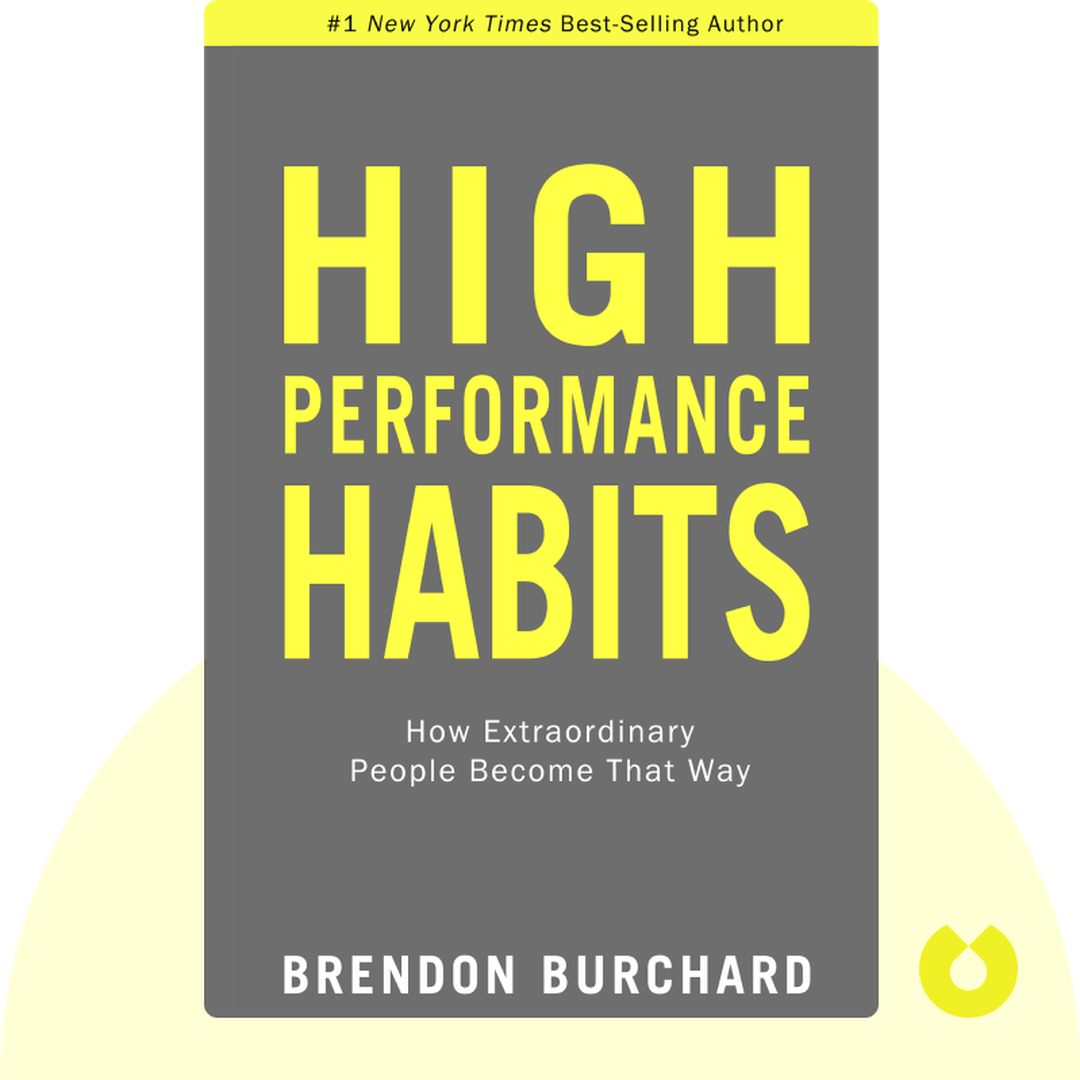
High Performance Habits
Start ListeningDownload Try free on iPhoneScan to start in 5 seconds
Categories:
If You're Curious About These Questions...
You should listen to this audiobook
- What's the secret to achieving 30% more in less time, like the world's most productive people?
- Are you curious about the one habit that can increase your energy levels and reduce procrastination?
- What if you could identify and break the patterns that are holding you back from reaching your full potential?
Listen to High Performance Habits — Free Audiobook
Loading player...
Key Takeaways from High Performance Habits
- Understand why true success isn't just about working hard, but requires deliberately practicing consistent habits to elevate yourself above the ordinary.
- Discover how to gain absolute clarity in your life by intentionally evaluating your personal growth, social relationships, professional skills, and practical contributions.
- Learn how to protect and optimize your physical, mental, and emotional energy by mastering daily transitions, releasing tension, and setting clear intentions.
- Find out how to drive your own success by creating performance necessity, leveraging both your internal identity and your external sense of duty to others.
- Master the art of true productivity by distinguishing between meaningless busywork and purposeful, daily progress toward your ultimate life goals.
Learning Tools
Reinforce what you learned from High Performance Habits
Mind Map
High Performance Habits
Core Philosophy+
Habit 1: Seek Clarity+
Habit 2: Generate Energy+
Habit 3: Raise Necessity+
Habit 4: Increase Productivity+
Habit 5: Develop Influence+
Habit 6: Demonstrate Courage+
Quiz — Test Your Understanding
Question 1 of 8
According to Brendon Burchard's research, what is the primary driver of long-term high performance?
Question 2 of 8
How do high performers approach social interactions differently than average performers?
Question 3 of 8
What surprising trait do high-performing CEOs often share with professional athletes?
Question 4 of 8
Why do high performers often share their goals with a large group of people?
Question 5 of 8
According to the text, why is constantly checking and answering email considered a trap for productivity?
Question 6 of 8
What is a 'false deadline trap' that underperformers frequently fall into?
Question 7 of 8
Why do underperformers often hesitate to ask for favors, despite data showing it is an effective strategy?
Question 8 of 8
How do high performers handle the fear of being judged as 'delusional' or 'unrealistic' regarding their goals?
High Performance Habits — Full Chapter Overview
- 1Recommendation
- 2High performance comes from strong habits and confidence, not personality or natural talent.
- 3High performers know themselves and have a clear sense of purpose.
- 4High performers stay positive and keep themselves physically and mentally fit.
- 5High performers rely on internal and external expectations to stay motivated.
- 6High performers minimize distractions and handle deadlines wisely.
- 7High performers are appreciative, generous, and attentive to what others need to succeed.
- 8High performers are willing to take risks and openly share their ambitions.
- 9Final summary
High Performance Habits Summary & Overview
High Performance Habits (2017) explores the six habits that can turn an ordinary person into an extraordinarily productive one. Performance coach Brendon Burchard draws on the data and statistics from one of the largest studies of the world’s most productive people ever conducted to explore their habits and find out what makes them tick.
Who Should Listen to High Performance Habits?
- Workers who wish to improve job performance
- Students interested in the habits of extraordinary people
- Readers who want to be healthier and happier
Books Similar to High Performance Habits
Readers who enjoyed this also liked these titles.