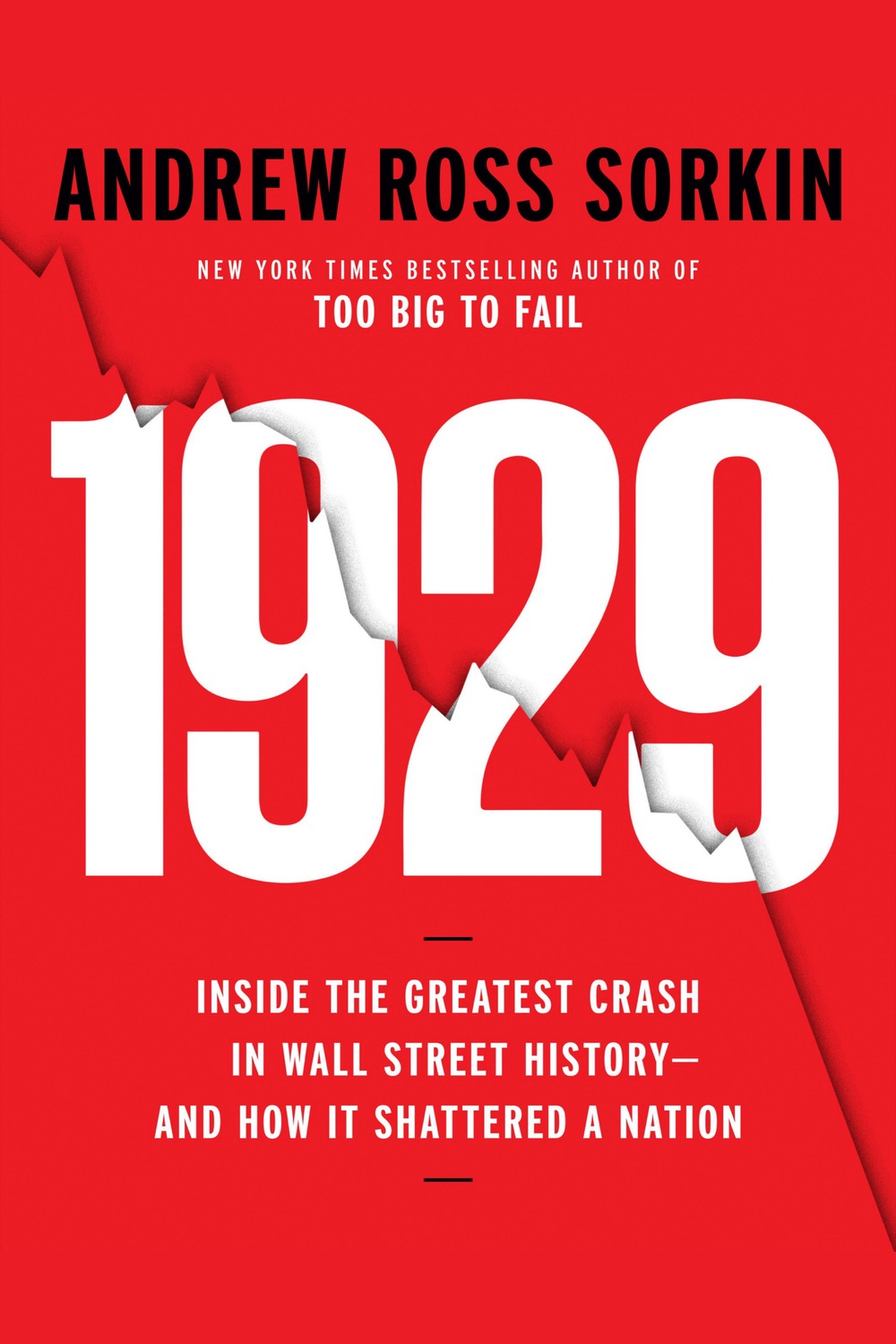
1929: Inside the Greatest Crash in Wall Street History—and How It Shattered a Nation audiobook cover - Andrew Ross Sorkin reconstructs the ambition, leverage, private bargains, policy failures, and human self-deception behind 1929, revealing how celebrated bankers and politicians helped turn extraordinary prosperity into a collapse that transformed American capitalism.

1929: Inside the Greatest Crash in Wall Street History—and How It Shattered a Nation

Andrew Ross Sorkin reconstructs the ambition, leverage, private bargains, policy failures, and human self-deception behind 1929, revealing how celebrated bankers and politicians helped turn extraordinary prosperity into a collapse that transformed American capitalism.

Andrew Ross Sorkin

4.5 / 5(408 ratings)
Start ListeningDownloadQR code that opens AudiobookHub on the App StoreTry free on iPhoneScan to start in 5 seconds

If You're Curious About These Questions...

You should listen to this audiobook

Listen to 1929: Inside the Greatest Crash in Wall Street History—and How It Shattered a Nation — Cinematic Audio Edition

Loading player...

Key Takeaways from 1929: Inside the Greatest Crash in Wall Street History—and How It Shattered a Nation

Learning Tools

Reinforce what you learned from 1929: Inside the Greatest Crash in Wall Street History—and How It Shattered a Nation

Mind Map

1929
The Illusion of Confidence+
Warning Signs & Policy Dilemmas+
The Crash of 1929+
Descent into Depression+
Accountability & Investigations+
Reform & Human Nature+

Quiz — Test Your Understanding

Question 1 of 10
Why did Charles Mitchell's National City Bank suddenly purchase seventy-one thousand of its own shares late in October 1929?
  • A. To trigger a massive short squeeze against rival speculators on Wall Street.
  • B. To support the stock price to ensure the survival of a planned merger with Corn Exchange Bank.
  • C. To comply with sudden Federal Reserve requirements regarding institutional capital reserves.
  • D. To distribute the shares as executive bonuses before the end of the fiscal year.
Question 2 of 10
How did the adaptation of consumer credit fundamentally alter the stock market during the 1920s?
  • A. It allowed investors to buy stocks on margin, making leverage feel like a shortcut to wealth.
  • B. It permitted the Federal Reserve to directly purchase and subsidize corporate bonds.
  • C. It restricted stock trading strictly to the wealthiest elite classes who could prove creditworthiness.
  • D. It eliminated the need for physical brokerage offices outside of major financial centers.
Question 3 of 10
What structural conflict within the Federal Reserve complicated its response to the growing speculative bubble?
  • A. The Washington board focused exclusively on European markets, while the New York Fed ignored international trade.
  • B. The New York Fed wanted to drastically raise interest rates, while Washington argued for negative rates.
  • C. Congress wanted to eliminate the Fed entirely, while the President pushed to expand its trading budget.
  • D. The Washington board wanted to restrain speculative loans, while the New York Fed feared an abrupt cutoff would cause a panic.
Question 4 of 10
How did Michael Meehan and other 'pool operators' successfully drive up the prices of targeted stocks like RCA?
  • A. By quietly accumulating shares, trading among themselves to fake momentum, and then selling to the public.
  • B. By launching hostile takeovers, firing corporate management, and liquidating the underlying assets.
  • C. By bribing Federal Reserve officials to lower interest rates specifically for companies in their portfolios.
  • D. By securing exclusive federal government contracts for the glamorous technology companies they invested in.
Question 5 of 10
What was the primary flaw in the bankers' intervention led by Thomas Lamont and Richard Whitney on Black Thursday?
  • A. They accidentally purchased millions of shares of already bankrupt companies.
  • B. They announced their intervention too early, causing retail investors to sell off before the bankers could buy.
  • C. They treated the visible symptom of vanishing bids without reducing the massive mountain of underlying debt.
  • D. The intervention was ruled illegal by government regulators, forcing them to reverse the trades.
Question 6 of 10
Why did the governors of the New York Stock Exchange ultimately decide against closing the market on Black Tuesday?
  • A. President Hoover issued an emergency executive order mandating that the exchange remain open.
  • B. They feared that informal street trading would emerge, collateral values would freeze, and closure would deepen the panic.
  • C. They believed the worst of the crash had already passed during the previous week's trading sessions.
  • D. Doing so would have automatically triggered the suspension clauses of the international gold standard.
Question 7 of 10
What was Treasury Secretary Andrew Mellon's primary approach to the economic crisis following the crash?
  • A. He championed massive federal public works programs to employ citizens.
  • B. He advocated for taking the United States off the gold standard immediately.
  • C. He proposed directly bailing out struggling farmers in rural communities.
  • D. He favored liquidation, believing bad investments and inefficient enterprises should be purged.
Question 8 of 10
What major revelation during Ferdinand Pecora's Senate hearings helped destroy the assumption that elite bankers could regulate themselves?
  • A. The discovery that Charles Mitchell had secretly funded anti-government militias.
  • B. The exposure of J.P. Morgan partners paying no income tax in certain Depression years and offering privileged stock deals.
  • C. The admission by Federal Reserve governors that they had intentionally orchestrated the crash to enrich themselves.
  • D. The uncovering of a massive counterfeit ring operated directly out of Wall Street's largest vaults.
Question 9 of 10
How does the book characterize the creation of the Glass-Steagall Act?
  • A. It was the singular, uncompromising vision of Senator Carter Glass.
  • B. It was forced upon Congress entirely by President Roosevelt's executive mandate.
  • C. It emerged from clashing interests and compromises among various politicians and bankers.
  • D. It was a temporary emergency measure drafted entirely by J.P. Morgan partners.
Question 10 of 10
What 'deliberately uncomfortable' final lesson does the book draw regarding financial regulation?
  • A. Strict adherence to the gold standard is the only way to prevent future depressions.
  • B. Financial panics are solely the result of government intervention, not private sector actions.
  • C. No regulation can completely eliminate economic cycles because they are rooted in human behavior.
  • D. The full enforcement of the Glass-Steagall Act would have permanently solved the problem of excessive leverage.

1929: Inside the Greatest Crash in Wall Street History—and How It Shattered a Nation — Full Chapter Overview

1929: Inside the Greatest Crash in Wall Street History—and How It Shattered a Nation Summary & Overview

Andrew Ross Sorkin’s 1929 is a deeply reported narrative history of the stock market crash and the political reckoning that followed. Rather than treating the disaster as an isolated week of panic, Sorkin traces the debt, speculation, financial engineering, and celebrity culture that inflated the boom. His central figures include National City Bank chairman Charles Mitchell, J.P. Morgan partner Thomas Lamont, speculator Jesse Livermore, President Herbert Hoover, Senator Carter Glass, and prosecutor Ferdinand Pecora.

The story moves from the confidence of early 1929 through Black Thursday and Black Tuesday, then into bank runs, mass unemployment, congressional investigations, and Franklin Roosevelt’s first months in office. It explains why repeated reassurances failed, how weak banks turned a market crash into a prolonged contraction, and why public anger finally made financial reform possible.

Sorkin’s larger argument is that crises are driven not only by flawed rules but by recurring human impulses: optimism disguised as certainty, debt mistaken for prosperity, and powerful people convinced that their judgment makes them exceptions to history.

Who Should Listen to 1929: Inside the Greatest Crash in Wall Street History—and How It Shattered a Nation?

  • Listeners interested in financial crises, Wall Street, and the origins of modern banking regulation.
  • Readers of narrative history who prefer major events explained through vivid personalities and consequential decisions.
  • Investors, policymakers, and business leaders seeking historical perspective on leverage, confidence, incentives, and systemic risk.

About the Author: Andrew Ross Sorkin

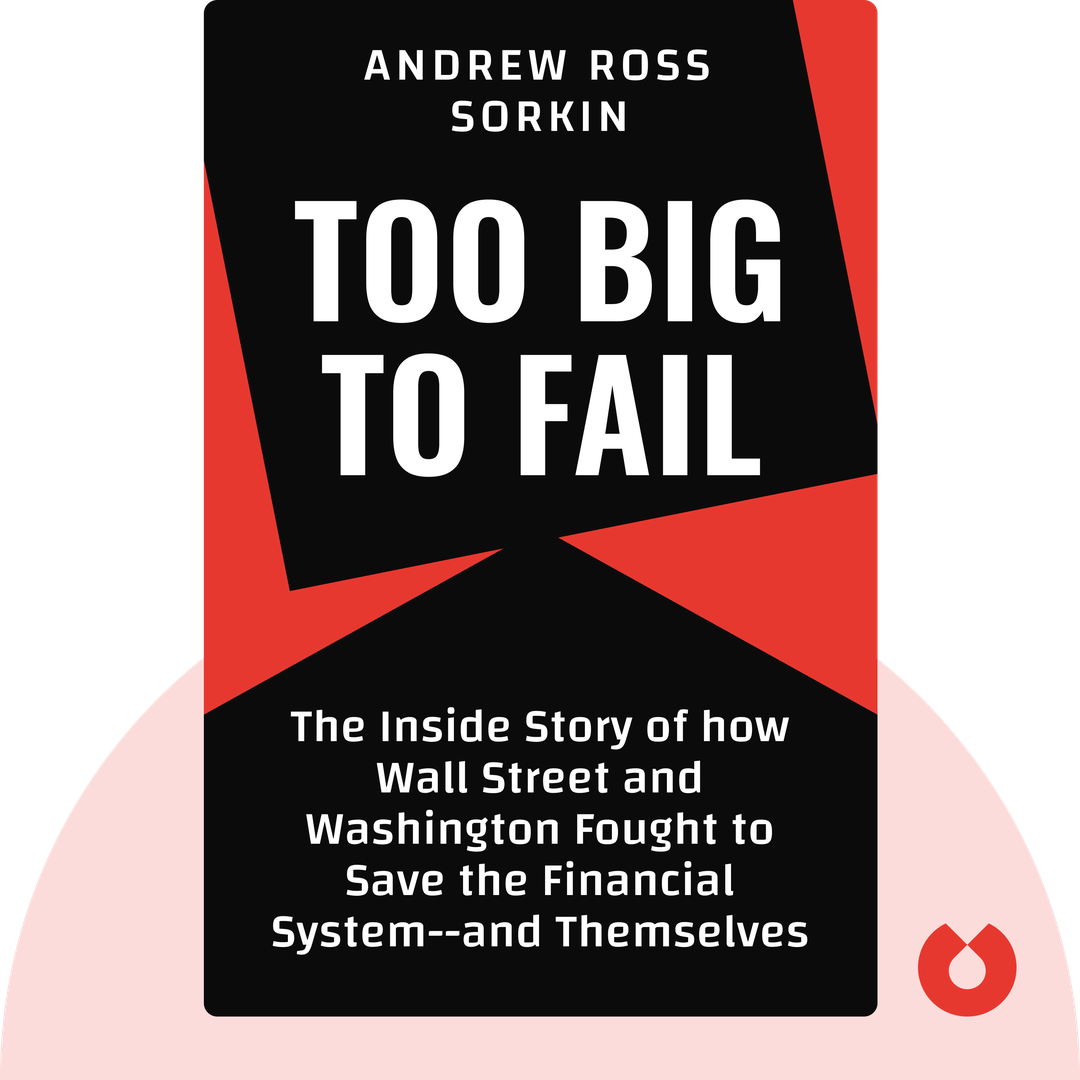
Andrew Ross Sorkin is an award-winning New York Times journalist, founder and editor at large of DealBook, and co-anchor of CNBC’s Squawk Box. He wrote the bestseller Too Big to Fail and co-created the television drama Billions.

🎧
Listen in the AppOffline playback & background play
Get App