Theme Song
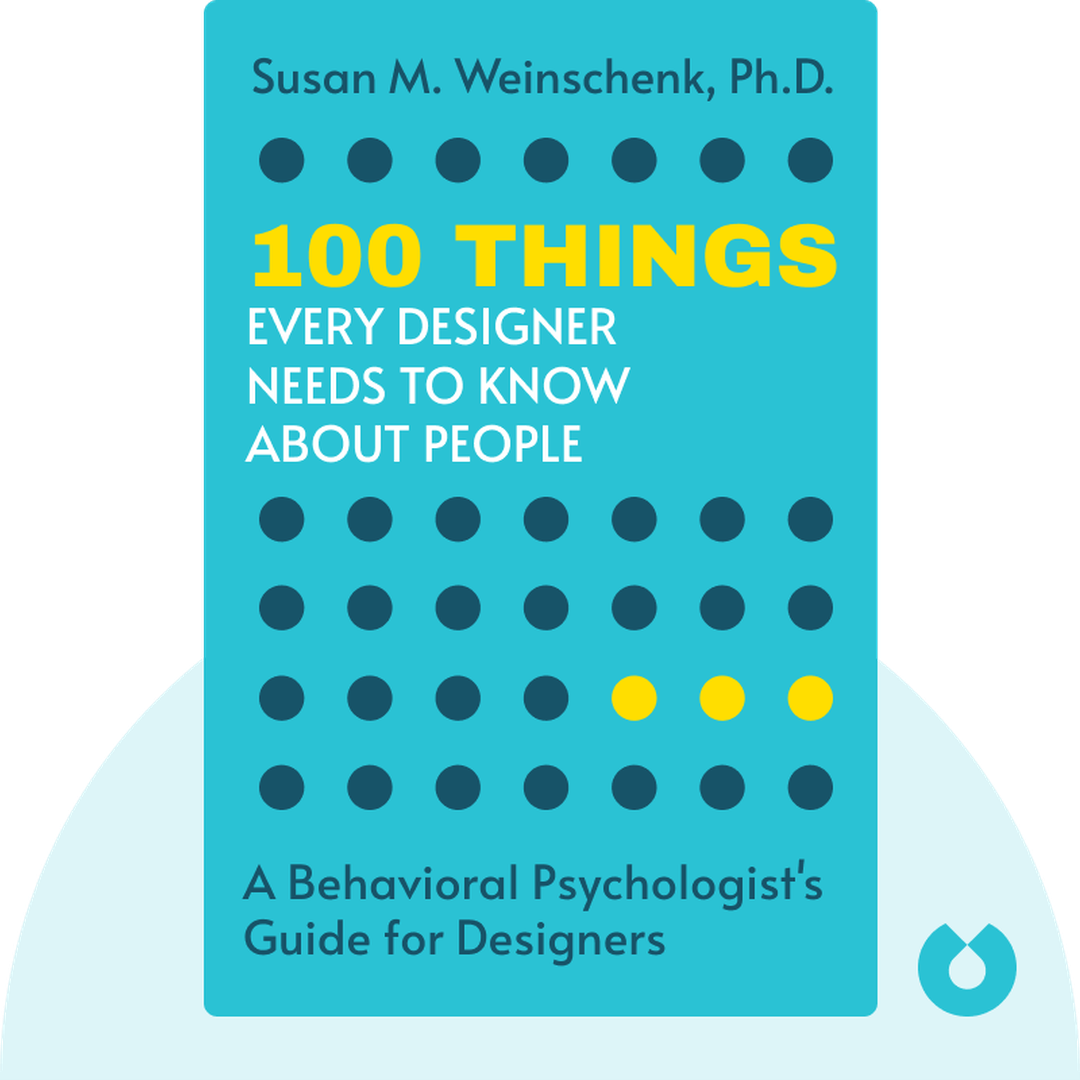
100 Things Every Designer Needs to Know About People
Start ListeningDownload Try free on iPhoneScan to start in 5 seconds
Categories:
If You're Curious About These Questions...
You should listen to this audiobook
- Did you know that your users' peripheral vision is actually what determines whether they stay on your page or leave within seconds?
- Have you ever wondered why most people make decisions subconsciously long before they even realize they’ve made a choice?
- What if you could master the hidden psychological triggers that dictate how people perceive, remember, and interact with your designs?
Listen to 100 Things Every Designer Needs to Know About People — Cinematic Audio Edition
Loading player...
Key Takeaways from 100 Things Every Designer Needs to Know About People
- Understand why leveraging human peripheral vision is crucial for grabbing attention, while using clear patterns helps our central vision quickly make sense of visual information.
- Discover how breaking information down into bite-sized chunks of four and using progressive disclosure prevents cognitive overload and makes your designs highly digestible.
- Find out how to design with natural human forgetfulness in mind by weaving essential information directly into your product or making it effortless to look up.
- Master the art of using chronological storytelling and clear categorization to successfully transition your product's message from the audience's short-term to long-term memory.
- Learn how to trigger your audience's mirror neurons through compelling storytelling to foster deep, natural empathy and a stronger connection with your design.
Learning Tools
Reinforce what you learned from 100 Things Every Designer Needs to Know About People
Mind Map
100 Things Every Designer Needs to Know About People
Vision & Perception+
Memory & Information Processing+
Long-Term Memory & Storytelling+
Empathy & Social Interaction+
Attention & Flow States+
Motivation & Dopamine+
Choice & Decision Making+
Quiz — Test Your Understanding
Question 1 of 8
Why is it highly effective for advertisers to place ads at the sides of a web page?
Question 2 of 8
When breaking down information into 'bite-sized chunks' for a user, what is the optimal maximum number of elements per group?
Question 3 of 8
Why is storytelling such a powerful tool for making information stick in a user's long-term memory?
Question 4 of 8
How does the psychological concept of 'social rules' apply to digital product design?
Question 5 of 8
Which of the following conditions is absolutely necessary for a user to enter a 'flow state'?
Question 6 of 8
Which of the following scenarios best utilizes the 'goal-gradient effect' to motivate users?
Question 7 of 8
When it comes to offering choices to users, what is the most effective strategy for a designer to employ?
Question 8 of 8
According to the final summary, why should designers incorporate elements of unpredictability into their products?
100 Things Every Designer Needs to Know About People — Full Chapter Overview
- 1Recommendation
- 2To make sense of the world, people rely on central and peripheral vision and seek out visual patterns.
- 3To create a good product, you need to break down information and understand memory deeply.
- 4Use stories and clear organizational structures to help ideas reach long-term memory.
- 5When designing your product, remember that people seek empathy and strongly follow social rules.
- 6People’s minds drift, but your design can help encourage a flow state.
- 7People are motivated by the chance to reach a goal — and dopamine plays a role, too.
- 8People believe they control their choices, but most decisions happen unconsciously.
- 9Final summary
100 Things Every Designer Needs to Know About People Summary & Overview
100 Things Every Designer Needs to Know About People (2011) is an essential guide for every designer. Combining research and practical examples, the book illustrates how important it is for designers to know, among many other things, how consumers make decisions and how memory is integral to good design.
Who Should Listen to 100 Things Every Designer Needs to Know About People?
- Product managers and developers
- Design or psychology students
- Consumers who want to improve their awareness
Books Similar to 100 Things Every Designer Needs to Know About People
Readers who enjoyed this also liked these titles.