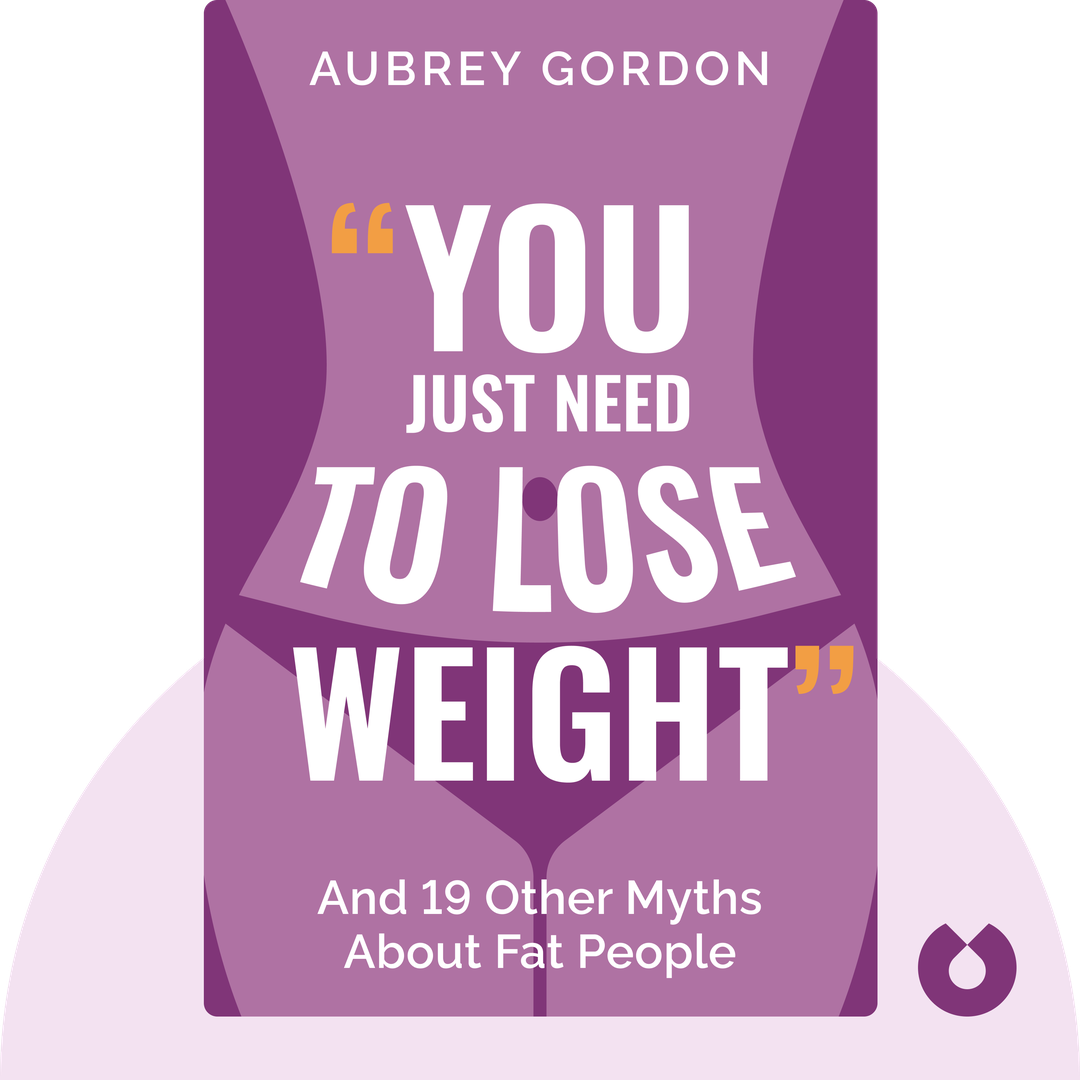
“You Just Need to Lose Weight”
Start ListeningDownload Try free on iPhoneScan to start in 5 seconds
Categories:
If You're Curious About These Questions...
You should listen to this audiobook
- Did you know that many of the most common “health facts” about body weight are actually rooted in cultural myths rather than scientific reality?
- Have you ever wondered why society is so quick to judge a person’s character based on their size, and where these deep-seated biases actually come from?
- Are you curious about how to effectively challenge anti-fat discrimination and dismantle the misconceptions that shape our views on health and body image?
Listen to “You Just Need to Lose Weight” — Free Audiobook
Loading player...
Key Takeaways from “You Just Need to Lose Weight”
- Discover why reclaiming the word 'fat' as a neutral descriptor is empowering, and learn how well-meaning euphemisms actually reinforce harmful anti-fat stigma.
- Understand the complex biological realities behind body size, including how genetics, metabolic damage from extreme dieting, and medical conditions disprove the myth that weight is simply a matter of willpower.
- Learn the deeply flawed history of the Body Mass Index (BMI), which was created by a mathematician using exclusively white male data and was never intended to measure individual health.
- Recognize how the medical community's reliance on the homogenous Body Mass Index disproportionately harms people of color by frequently miscalculating health risks and leading to misdiagnoses.
- Find out how misleading studies and the World Health Organization's adoption of the flawed BMI fueled an overblown and harmful societal panic regarding the so-called 'obesity epidemic.'
Learning Tools
Reinforce what you learned from “You Just Need to Lose Weight”
Mind Map
“You Just Need to Lose Weight”
Reclaiming the Word 'Fat'+
The Myth of Choice & Willpower+
The Flawed Body Mass Index (BMI)+
The Manufactured 'Obesity Epidemic'+
The 'Glorifying Obesity' Fallacy+
Fat Shaming as Systemic Discrimination+
Quiz — Test Your Understanding
Question 1 of 7
How does author Aubrey Gordon view the word 'fat'?
Question 2 of 7
According to the text, why do well-meaning euphemisms like 'sturdy' sting more for the author than direct insults?
Question 3 of 7
What did a study on former contestants from the reality TV series 'The Biggest Loser' reveal about dramatic weight loss?
Question 4 of 7
What is a major flaw in the origins of the Body Mass Index (BMI) as it is used today?
Question 5 of 7
What triggered the sudden media panic over an 'obesity epidemic' in the late 1990s?
Question 6 of 7
According to the text, why are fat people often accused of 'glorifying obesity' when they post normal photos of themselves online?
Question 7 of 7
How does the author distinguish between skinny shaming and fat shaming?
“You Just Need to Lose Weight” — Full Chapter Overview
- 1Recommendation
- 2We shouldn’t be afraid of the word “fat.”
- 3Some people choose to be fat, while others do not.
- 4Using the body mass index harms many groups of people.
- 5Misleading studies have fueled exaggerated panic over the “obesity epidemic.”
- 6Treating fat people fairly does not glorify obesity.
- 7Skinny shaming is personal, while fat shaming reflects a wider cultural bias.
- 8Final Summary
“You Just Need to Lose Weight” Summary & Overview
“You Just Need to Lose Weight” (2023) takes a deep dive into some of society’s most harmful myths about fat people. By revealing the facts behind these common misconceptions, Aubrey Gordon gives readers the tools to analyze their own internal biases, combat anti-fat discrimination, and support the goal of social acceptance for people of all sizes.
Who Should Listen to “You Just Need to Lose Weight”?
- Anyone who wants to learn about the myths surrounding fatness
- People interested in confronting anti-fat bias and discrimination
- Supporters of fat activism
Books Similar to “You Just Need to Lose Weight”
Readers who enjoyed this also liked these titles.