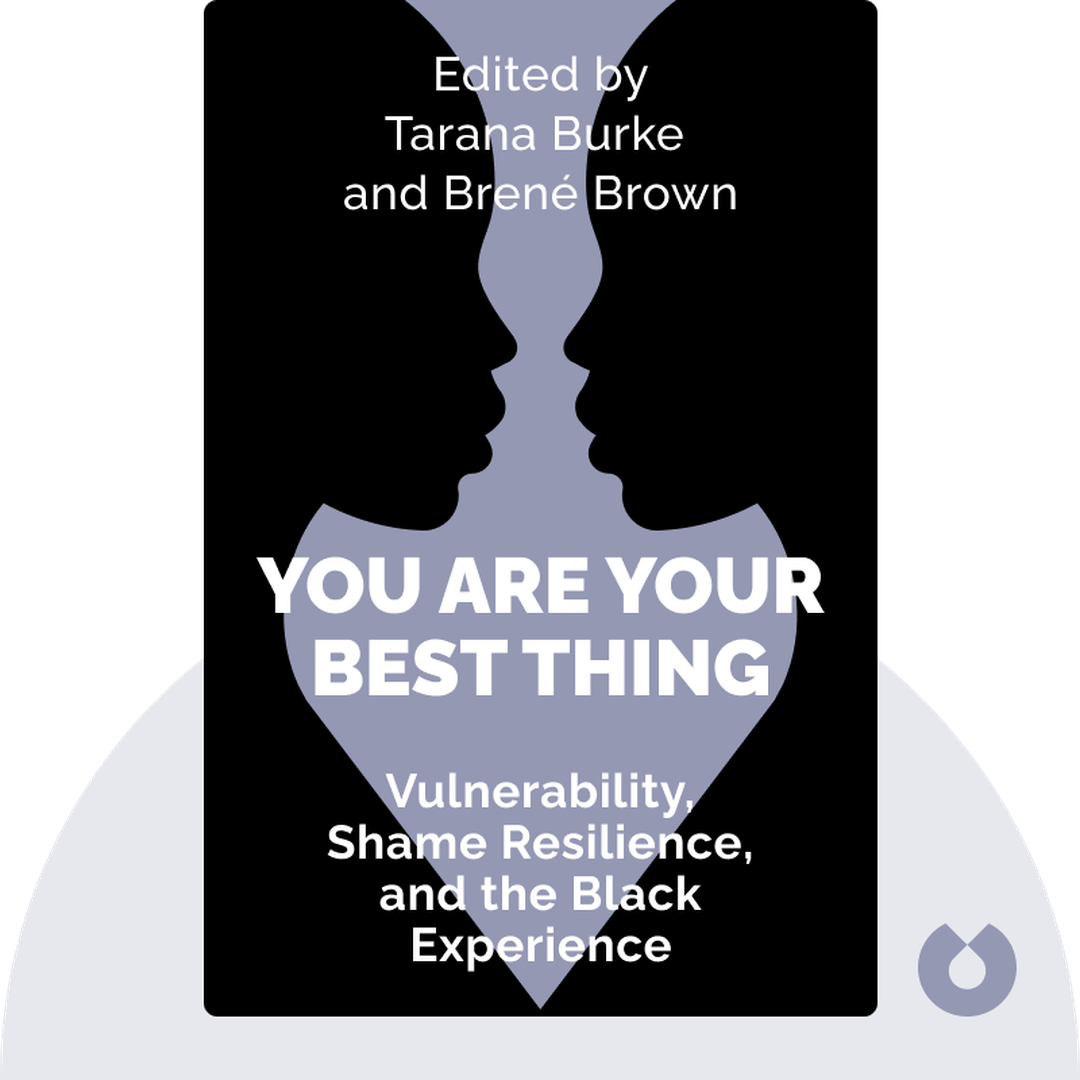
You Are Your Best Thing
Start ListeningDownload Try free on iPhoneScan to start in 5 seconds
Categories:
If You're Curious About These Questions...
You should listen to this audiobook
- Have you ever wondered how the power of vulnerability shifts when it's practiced within the unique challenges of the Black experience?
- What’s the secret to reclaiming your humanity and finding healing in a world designed to make you feel unsafe?
- What if you could transform the way you handle shame by understanding its deep-rooted connection to systemic racism?
Listen to You Are Your Best Thing — Free Audiobook
Loading player...
Key Takeaways from You Are Your Best Thing
- Discover why equating resilience with emotional suppression only breeds isolating shame, and how embracing vulnerability can help communities heal.
- Understand how the isolation of being 'the only one' in predominantly white spaces often forces Black youth to mask their cultural heritage and authentic identities.
- Learn why trauma in Black communities is often a continuous stress rather than 'post-traumatic,' and how acknowledging intergenerational grief can break harmful cycles.
- Find out the dangers of 'John Henryism,' a coping strategy where marginalized groups push through extreme hardship to achieve goals at severe physical and mental costs.
- Explore how unlearning rigid societal expectations of hypermasculinity and patriarchy is essential for Black men and queer individuals to reclaim their sensitivity and joy.
Learning Tools
Reinforce what you learned from You Are Your Best Thing
Mind Map
You Are Your Best Thing
Vulnerability & Systemic Racism+
Manifestations of Trauma+
Survival Tactics vs. Healing+
Tools for Shame Resilience+
Quiz — Test Your Understanding
Question 1 of 10
Why did Tarana Burke approach Brené Brown to collaborate on a book?
Question 2 of 10
How does Austin Channing Brown's experience of 'foreboding joy' differ from Brené Brown's traditional definition?
Question 3 of 10
What realization helped Tanya Denise Fields escape her abusive relationship and transform her life?
Question 4 of 10
According to Kiese Laymon’s essay, why is it difficult for many Black Americans to simply 'ask for help' regarding their mental or physical health?
Question 5 of 10
What therapeutic approach helped Prentis Hemphill learn to relax their bodily defenses and connect with others?
Question 6 of 10
Why did the older women in Tracey Michae’l Lewis-Giggetts's church cover up her sexual abuse?
Question 7 of 10
Why does Shawn Ginwright argue that the term 'PTSD' is inaccurate for many of the Black youths he works with?
Question 8 of 10
What wake-up call forced Tarana Burke to realize she was treating her labor as more important than her well-being?
Question 9 of 10
How does Laverne Cox contextualize the violence frequently committed against Black trans women?
Question 10 of 10
Which of the following is NOT mentioned by Aiko D. Bethea as a key tool for developing shame resilience?
You Are Your Best Thing — Full Chapter Overview
- 1Recommendation
- 2Black experiences of shame, vulnerability, and trauma are inseparable from white supremacy.
- 3Being a Black parent in America means fearing for your child’s life.
- 4Building self-worth means dismantling racist systems designed to shame you.
- 5The white medical establishment lets Black Americans down.
- 6Accepting yourself opens the way to healing and connection.
- 7Church should support Black women instead of shaming them.
- 8Emotional vulnerability is essential for connection, but it needs a safe environment.
- 9Black women are told their labor matters more than their well-being.
- 10Violence against trans women is perpetuated by the historic trauma of Black men.
- 11Shame resilience helps you live wholeheartedly in the face of adversity.
- 12Final summary
You Are Your Best Thing Summary & Overview
You Are Your Best Thing (2021) is an anthology of original essays that explore Black experiences of living, loving, and parenting in America today. It examines concepts like vulnerability and shame, and shows that the key to personal healing lies in confronting white supremacy and the racist systems that make Black people feel unsafe in their communities.
Who Should Listen to You Are Your Best Thing?
- Black people looking for tools to heal from trauma
- Psychology-lovers seeking new perspectives on how the personal and political intersect
- Those who want to deepen their understanding of the impact of racism in America
Books Similar to You Are Your Best Thing
Readers who enjoyed this also liked these titles.