If You're Curious About These Questions...
You should listen to this audiobook
- Have you ever wondered why the use of “like” and emoticons isn’t actually ruining the English language, but is instead a sign of its healthy evolution?
- Did you know that many of the words we use today have completely different meanings than they did just a few centuries ago, and that this “drift” is the secret to a living language?
- Are you curious about how a rugged West Germanic dialect managed to transform into a global lingua franca while shedding almost all of its original rules along the way?
Listen to Words on the Move — Free Audiobook
Loading player...
Key Takeaways from Words on the Move
- Understand why the English language is in a constant state of evolution, and how recent linguistic habits like using the word 'like' continue a long-standing tradition of adaptation.
- Discover how emotional self-expression has been embedded in everyday language since the Dark Ages, using simple words like 'well' to convey complex attitudes and soften conversations.
- Learn how emoticons serve as a crucial emotional arsenal in modern texting, functioning as linguistic intensifiers rather than threatening to replace written English.
- Explore the fascinating process of how word meanings gradually shift over centuries, transforming the definitions of everyday terms like 'science,' 'dog,' and 'innumerable.'
- Find out how the rapid evolution of English continuously reshapes our grammar, frequently transforming everyday action verbs into newly minted nouns for modern conversation.
Learning Tools
Reinforce what you learned from Words on the Move
Mind Map
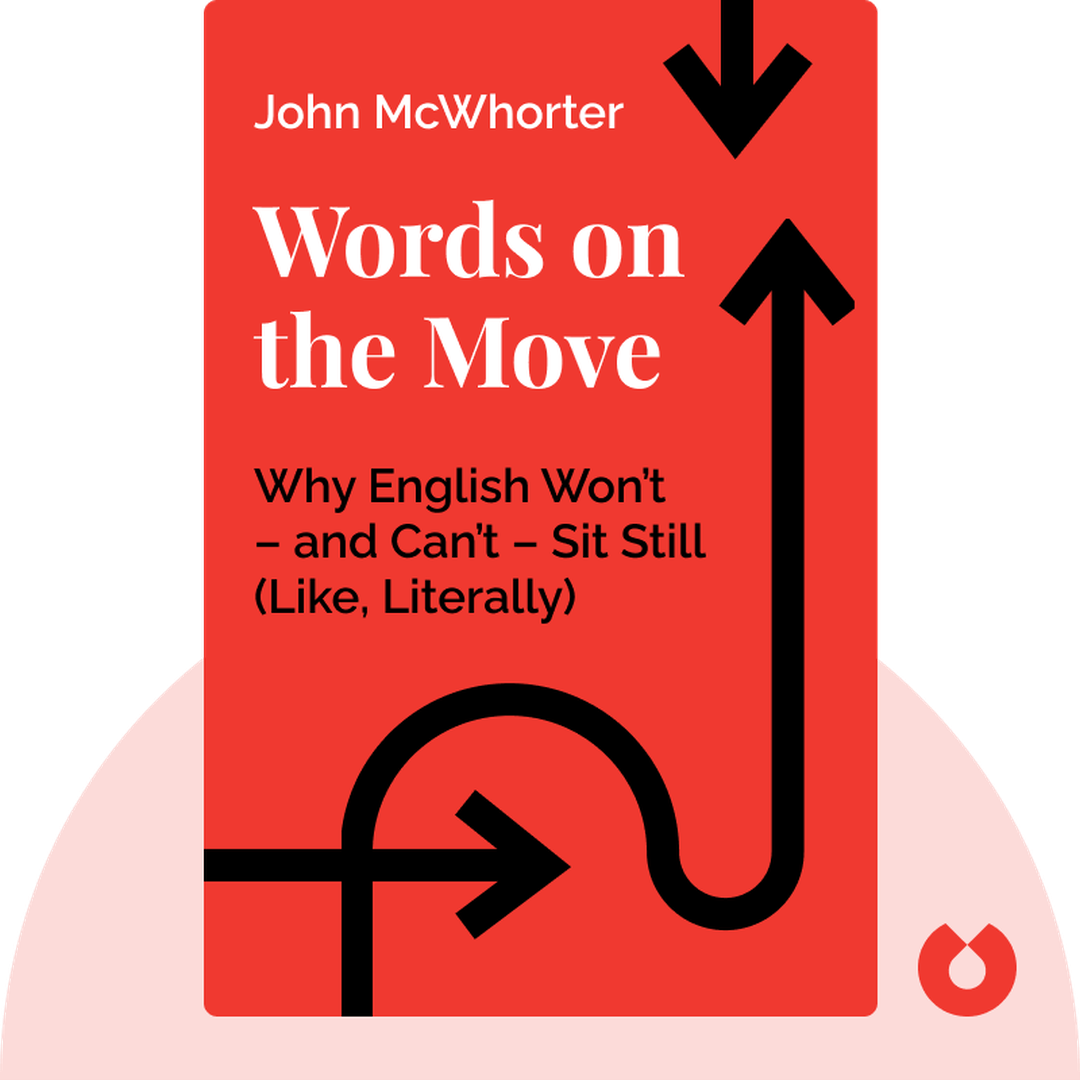
Words on the Move
Constant Evolution+
Expressing Emotion+
Structural Innovations+
Punctuation Fads+
Quiz — Test Your Understanding
Question 1 of 9
According to the book, how does the history of emotional expression in language compare to that in art?
Question 2 of 9
What is the author's perspective on the rise of texting and the use of emoticons?
Question 3 of 9
How did the word 'innumerable' change in meaning over time?
Question 4 of 9
Why would a native French or Spanish speaker likely find English business jargon like 'the ask' or 'a solve' jarring?
Question 5 of 9
According to the text, why has the exclamation mark become so common in everyday digital communication?
Question 6 of 9
How does understanding modern word blends like 'sitcom' or 'staycation' help us understand Old English?
Question 7 of 9
What linguistic principle explains the difference in pronunciation between the verb 'suspect' and the noun 'suspect'?
Question 8 of 9
What is the linguistic origin and evolution of the '-ly' suffix in words like 'slowly' or 'angrily'?
Question 9 of 9
How does the author view the modern, frequent use of the word 'like' in spoken English?
Words on the Move — Full Chapter Overview
- 1Recommendation
- 2Emotional self-expression may be new in art, but it’s been central to language since the Dark Ages.
- 3Emoticons are simply the newest tool in the emotional toolkit of our language.
- 4The meaning of nearly every word shifts slowly and gradually over time.
- 5English is packed with cases of verbs turning into nouns and gaining completely new senses.
- 6The role of exclamation marks has shifted as usage trends and cross-cultural influences evolved.
- 7Realizing that words often fuse together and form new hybrids sheds light on Old English.
- 8Shifts in how we stress words when pronouncing them can trigger further language change.
- 9The word “like” has constantly transformed, and how we use it now is just the newest twist.
Words on the Move Summary & Overview
Words on the Move (2016) is a whistle-stop tour through the history of the English language, from its Anglo-Saxon roots to global lingua franca. Packed with illuminating insights into the evolution of words and meaning, John McWhorter’s entertaining look at language dispels plenty of myths along the way. He argues that emoticons and the new use of “like” aren’t a threat to our language, but quite the opposite – they’re the latest chapters in a story of endless evolution.
Who Should Listen to Words on the Move?
- Language learners and enthusiasts
- Anyone who’s wondered where words come from
- History buffs
Books Similar to Words on the Move
Readers who enjoyed this also liked these titles.