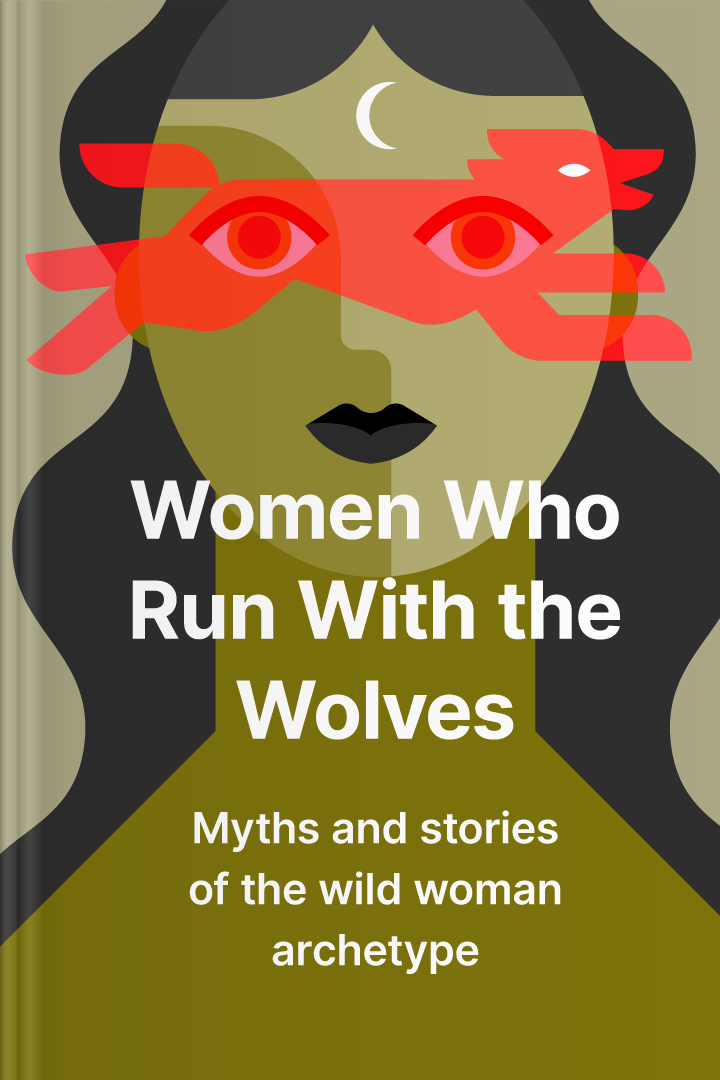
Women Who Run With the Wolves
If You're Curious About These Questions...
You should listen to this audiobook
- Have you ever wondered why modern life often quiets your most powerful inner voice—the 'wildish' self that instinctively knows how to create, protect, and thrive?
- What if the world’s oldest myths and fairy tales actually hold the 'medicine' you need to recognize hidden dangers and reclaim your intuitive power?
- Are you curious about the secret to protecting your creative gifts and finally finding a sense of belonging that doesn’t require you to follow someone else's rules?
Listen to Women Who Run With the Wolves — Cinematic Audio Edition
Key Takeaways from Women Who Run With the Wolves
- Discover how ancient myths and fairy tales serve as psychological medicine, inviting you to reconnect with your deepest instincts and remember your true nature.
- Understand that the 'Wild Woman' is not a newly adopted personality, but an ancient, innate intelligence that helps you remain resilient when modern expectations try to tame you.
- Learn to use stories and symbols as seeds for personal growth, allowing them to take root in your mind and help you recover exiled parts of your psyche.
- Recognize the psychological warning signs of predators by exploring the tale of Bluebeard, and discover why you must trust your inner hesitancy over blinding charm.
- Embrace the empowering act of opening the 'forbidden doors' in your life, confronting hidden truths and shedding vulnerabilities to become stronger and wiser.
Learning Tools
Reinforce what you learned from Women Who Run With the Wolves
Mind Map
Quiz — Test Your Understanding
Women Who Run With the Wolves — Full Chapter Overview
- 1Recommendation
- 2Remembering the Instinctual Self
- 3The Forbidden Door and the Predator’s Mask
- 4The Blessed Doll and the Courage to Stand Firm
- 5Leaving the Wrong Pond to Find True Belonging
- 6Protecting the Spark Before It Goes Out
- 7The Long Climb of Emotional Mastery
- 8Story as Ancestral Medicine
Women Who Run With the Wolves Summary & Overview
This narrated adaptation explores the idea that modern life can quiet a woman’s instinctive nature—the part that knows, feels, creates, protects, and belongs to something larger than rules and expectations. Through myths and fairy tales, the listener is invited to notice where that “wildish” self still lives: in dreams, symbols, longing, grief, love, and art.
Each story becomes a kind of medicine—an image to sit with, rather than a lesson to force. Together, they offer a supportive way to strengthen intuition, recognize danger without fascination, find true belonging, protect creative gifts, and learn emotional regulation through lived experience.
Who Should Listen to Women Who Run With the Wolves?
- Women who feel disconnected from their instincts, creativity, or inner confidence, and want a gentle path back to themselves.
- Listeners drawn to myth, fairy tales, Jungian themes, and symbolic storytelling as a form of reflection and healing.
- Anyone navigating relationships, family dynamics, or personal boundaries, who wants language and imagery for recognizing red flags and reclaiming self-trust.
Books Similar to Women Who Run With the Wolves
Readers who enjoyed this also liked these titles.