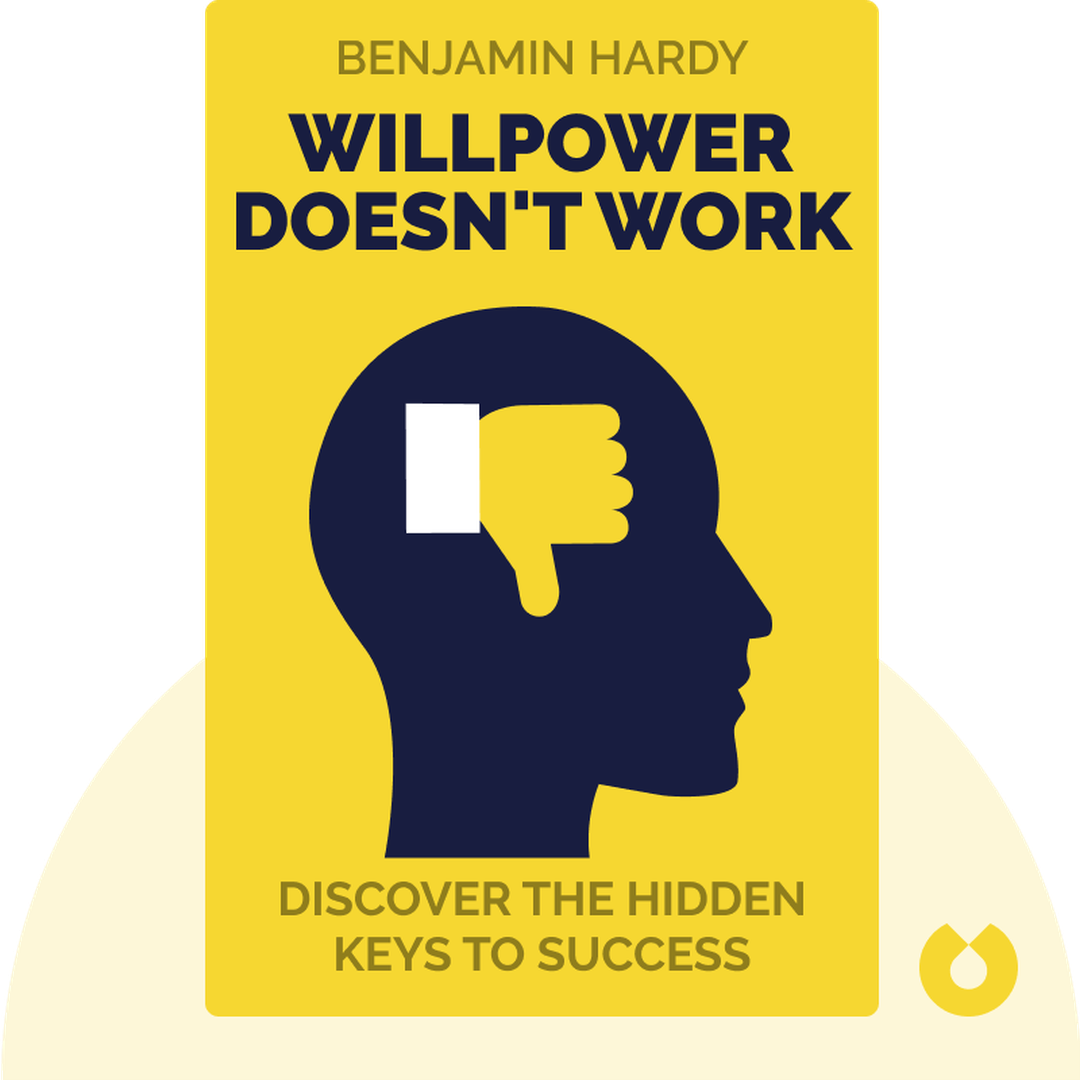
Willpower Doesn't Work
Start ListeningDownload Try free on iPhoneScan to start in 5 seconds
Categories:
If You're Curious About These Questions...
You should listen to this audiobook
- Did you know that relying on willpower is actually a recipe for failure, and there’s a much more powerful force that truly determines your success?
- Have you ever wondered why even the most disciplined people struggle to change their habits without making one specific shift in their surroundings?
- What if you could automate your productivity by making your most difficult goals the 'default' path in your life?
Listen to Willpower Doesn't Work — Free Audiobook
Loading player...
Key Takeaways from Willpower Doesn't Work
- Discover why relying on willpower is a losing battle and learn how redesigning your daily environment is the true key to reaching your goals.
- Understand the concept of domesticated evolution and how intentionally shaping your surroundings forces you to adapt into your ideal self.
- Learn how to maximize your productivity by dividing your life into two distinct spaces: a high-stress environment for deep work and a high-recovery environment for pure play.
- Find out why only 16 percent of creative breakthroughs happen at work, and how prioritizing relaxation gives your brain the chance to forge brilliant new ideas.
- Master the art of sparking profound inspiration by intentionally creating peak experiences through disconnecting and visiting unfamiliar places.
Learning Tools
Reinforce what you learned from Willpower Doesn't Work
Mind Map
Willpower Doesn't Work
The Core Problem+
Power of Environment+
Designing Spaces+
Peak Experiences+
Removing Dead Weight+
Implementation Intentions+
Forcing Functions+
Actionable Work Habits+
Quiz — Test Your Understanding
Question 1 of 8
According to the author, why is relying on willpower an ineffective strategy for achieving goals?
Question 2 of 8
How does the author use the concept of 'domesticated evolution' to explain self-improvement?
Question 3 of 8
What does the book suggest is the most effective way to structure your physical spaces for work and relaxation?
Question 4 of 8
How can you actively prepare your mind for a creative 'peak experience'?
Question 5 of 8
What lesson is illustrated by the story of the Boy Scout who froze without his sleeping bag?
Question 6 of 8
What is an 'implementation intention' as described in the book?
Question 7 of 8
Why does entrepreneur Dan Martell deliberately leave his laptop charger at home when working at a coffee shop?
Question 8 of 8
What is the author's view on the traditional nine-to-five workday?
Willpower Doesn't Work — Full Chapter Overview
- 1Recommendation
- 2When you’re pursuing your goals, your surroundings matter more than willpower.
- 3Create distinct environments – one designed for work and another for play.
- 4You can boost your creativity by seeking out “peak experiences.”
- 5Take bold action now and cut the dead weight from your life.
- 6Stay on course by planning with implementation intentions.
- 7Rely on forcing functions that push you to meet your goals.
Willpower Doesn't Work Summary & Overview
Willpower Doesn't Work (2018) sets itself firmly against orthodox opinion in the fields of productivity and self-help. Drawing on a wide range of psychological theories, as well as the stories of successful entrepreneurs, these blinks argue that when it comes to changing your life, willpower simply isn’t the answer.
Who Should Listen to Willpower Doesn't Work?
- Master procrastinators trying to turn over a new leaf
- Entrepreneurs trying to reach their full potential
- Organizational leaders interested in the psychology of productivity
Books Similar to Willpower Doesn't Work
Readers who enjoyed this also liked these titles.