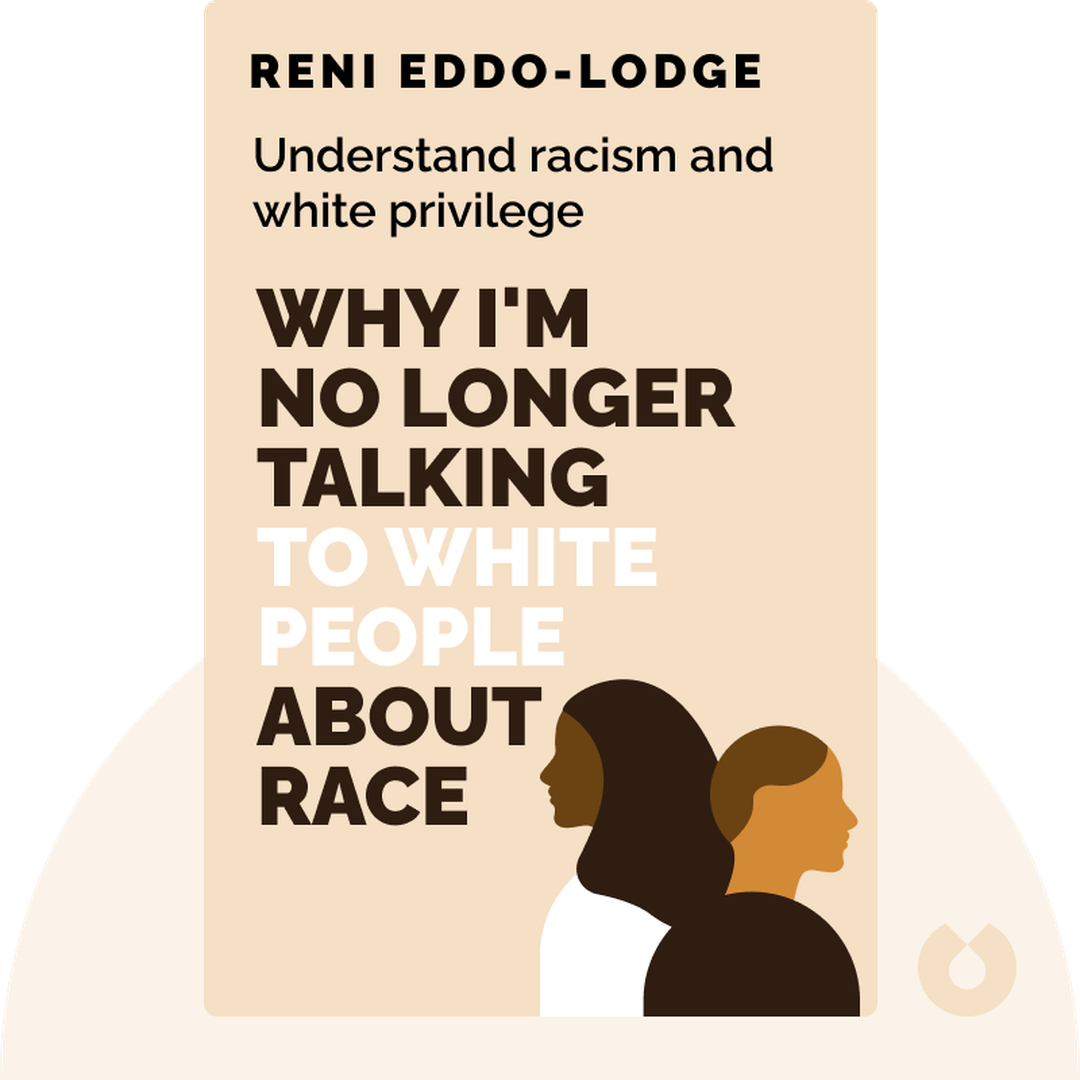
Why I'm No Longer Talking to White People About Race
Start ListeningDownload Try free on iPhoneScan to start in 5 seconds
Categories:
If You're Curious About These Questions...
You should listen to this audiobook
- Why does the author argue that the well-meaning claim 'I don't see color' is actually harmful to bridging the communication gap in race relations?
- How does the hidden history of Britain's Black civil rights movements and its treatment of Commonwealth citizens contradict the belief that systemic racism is primarily an American issue?
- In what ways do politicians weaponize the term 'white working class' to divide marginalized groups and obscure the complex realities of racialized poverty?
Listen to Why I'm No Longer Talking to White People About Race — Cinematic Audio Edition
Loading player...
Key Takeaways from Why I'm No Longer Talking to White People About Race
- Racism in modern Britain is deeply rooted in its largely unacknowledged history of colonialism, imperialism, and the transatlantic slave trade.
- Structural racism extends far beyond individual prejudice, actively reducing the educational outcomes, employment opportunities, and overall life chances of people of color.
- White privilege is an ingrained systemic advantage that positively affects white people's opportunities, yet it often remains completely invisible to those who benefit from it.
- Mainstream feminism frequently operates as 'white feminism,' failing to embrace intersectionality and ignoring the compounded discrimination faced by women of color.
- The political rhetoric surrounding the 'white working class' is often used as a divide-and-conquer tactic to obscure how racial inequality actively worsens class disadvantage.
Learning Tools
Reinforce what you learned from Why I'm No Longer Talking to White People About Race
Mind Map
Why I'm No Longer Talking to White People About Race
The Communication Gap+
Erased British History+
Black British Civil Rights+
Structural Racism+
White Privilege+
Representation & Pop Culture+
Intersectionality & Feminism+
Race and Class+
Quiz — Test Your Understanding
Question 1 of 8
Why is the phrase 'I don't see color' considered problematic in the context of race relations?
Question 2 of 8
How did the British Empire treat Indian soldiers who fought for them during the First World War?
Question 3 of 8
How did the British Parliament respond to the 1958 racist riots in London?
Question 4 of 8
According to the text, what is an effective, proven method to combat structural racism in the job market, as demonstrated by the NFL's Rooney Rule?
Question 5 of 8
Why is conversing with progressive white people who don't recognize their white privilege often deeply frustrating for people of color?
Question 6 of 8
What does the public backlash against the casting of Black actress Noma Dumezweni as Hermione Granger illustrate?
Question 7 of 8
What is the primary criticism the author levels against mainstream feminism, citing examples like the TV show 'Girls'?
Question 8 of 8
According to the text, why do some British politicians frequently use the term 'white working class'?
Why I'm No Longer Talking to White People About Race — Full Chapter Overview
- 1Recommendation
- 2A communication gap between white people and people of color is blocking progress in Britain’s race relations.
- 3Britain’s racist history stems from colonialism, imperialism and participation in the slave trade.
- 4To grasp today’s race issues in Britain, we must uncover the history of Black Britain.
- 5Once structural racism is faced, equal opportunities for people of color can be built.
- 6White privilege is a deep-rooted racism that boosts white people’s life chances.
- 7The shortage of Black heroes in culture mirrors a white fear of a Black planet.
- 8We need a feminism that stands for every disempowered person, not just white women.
- 9Race and class prejudice are tightly linked forces that self-serving British politicians deny.
Why I'm No Longer Talking to White People About Race Summary & Overview
Why I’m No Longer Talking to White People About Race (2017) examines the often-dismissed problem of racism in Britain and offers insight into how it might be overcome. Contrary to the title, this volume provides a starting point for productive conversations about racism in Britain today. It examines British black history, white privilege and the links between class and race.
Who Should Listen to Why I'm No Longer Talking to White People About Race?
- People interested in black British history
- Workers who feel the economy and society aren’t working for them
- Anyone who wants better race relations
Books Similar to Why I'm No Longer Talking to White People About Race
Readers who enjoyed this also liked these titles.