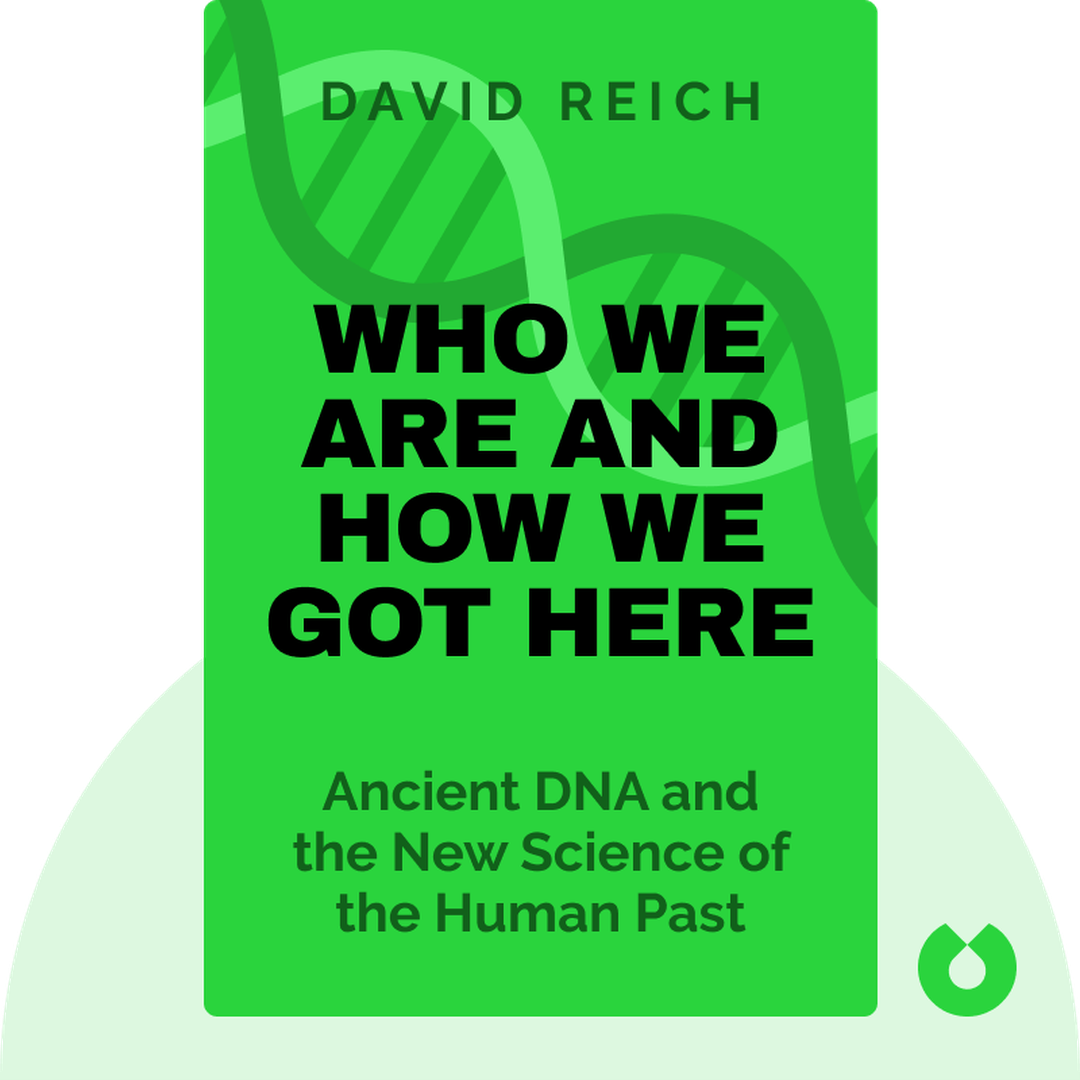
Who We Are and How We Got Here
Start ListeningDownload Try free on iPhoneScan to start in 5 seconds
Categories:
If You're Curious About These Questions...
You should listen to this audiobook
- Did you know that the concept of 'pure' ancestral lineages is actually a scientific myth, and that our history is defined by constant, unexpected waves of migration and mixing?
- Have you ever wondered how the DNA of people who lived tens of thousands of years ago is currently rewriting everything we thought we knew about human origins?
- What if the secrets of your true heritage weren't found in history books, but were hidden deep within the genetic code of your ancient ancestors?
Listen to Who We Are and How We Got Here — Free Audiobook
Loading player...
Key Takeaways from Who We Are and How We Got Here
- Discover how mitochondrial DNA analysis disproved the multi-regional evolution theory, revealing that all modern humans descend from a single female ancestor in Africa less than 200,000 years ago.
- Understand how scientists use random genetic mutations in human DNA to trace individual ancestry and map out the complex, ancient migrations of our species.
- Learn why modern non-African populations possess genomes that are 1.5 to 2.1 percent Neanderthal due to ancient interbreeding that occurred around 50,000 years ago.
- Find out how the sequencing of a single Siberian fingerbone revealed the Denisovans, an entirely new ancient human species whose genetic legacy survives in modern New Guineans.
- Uncover the genetic origins of modern Europeans by tracing the ancient migration of the Yamnaya, a nomadic culture linked to a mysterious 'ghost population' of Ancient North Eurasians.
Learning Tools
Reinforce what you learned from Who We Are and How We Got Here
Mind Map
Who We Are and How We Got Here
The Genetics Revolution+
Ancient Interbreeding+
Mapping Regional Ancestries+
Social Dynamics in DNA+
Race, Differences, and Ethics+
Quiz — Test Your Understanding
Question 1 of 9
How did the study of mitochondrial DNA change scientists' views on human evolution?
Question 2 of 9
According to genome sequencing, which modern population shares the highest percentage of DNA with the ancient human species known as Denisovans?
Question 3 of 9
What significant cultural and biological contribution did the nomadic Yamnaya people bring to modern Europe?
Question 4 of 9
Genetic studies of modern Indian populations reveal a mix of Ancestral North Indians (ANI) and Ancestral South Indians (ASI). How does this genetic divide reflect in modern Indian society?
Question 5 of 9
What evidence suggests that the so-called 'First Americans' who crossed the Bering Strait were not the true first inhabitants of the Americas?
Question 6 of 9
Based on linguistic and genetic evidence, where did the ancestors of modern Pacific Islanders and the indigenous people of Madagascar originate?
Question 7 of 9
What surprising discovery did scientists make regarding the ancient African ghost population known as the East African Foragers?
Question 8 of 9
In genetic analysis, what does a male 'star cluster' on the Y chromosome typically indicate about historical human populations?
Question 9 of 9
How does genomic data address the concept of 'biological race' and the differences between human populations?
Who We Are and How We Got Here — Full Chapter Overview
- 1Recommendation
- 2Scientific advances in genetics offer unique insights into early human history and evolution.
- 3The ancestors of modern non-African humans mixed with both Neanderthals and Denisovans.
- 4Migration patterns thousands of years ago shaped the ancestry and languages of today’s Europeans.
- 5Indian ancestry has a dual origin, still visible in its languages and caste hierarchy.
- 6Native Americans came from two distinct migrations, though their full story remains uncertain.
- 7Modern East Asians descend from migrations rooted in China’s ancient farming heartlands.
- 8Africa has experienced just as much population movement as any other region on Earth.
- 9Population mixing is often shaped by gender inequality between different social groups.
- 10DNA shows that populations differ, but those differences cannot support racist stereotypes.
Who We Are and How We Got Here Summary & Overview
Who We Are and How We Got Here (2018) takes readers on a journey through the world’s anthropological history, demonstrating that people have continually migrated and mixed over time. Recent scientific advances are allowing scientists to study human DNA from the distant past and compare it to that of those alive today. The insights about humans’ origins are both fascinating and revealing.
Who Should Listen to Who We Are and How We Got Here?
- Scientists with burgeoning interests in anthropology and languages
- Ethno-nationalists looking to have their views challenged
- Genealogists looking for the bigger picture
Books Similar to Who We Are and How We Got Here
Readers who enjoyed this also liked these titles.