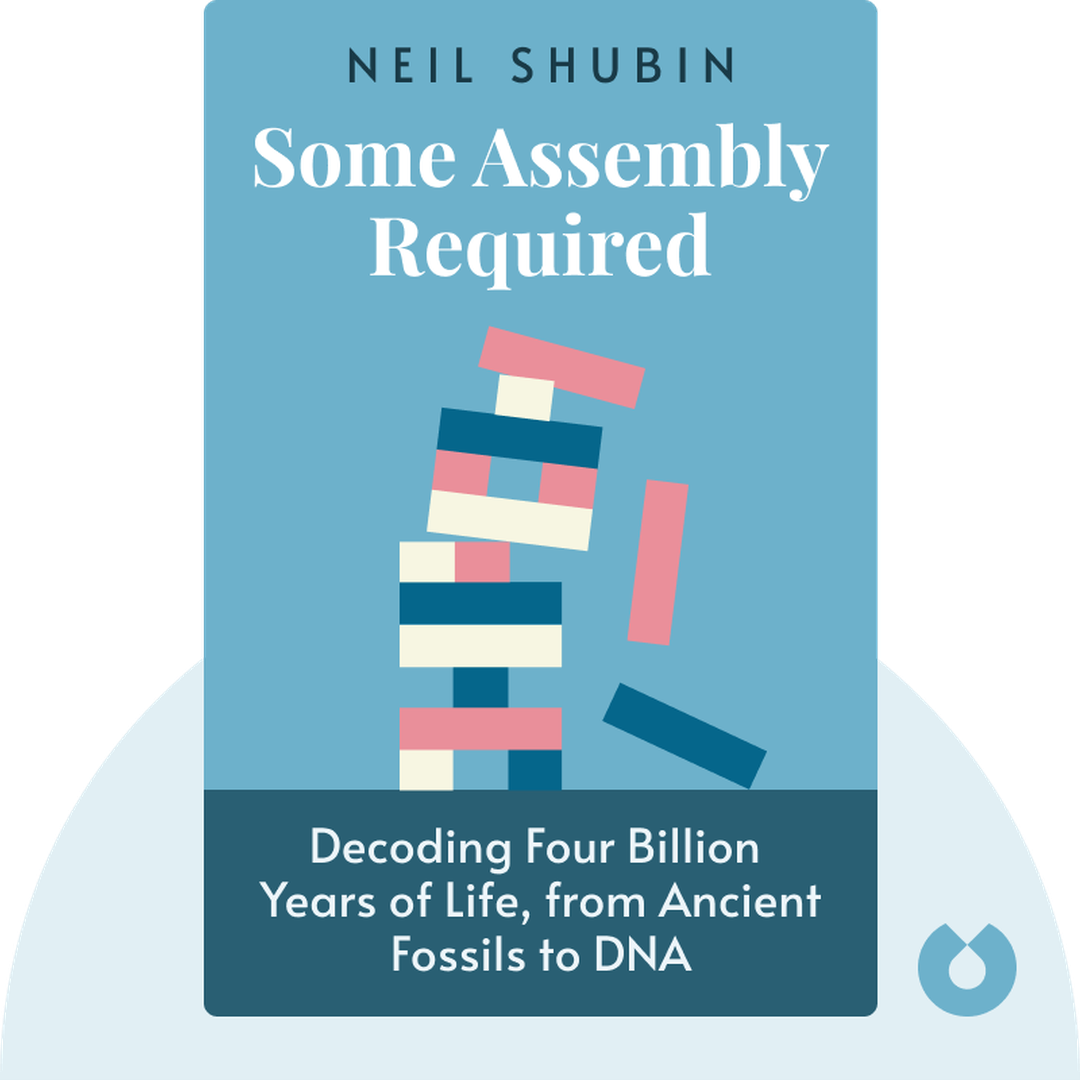
Some Assembly Required
Start ListeningDownload Try free on iPhoneScan to start in 5 seconds
Categories:
If You're Curious About These Questions...
You should listen to this audiobook
- Did you know that the most profound secrets of our evolutionary journey are hidden not in ancient fossils, but deep within our own DNA?
- Have you ever wondered why major biological innovations, like lungs and limbs, often appeared long before they were ever used for breathing or walking?
- What if the key to human complexity wasn't the creation of new genes, but a radical way of repurposing the ones we already had?
Listen to Some Assembly Required — Free Audiobook
Loading player...
Key Takeaways from Some Assembly Required
- Discover why plants and animals don't develop entirely new traits, but instead repurpose old ones, such as fish possessing proto-lungs long before they ever walked on land.
- Learn how the study of embryos unlocks the secrets of evolution by showing how an organism's physical development can drastically change based on its surrounding environment.
- Understand the surprising origin of all vertebrates by tracing our ancestry back to the sea squirt, a simple creature that shaped human evolution by halting its own development early.
- Find out how microscopic DNA switches organize our genomes, and how tiny genetic malfunctions are responsible for major evolutionary leaps like the transition from fins to wings.
- Uncover how modern DNA analysis proves that the journey of evolution is not a straight path, but rather a fascinating history of biological accidents and genetic anomalies.
Learning Tools
Reinforce what you learned from Some Assembly Required
Mind Map
Some Assembly Required
Repurposing Old Traits+
Embryos & Development+
Genetic Switches+
Mutations & Body Plans+
The Active Genome+
Predictable Evolution+
Quiz — Test Your Understanding
Question 1 of 6
According to the book, how did fish develop the ability to breathe air on land?
Question 2 of 6
Why is the sea squirt considered a crucial ancestor to all vertebrates?
Question 3 of 6
What mechanism primarily explains the vast physical differences between a human and a sea squirt, despite sharing similar DNA?
Question 4 of 6
What did scientists discover when studying the genetic sequence that builds the body structure of fruit flies?
Question 5 of 6
Which of the following best describes the nature of the human genome as presented in the book?
Question 6 of 6
What does the evolution of the salamander's lightning-quick projectile tongue demonstrate about evolutionary outcomes?
Some Assembly Required — Full Chapter Overview
- 1Recommendation
- 2Plants and animals don’t change by creating new traits – they reuse old ones.
- 3Embryos reveal how change unfolds – in individuals and in species.
- 4Tiny glitches in the genome can lead to enormous effects.
- 5Changes in genes and their modification have powered astonishing evolution.
- 6Copying, mutating, leaping, and even hunting define the human genome.
- 7Even with a different evolutionary path, many results would be similar.
Some Assembly Required Summary & Overview
Some Assembly Required (2020) is an approachable account of the great transformations in the history of life. Paleontologist Neil Shubin started his career looking to fossils for the answers to life’s greatest questions – but with recent scientific advancements, he argues that studying DNA reveals more about the journey we took to become human.
Who Should Listen to Some Assembly Required?
- People interested in the history of evolution
- Science enthusiasts
- Anyone who loves an amazing factoid
Books Similar to Some Assembly Required
Readers who enjoyed this also liked these titles.