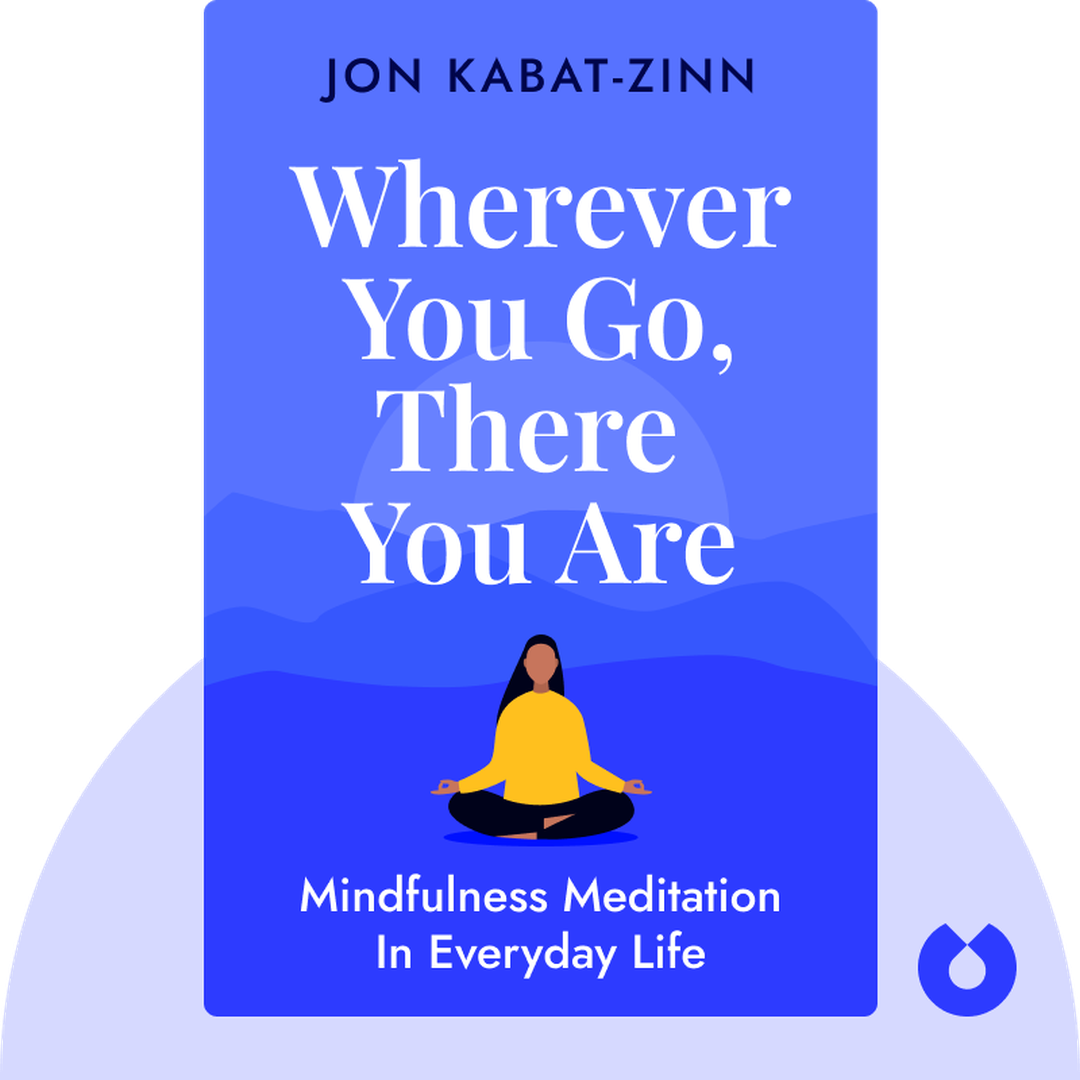
Wherever You Go, There You Are
Start ListeningDownload Try free on iPhoneScan to start in 5 seconds
Categories:
If You're Curious About These Questions...
You should listen to this audiobook
- Have you ever wondered why your mind is often everywhere except where you actually are, and what that’s costing your happiness?
- What's the secret to finding a deep sense of tranquility without having to change a single thing about your busy schedule?
- What if you could stop 'doing' for just a moment and discover that everything you’ve been searching for is already right in front of you?
Listen to Wherever You Go, There You Are — Cinematic Audio Edition
Loading player...
Key Takeaways from Wherever You Go, There You Are
- Understand that successful meditation doesn't require a completely blank mind, but rather the practice of letting thoughts flow naturally without attachment.
- Discover how focusing on the present moment prevents living in inertia and unlocks your genuine capacity for creativity and personal growth.
- Learn how to cultivate mindfulness by sitting still for just five minutes and observing your busy mind with an open, non-judgmental attitude.
- Master the technique of using your breath as an anchor to navigate life's inevitable stresses, allowing you to 'surf the waves' rather than trying to stop them.
- Find out why intentionally 'doing nothing' isn't laziness, but a powerful practice that lets situations unfold naturally and relieves the burden of constant decision-making.
Learning Tools
Reinforce what you learned from Wherever You Go, There You Are
Mind Map
Wherever You Go, There You Are
Core Philosophy+
Shifting States+
Foundational Attitudes+
Formal Practice+
Informal Practice+
Quiz — Test Your Understanding
Question 1 of 7
According to the text, what is the true aim of mindfulness meditation regarding the 'waves' of our mind?
Question 2 of 7
How does the text use the Dalai Lama's response to the Chinese government's actions to illustrate mindfulness?
Question 3 of 7
How does the text describe the relationship between meditation and self-improvement?
Question 4 of 7
What does the concept of 'voluntary simplicity' entail in the context of mindfulness?
Question 5 of 7
What is the core lesson of the 'mountain meditation' practice?
Question 6 of 7
Why is the ego considered the biggest obstacle on the path to mindfulness?
Question 7 of 7
What realization does loving-kindness meditation help make apparent regarding the 'self'?
Wherever You Go, There You Are — Full Chapter Overview
- 1Recommendation
- 2Chapter 1
- 3Chapter 2
- 4Chapter 3
- 5Chapter 4
- 6Chapter 5
- 7Chapter 6
- 8Chapter 7
- 9Final summary
Wherever You Go, There You Are Summary & Overview
Wherever You Go, There You Are (1994) explains how to fully enjoy the present moment without worrying about the past or the future. By providing step-by-step meditation practices, both formal and informal, that can easily be incorporated into everyday life, Kabat-Zinn steers us toward the peace and tranquility that we’re yearning for.
Who Should Listen to Wherever You Go, There You Are?
- Those who want to be fully present
- People who want to learn how to meditate
- Meditators hoping to expand and deepen their practice
Books Similar to Wherever You Go, There You Are
Readers who enjoyed this also liked these titles.